Listen now:




Show Notes
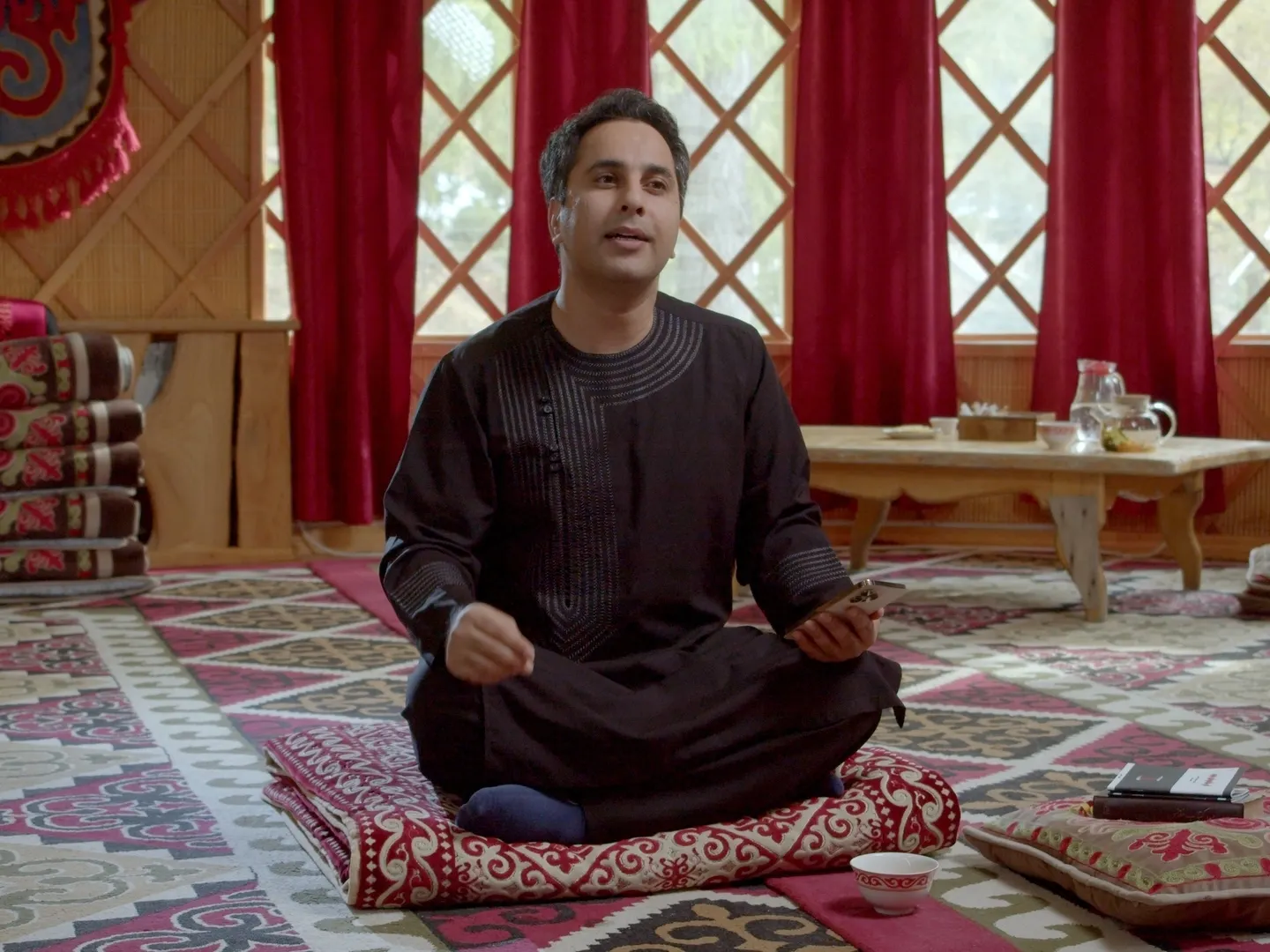
In this episode of Reflexio, Don talks with Samir, an Afghan follower of Jesus whose story runs from rockets falling on Kabul to long, TikTok conversations about the gospel with hundreds of Afghans around the world.
Samir talks about how Christ met his whole family in their desperation, freed him from the fear of death, and eventually called him out of a promising political career and into ministry. Samir reaches thousands of Afghans, both Muslims and ex-Muslims, through TikTok and Facebook live shows, engaging in open dialogue about faith, theology, and hope—even as he faces death threats on a weekly basis.
This is an exciting yet sobering window into what God is doing among Afghans today—and an invitation to carry Afghanistan on our hearts in prayer.
Various links to Samir Afghan's Ministry: Lumens of Truth
Lumens of Truth's Website
Lumens of Truth on TikTok
Lumens of Truth on Facebook
Lumens of Truth on YouTube
Lumens of Truth's Blog
The Afghan Journal of Theology
Support Lumens of Truth
Make sure to subscribe and give us a 5-star rating on your favorite podcasting platform.
Let your friends know about The Reflexio Podcast and encourage them to Subscribe to receive an email when new episodes drop!
Transcription
Don [00:00:01]:
Welcome to another episode of the Reflexio podcast. I'm your host, Don Little. In today's episode we have, I have a conversation with Samir, an Afghan who has quite a remarkable story. And he shares his story. He talks about how he almost died with his whole family during the civil war when he was four years old as his first memory. And then how his parents came to faith when he was in Pakistan, where they fled after the war when he was 8 or 9 years old. And then they ended up moving to the West. He went to school, eventually did a university degree in political science and philosophy, and then he got involved in a career in politics. He ended up being an assistant in a political office doing policy, working on policy at a pretty important role in the, the government of his country. And then God led him and his wife into this ministry that he does now in which he's hosting live call in Talk shows on TikTok. And they go from three hours to five hours, sometimes seven or eight hours nonstop, with hundreds of Afghans tuning in and standing in line, waiting in line to ask their questions, to make their comments. And they have fascinating conversations. And as I watched this episode again in preparation for releasing it now, I was really struck by Samir's really sweet, gentle spirit. He has such a deep love for his people and he burdened, weeps for his people, for their future. He's deeply saddened by what's happening there, and yet he has a heart that they might know and see the living God in Jesus Christ.
Don [00:01:46]:
So welcome, Samir, to the Reflexio podcast. It's great that we've been able to meet in this conference in Asia.
Samir Afghan [00:01:56]:
Thank you so much, Don. It's a pleasure to be here. Thank you for the invitation and I pray we have a wonderful time as we think and talk about the deep things of God and his work among the unreached.
Don [00:02:09]:
So people don't know you. We write a little bit in the show notes sort of introducing you, but can you just sort of tell a little bit of your background, your faith story, whatever seems appropriate and just let people know who you are a bit? Yeah, go ahead.
Samir [00:02:28]:
Well, I was born in Afghanistan in a Muslim family during the civil war right prior to the rise of the Taliban, the first time in 1996. And so I was born in after the Russians left. Yes. So when the Russians left, there was four groups of Mujahideen that fought over my city. And as a result of fighting for power and control, thousands upon thousands of lives were taken away and destroyed. Our own house Was hit by a rocket. And I remember that that was a very particular and significant experience that I had at a young age, three or four or a little about four years old.
Don [00:03:13]:
Wow.
Samir [00:03:14]:
Yeah. So the houses are made out of mud at that time in Kabul and we were all hiding in our basement and the rocket hit the third floor where the water tank was and felt right in front of door of the basement. And so my uncles, my grandparents, my aunts, everyone was in the basement and everyone was trapped, completely trapped. And as we were there, my grandma was trying to light a match because it was completely dark, you see, and there was not enough oxygen to even turn on a match because of the dust. My uncle had his hand over my feet face. And that was one of my first memories.
Don [00:04:00]:
I would say 4-year-old's early memories.
Samir [00:04:03]:
Yeah. I thought I was in a tomb. I thought this was it, this was a grave, I was going to die. And so from a young age, death was a big reality in my life.
Don [00:04:14]:
Tell us how you escaped.
Samir [00:04:16]:
My, my grandma, my grandpa, my dad and my uncles literally dug us out of there, bare hands because the, the windows had broken, the house had mixed with the water, the clay and it had become mud. They dug us out with their hands completely cut up and bloodied and so.
Don [00:04:41]:
But you escaped?
Samir [00:04:42]:
We did escape.
Don [00:04:43]:
Everyone.
Samir [00:04:44]:
Everyone did, yeah. We had to leave the city for a few months. Our house was gone. Yeah. And that was my. One of my first memories, one of the darkest memories I have from that period. And I think it stirred in me this reality that life is very fragile and death is a reality. And so I remember when we had to escape to Pakistan because the Taliban took over. We lived as refugees in Pakistan. At night when my parents were sleeping, I would go to bed and I would. Once I knew everyone was sleeping, I would begin crying and weeping because I was so afraid to die. And it was in the midst of being a refugee, working, making carpets from 5 in the morning till 5, 6, 7, 8 o' clock at night as a child. As a child that the Lord found us through a two year old Afghan boy who used to come and play with my little sister. He one day came and he had a little booklet in his hand that was called Jesus, the savior of the world.
Don [00:05:55]:
And it was in Dari.
Samir [00:05:56]:
It was in Dari. Now. My mom had seen a dream about Jesus in Afghanistan seven years before. We first heard about Jesus right through this booklet. She had seen a dream that two angels take her to heaven and there's a room and in the middle of the room there's a throne and a man is sitting on the throne. The angel tells her to worship him because he's the living God.
Don [00:06:24]:
A man is a living God.
Samir [00:06:25]:
A man is a living God. As you know, in Islam the height of blasphemy is to equate the creator with a creature.
Don [00:06:32]:
Just like in Judaism.
Samir [00:06:34]:
Yes, yeah, yeah. The tawhid, the oneness of God. And also, yeah, this is the unforgivable sin. This is shirk to say a creature can be the creator. And yet my mom in her dream, bowed down and worshiped him.
Don [00:06:48]:
She did. In the dream.
Samir [00:06:49]:
In the dream? Well, she was quite desperate when, before she saw that dream, the night before she went to bed and saw this dream, she had been beaten by my dad. She, I was completely hopeless. She had tried to take her life multiple times. And before sleeping she had cried, God, why have you created me? Why am I here? Why didn't you just take my life away?
Don [00:07:15]:
And she was a young mother too.
Samir [00:07:17]:
She was a very young mother, married at the age of 14. And I was born when she was 16 years old. And so in the depths of her pain and crying before God, God responded. And then seven years later from that
Don [00:07:35]:
dream, in that gap, did she have suicidal thoughts or those were gone after that?
Samir [00:07:42]:
No, she was. Life was quite hard.
Don [00:07:45]:
She didn't try to take her life again?
Samir [00:07:49]:
I don't know. I don't know, to be completely honest.
Don [00:07:51]:
Before she did.
Samir [00:07:52]:
Yeah, certainly. And she tried to do that multiple times because life was very hard for her as an Afghan woman, as it is for a lot of Afghan women especially.
Don [00:08:01]:
Especially today, again.
Samir [00:08:02]:
Yeah. And so seven years later, this little boy comes up who's our neighbor, he's an Afghan guy. And my dad saw this booklet and said, can I, can I read it? And he gave it to my dad. Now of course, he didn't intentionally bring it. He had just picked it up from his parents pile and he brought it. And my dad ran to my mom and said, I have found a Christian book. And they had never seen the Bible before. They had never seen any Christian material. And they began reading it and it talked about how Jesus came to this world, how he lived a perfect life, he died and he resurrected and that he's the living God. And when my mom heard that, she turned to my dad and said, do you remember my dream from seven years earlier? And he did. But they didn't know what to do. So they took the booklet back to our neighbor and said, please be careful with this Kind of material we lived in. We live close to. Quite close to a mosque. And we said, if someone from the mosque or someone from the community sees this, you could be in a lot of trouble. Who knows what they would do to you? But we want to know more about Jesus.
Don [00:09:18]:
Okay.
Samir [00:09:19]:
Yeah. So that neighbor. And for the next four months began telling my parents.
Don [00:09:24]:
So the neighbor was a believer?
Samir [00:09:26]:
They were, yeah. They came to our house. My parents invited them, and we would go to their house, they would have tea and we would eat food together. And they would answer my parents questions. And one of the questions, I mean, one time they were sitting down, and my dad turned to this man and said, you know, Christians are horrible, horrible people. They don't have any honor. They don't care about their woman's honor. They. They're completely immoral. Now, these are the things he had heard in the mosque. He heard he had seen on tv. Anyone that wore a cross when they were a Christian, whether it was a pop star or a Hollywood movie, they are immoral people. And that man looked at my dad right in the eye and said, do you think I'm that kind of a man? Do you think I have no sense of honor when it comes to my wife and my family? My dad. My dad knew him. He couldn't deny that he was. He was an honorable man and said, no, I'm not talking about you. I'm talking about those Christians. He said, I am one of those Christians. And so over the next four months, they told my parents more and more about Jesus. Finally, they invited us to church. And my mom.
Don [00:10:43]:
Was it a local church or an Afghan fellowship?
Samir [00:10:46]:
It was a local. It was a Bible study. And then we used to go to a church that was Iranians and Afghans together.
Don [00:10:54]:
Okay.
Samir [00:10:55]:
Yeah. And. And so they invited us. The wife invited my mom, and my mom, me and my little sister went to church for the first time. I was about 8, 9 years old at that time. And my mom heard the gospel, heard about God being our father. She had lost her father during the. During the Soviet era time. Her dad was dragged out of the house when she was five. Five years old. And they found his body three years, three days later, shot. Two of her uncles were killed during that time. And she hadn't seen love, the love of father. And here she heard that God loves her like father. She gave her life to Christ, came
Don [00:11:41]:
back home in that first visit.
Samir [00:11:42]:
In that first visit.
Don [00:11:43]:
Wow. And you were there?
Samir [00:11:44]:
I was there.
Don [00:11:45]:
Were you in the conversation or you just heard about it?
Samir [00:11:48]:
Well, we Went to Sunday school. Yeah, yeah, yeah. But when we came back home, it was around seven, eight o' clock at night. And my dad had come from work. My dad used to work. He was a young guy, but life was very hard. He was working at least 18 hour days. 18.
Don [00:12:06]:
To the carpet factory?
Samir [00:12:08]:
No, he used to work in a plastic factory.
Don [00:12:10]:
What?
Samir [00:12:11]:
In a plastic. They used to make plastic sandals.
Don [00:12:14]:
Okay.
Samir [00:12:14]:
Yeah. So my dad had come home. My mom had not made dinner, and my dad was very angry. As soon as my mom entered the room, my dad got up to. To hit her. And when my dad tells the story, he says the only reason I didn't beat her that day was because she had a smile on her face.
Don [00:12:36]:
She was smiling, beaming.
Samir [00:12:38]:
Yeah, yeah. She had become a body that walked but did not have life. And Jesus gave her life again. And so. And the first thing my mom told my dad is, it doesn't matter to me whether you let me live or kill me or divorce me or whatever you do. I've become a follower of Jesus.
Don [00:12:58]:
Wow. She said that, really?
Samir [00:13:01]:
My mom is a very bold woman when it comes to Afghan women. Sometimes we can think all kinds of things, but the she was pretty strong character. Boldness of Afghan woman would. Is beyond imagination sometimes. And I've seen that in my grandma, I've seen that in my mom. I've seen that in other women. Yeah. And my dad said, let her be happy for the day. She's going to forget about it by next week. And she didn't. Next week she insisted.
Don [00:13:31]:
Yep.
Samir [00:13:32]:
Yeah, I would. I want to go to church.
Don [00:13:33]:
Church again. And take the kids.
Samir [00:13:35]:
And take the kids. Of course she wouldn't go alone. And so she went to church again and she came back as a preacher and began telling my dad about Jesus. She said, you have to. She told my dad, you have to come to church because God is in the church. There's a purity in the eyes of the people there that I've never seen anywhere else. There's a love in that space that I've never seen anywhere else else. You have to come and see it for yourself. And my dad thought his wife had been deceived. Yeah. So she came. He came. Two weeks later. He came to church to prove her wrong. He came with his long beard, tired heart and there to undeceive his wife. And he entered that church and an Iranian brother was at the door greeting people. And he just hugged them and kissed them on both sides of the space and welcomed them. I mean, historically, Iranians and Afghans are not the greatest brothers.
Don [00:14:40]:
So you said Iranian.
Samir [00:14:41]:
It was an Iranian brother. And my dad said, maybe this is a trick. Maybe they're trying to deceive me as well. They entered the sanctuary. All of a sudden, people were singing in our own language. People were worshiping through song. There was a joy there. And then the pastor began preaching, and he says. It seemed like to me that he was only talking with me, no one else.
Don [00:15:06]:
He's talking right to me.
Samir [00:15:08]:
Yeah. The spirit of God speaking through that man to my dad's heart. And when at the end, he said, if anyone wants to give their life to Christ, Christ come to the front. My dad ran to the front, he knelt, he wept, and God changed his life.
Don [00:15:25]:
Beautiful.
Samir [00:15:26]:
That anger that he had, the hate that he had was all gone. The violence in the house, gone. Yeah. Yeah. God changed his life. And to me. So for me, when I. When I look back, what caused me to believe in Jesus, the first thing is the transformation that I saw with my own very eyes.
Don [00:15:51]:
With your parents?
Samir [00:15:52]:
With my. With my parents, especially my dad. It is. I cannot think. I studied philosophy. I've read quite a bit. I do not have a natural explanation for that kind of a transformation.
Don [00:16:07]:
Because it was instant.
Samir [00:16:09]:
It was. Yeah.
Don [00:16:09]:
I mean, he believed.
Samir [00:16:11]:
Yeah. Well, we. Sanctification happens over a lifetime. But to him, the transformation that brought up about the sudden change. And now, of course, he's continuing to become more like Christ for the rest of his life. That is. That's the truth of all of our lives. But that sudden change, it is. It has to be a miracle. I don't know what else to call a miracle. I don't know the meaning of the word miracle. Unless we say a human being can change so magnificently, so significantly, so clearly. And so my parents then began reading the Word of God to us. They had it. They finished the whole Bible. The whole New Testament or the whole Bible within a month, month and a half. Every night when we were done work,
Don [00:16:59]:
we would sit together for an hour. Longer.
Samir [00:17:01]:
Yeah, hours. We sit down and it just. We finished.
Don [00:17:04]:
They were just absorbing it. Yeah, you guys were, too.
Samir [00:17:07]:
Yes. They would read it out loud around as we finished our food. We would sit down and they would read it to us. And the thing that struck me was this question, this reality of life being in Jesus, that death didn't have the final word. I mean, the classic verse, of course, on that is John 3:16. But throughout the Gospel, I've come and I've come to give them life abundantly. This is true life that you may know him. Or even greater and more significant to me, the verse in Hebrews chapter two, where it says that he came to free those who. In the bondage of the fear of death.
Don [00:17:54]:
You were so afraid of death.
Samir [00:17:56]:
I was in the bondage even at that point. Yes, yes. I was in the bondage of the fear of death. And the Gospel freed me from that fear to a point perhaps almost to the other extreme, where now, as I do ministry and I'm getting 10 to 20 to 30 death threats every single month. I was speaking at a church and I was talking about. I was talking about these death threats, but also the reality, this mystery, this secret that I said, they don't know. Here's the reality. They cannot kill me. They cannot kill me. They can kill this mortal body that we have, but they cannot kill me because my name is written in the book of life. And so as I said that as
Don [00:18:45]:
As a child, you believed that around shortly after.
Samir [00:18:47]:
Yes.
Don [00:18:48]:
And the fear was gone too?
Samir [00:18:49]:
It was gone, yeah. And so after I preached that, the pastor came to me and said, you're very flippant about death. That is very courageous. I said, this courage that you're talking to me about, if you had seen me before Christ, you wouldn't have ever called me courageous. This courage itself is bought by the blood of Jesus. And so that's a short story of how we came to faith in Christ. Rather I would say how Christ drew us to himself. There was no reason why us. First of all, Afghanistan has a population of 43 million people, less than 3,000 Christians. I see no reason why I would be saved rather than a Talib. Other than God has been so very gracious to our family.
Don [00:19:45]:
Wow. So. But you didn't stay in Pakistan. A door opened for you to settle in North America?
Samir [00:19:55]:
Yes. Yeah, that's right. We came to North America in 2004. I started schooling in grade six, seven. And I studied. I went to university, studied philosophy and political science, worked for the government for about three and a half years and got married, have a beautiful wife, three children, all under the age of six. Our house is quite loud, but in a beautiful way.
Don [00:20:22]:
Lots of action. The kids.
Samir [00:20:25]:
Yeah, it's never quiet in the house, but. But we love it.
Don [00:20:30]:
Can you tell just a bit more about your parents and what they ended up doing? A little bit, yeah.
Samir [00:20:35]:
So my parents, well, they became believers. We continued the work that we were doing. My parents began serving the Lord even back in Pakistan. Back in Pakistan, they did some studies with campus for Christ, some leadership training, some biblical training.
Don [00:20:55]:
Did your dad shave off his big beard or just trim it shorter?
Samir [00:20:58]:
He trimmed it shorter in the beginning, and then he did shave it later.
Don [00:21:02]:
Okay.
Samir [00:21:02]:
Yeah. So, yeah, Then they began doing radio ministry with Pamir Ministries, even in Pakistan. Starting in Pakistan. Yeah. So they've. They've been doing that ministry for over 22 years.
Don [00:21:18]:
They're still doing it.
Samir [00:21:19]:
They're still doing it. Wow. Yeah. Yeah. I mean, one of the incredible things that they started was two things. First, they began a live radio show. So it wasn't scripted. A lot of the radio shows for the ministry was people would write their
Don [00:21:37]:
scripts and read them and perform them.
Samir [00:21:40]:
Yeah. And then a big change came when they said, why don't we have a live conversation and announce a phone number and people can call in? Okay. And that. That really changed the shape of call in.
Don [00:21:54]:
And then you would talk to the person on the phone and.
Samir [00:21:57]:
And answer the questions live. And then the other thing was, as they said, why don't we announce a phone number and ask people to call with any questions they have? Before people used to write letters, and so would they.
Don [00:22:13]:
This is the era of cell phones by now.
Samir [00:22:15]:
This is around 2010 or so.
Don [00:22:17]:
Okay. Yeah.
Samir [00:22:18]:
Yeah. And it has been incredible to see the number of people that have been calling to that ministry.
Don [00:22:24]:
They call them all over the world.
Samir [00:22:26]:
From all over the world. Afghans from all over the world, but a great number within Afghanistan.
Don [00:22:31]:
So it's like a WhatsApp number. So they can call without having to.
Samir [00:22:34]:
Yeah, they have a WhatsApp number. They have a phone number. They have. Yeah. Now they have social media. So when. When the Lord called my wife and I to ministry, I began. I started the social media ministry with him.
Don [00:22:46]:
Before we go there, why don't you just tell a little about that story? Because you weren't. I mean, you were a believer. You're not Christian.
Samir [00:22:54]:
Yeah.
Don [00:22:54]:
But you weren't, you know, you were working and you were being a kingdom person in your work, but you weren't focused on ministry initially.
Samir [00:23:03]:
That's right. So I studied philosophy and political science. I loved apologetics. I studied. I studied. So I studied philosophy partly for that reason. I love theology, read quite a bit
Don [00:23:20]:
philosophy, almost the double major, English literature, philosophy. So I understand.
Samir [00:23:24]:
That's amazing. Yeah. But for me, I even now think. Think I'm still catching up because I didn't go to school for that first six years. And so I try to read as deeply as I can. I love literature, Russian literature, English literature
Don [00:23:41]:
and Persian literature, poetry.
Samir [00:23:45]:
And now I've recently Been doing a little bit more of reading Afghan novels.
Don [00:23:51]:
Oh, wow.
Samir [00:23:52]:
I'd say it's been contemporary novels. Contemporary novels. And not just classic literature.
Don [00:23:57]:
Right.
Samir [00:23:58]:
But there was a little bit of a shift in my focus during university when as I was studying politics. To me, politics was something like. Very realistically, as most people understand it, it's a dirty business. You don't want to be involved in that. It's a very dishonest thing. I mean, that's a.
Don [00:24:22]:
A common perception.
Samir [00:24:23]:
That's a common perception. But as I was studying politics, I went to this function, and I won't say the name there. There was a minister in the government at that time, and he was a Christian, and his talk was called Politics as a vocation, Politics as a calling.
Don [00:24:44]:
I suspect. I know the men. Go ahead.
Samir [00:24:46]:
Presumably, I would. I would assume you would. So that. That really, really changed my mind about politics. So I began volunteering at the parliament, and then I began working, and I. It became my career for about three and a half years, and it was. I went from working on the parliamentary side to very quickly to the department
Don [00:25:10]:
doing policy kind of stuff.
Samir [00:25:12]:
Working on policy. Yeah, yeah, yeah. And then when we got married, my wife and I, she has her own career. She's a. She works for the police. But we. Throughout that time, we wanted to do things that were meaningful for us. And so some of that was working with the home churches in closed countries among Afghans and Iranian brothers and sisters. She had never left that country, the country she was born in. And the first time she ever left the country was when we worked and we went and worked in a home church. And that really impacted her, really. It was very impactful for her to see how refugees are coming to Christ. And yet there's such a thirst for the word of God. There's such a thirst for. For the community of faith and such desire for the very presence of God. So there was a change in my. In my job. I was looking at possibly doing an MBA or doing a master's in public policy. But we also, my wife and I, we have always said this. We are open to go wherever the Lord leads us. I even bought the LSAT books and I began studying for the exams. At the same time, we continued to pray together about, yes, these are our plans, but where. Where do you want us to go? Because we know that whether it is our education or our life or everything that we have belongs to the Lord. And so it would be not very wise if you're making a decision to not have that Clear decision to say yes. These are the things that look good to us. These are our plans. But what is it that you want us to do?
Don [00:27:09]:
Yeah. Submit your plans to God and he will direct your plans.
Samir [00:27:14]:
Yeah. And doing that intentionally and praying about it. All of a sudden, this idea to join ministry became more of a reality. And that was affirmed both by what the Lord did in our own hearts and our own lives, but also the community of faith that we had. We were very involved with our church. We were very involved with our young adult group. We were mentoring. We had people at our house at least twice a week. We had 30, 40 people. We lived in a one bedroom apartment.
Don [00:27:53]:
Do you have children yet or not?
Samir [00:27:55]:
We didn't have children. That's why we had 30, 40 people.
Don [00:27:59]:
They could always put the baby on the lap of someone. So.
Samir [00:28:01]:
Yeah, well, I mean, it continued. It still continues, perhaps less now, but our house was a place where everyone just came and we ate and. And they knew.
Don [00:28:13]:
Was your church community South. South Asian community, or was it just a normal.
Samir [00:28:18]:
It was, it was a normal western church. But we had, of course we had people. The western church is so very diverse
Don [00:28:25]:
now, especially the big cities.
Samir [00:28:26]:
Yeah, yeah, certainly. So, yeah, through prayer, through affirmation of our church, our pastors, our family, it seemed like the call to ministry was where we were supposed to go. And so that's what we did.
Don [00:28:44]:
So in an earlier conversation you mentioned, and maybe you referred to that a minute ago, that you did an overseas trip and that impacted your wife in an unexpected way. Is that part of when you said refugees or was that something else?
Samir [00:28:57]:
Yeah, no, that was it. And so we were in a close country that I will not name because of the ministries that happened there. We went and served there among refugees.
Don [00:29:08]:
I mean, for a few weeks or
Samir [00:29:10]:
for about three weeks. Yeah, yeah. Because that's how much holidays we had. So we took our holidays and we went up with our own. Yeah, we wanted to do that because that's what we. That was a big reality of our
Don [00:29:23]:
life and testing the waters and seeing what God's saying.
Samir [00:29:26]:
Yeah, well, it wasn't. It wasn't even that. It was just we wanted to serve and we thought we have some time and. And why didn't we do that?
Don [00:29:34]:
Okay.
Samir [00:29:35]:
Yeah. And as a result, I mean, at that time, we didn't. We were not even thinking of ministry. We just didn't. But as we were praying, my wife, who had never seen a dream, actually saw a dream that was part of this process that was six to eight months that we were continuing to pray and think. My wife saw a dream that we are back in that church in that country, and people are on their knees and they're praying and worshiping the Lord. And she looks outside and the windows. The church was in a hotel room that had big windows. And she looks outside and sees that people are going about their daily life and she realizes that they don't know Christ. And she just began sweeping in the dream, in the dream and she woke up and she had actual tears in her eyes. And that was again, God prompting us
Don [00:30:37]:
with the needs of the unreached, the lost.
Samir [00:30:40]:
Yeah.
Don [00:30:41]:
Wow.
Samir [00:30:42]:
Yeah.
Don [00:30:42]:
So after that you started to consider it more.
Samir [00:30:45]:
Yeah, we consider that a significant affirmation that you're supposed to move in this direction. It is always, I think, as a young person, when you think about what your life is going to look like, those kind of moments become almost foundational because it significantly changes the trajectory of your life. Do you.
Don [00:31:10]:
Becoming a parliamentarian or something, you end up putting it all aside?
Samir [00:31:16]:
Yeah, yeah. And I've been asked before in terms of running for parliament and I had a very good job in a department, one of the. One of the three most powerful departments in the government. I was moving very quickly up the ladder, but the question was rising star. Well, I love. I love what I do. I work heart and I. I enjoy what I do.
Don [00:31:45]:
People appreciated you and saw your gifting.
Samir [00:31:47]:
Yeah, yeah. And. And I believe in what I was doing there. I think sometimes I. I don't want this to sound like there's a greater missionary work is the greatest call. It is. But I think we also have to understand that in the. The Lord may call us to do politics or business and be people of God because there's. I have seen darkness in that. In those places that I've been seeing. I've been seen in a lot of places. The lives that walk and have all the answers and are always happy and everything is all well, are some of the most vacuous and empty lives I've ever seen. Once the cameras are put away and there's no one looking, I've seen them lives. I've seen them weep. I've seen them weep out of loneliness and meaninglessness. Because once you have the power, you have all the power you want. You're. You're sitting in meetings that with very, very important people. You begin asking yourself, is this it?
Don [00:32:54]:
Is this what life is about?
Samir [00:32:55]:
And are all these powerful people or the power that they portray, is this really what it. It is displayed? Is it as significant is it? And generally. Generally people find it very empty and very vacuous. Yeah. And so. But the Lord called us to ministry. Our ministry in politics was done. And so the Lord called us to ministry. Yes. And the question for me was, how do we take the gospel? Afghanistan, as I said earlier, 43 million people, majority of them have never heard the gospel. Sometimes we look at the Taliban, sometimes we look at what is happening in Afghanistan, and we think, these are horrible people. These are evil people. These are. Yes, they are like all of us. But here's the reality. The Taliban have not yet rejected the gospel. They have not heard it.
Don [00:34:00]:
They never had it presented in a way that meant something to them.
Samir [00:34:03]:
They have never heard that they no longer have to take lives, and they don't need to shed their own blood because God has sent his son and he has shed the blood of his son. So we would put down our guns and stop killing our sons for the sake of God. And so our heart was to say, how do we take this gospel and spread it as far and as wide so as many people as possible would hear it so that some may be saved. And that. So social media at that time was really taking off in Afghanistan, as well as Internet was becoming more accessible. And so he said, why don't we do some social media ministry? And it began from putting some Bible verses on a Facebook page to. Very quickly it became clear to me that you need to have a face. People, of course, react to a picture, but unless there is a face that says these things and pleads with the people and calls people people, the incarnational element of missions is so very important,
Don [00:35:22]:
and it's part of what the gospel is. It's Christ in us.
Samir [00:35:25]:
Yeah.
Don [00:35:26]:
Not just talking about him.
Samir [00:35:28]:
Yeah. So. So I went to Afghanistan one last time. I said goodbye to my families, said goodbye to my grandparents, my grandma, my uncle, uncles and aunts and cousins.
Don [00:35:42]:
You haven't seen them since you were very young, probably?
Samir [00:35:44]:
No, I didn't see them in about 17 years, but I went. I went for the last time. And it was. I. I mean, I. I feel like I still mourn that you thought it
Don [00:35:59]:
was the last time because you may never be able to get back in.
Samir [00:36:02]:
Well, I knew that I wouldn't be going back. And once I. Once my face was on.
Don [00:36:07]:
Okay.
Samir [00:36:08]:
On video and my videos were out there, I knew I couldn't go back in.
Don [00:36:11]:
Yeah.
Samir [00:36:12]:
And so knowing that, I made the decision to go one last time, what was that like? I love Afghanistan.
Don [00:36:22]:
Yes. But the trip to say Goodbye to all your relatives. Was that a very emotional time or was it very exciting?
Samir [00:36:29]:
It was both. I mean, I began some of those relationships that. That were on pause. Yeah. I got to see my family's face to face. We laughed and we told stories and it was. It was a meaningful time for me, a deep time. And I tried to.
Don [00:36:50]:
With your roots and your.
Samir [00:36:51]:
Yeah, yeah. And I. And just trying to take in as much of it as I could because I knew this was it in a way. It feels like it was. It was a dying of sorts. And so I came back and we began producing videos. And it was incredible to see how the Lord used that.
Don [00:37:16]:
Okay.
Samir [00:37:18]:
Yeah, it was to me, in my heart, it was. It was like the Lord calling you. You to lay down Isaac, knowing that he would live again. We.
Don [00:37:31]:
Sorry, can you give an example of a video and impact just so people can sort of picture what you're doing?
Samir [00:37:38]:
Yeah, certainly. So. Well, let me just focus on that. In the six years that we have done social media ministry, in the first two, three years, my videos were watched over 16 million times. We get tens of thousands of comments. I had to train a team of four people that were full time responding simply to the messages, the comments and the messages that we're getting on Facebook.
Don [00:38:03]:
It was all Facebook, pretty much.
Samir [00:38:05]:
It was most. Well, most of our videos are watched on TikTok. Facebook was where a lot of the conversations were happening. Afghan's asking for the Bible, for the gospel, Afghans wanting to know more about Jesus. So there's where a lot of significant conversations were happening. Tik Tok became a place where. In Afghanistan, where the government denies that Afghan Christians exist at all. It became a place where I would go and have conversations with imams and students and as a Christian, very openly. Very, very openly. And hundreds and hundreds of Afghans would sit down and listen to these conversations. Taliban are denying that there is such thing as Christians. And here you're in public. Yeah. You're in a very. In the public arena. So the Christian faith is not simply a movement that is hidden.
Don [00:39:02]:
Hidden away.
Samir [00:39:03]:
Yeah. But we are having an actual dialogue and it's not hostile. I'm not there to hate them. They're my people.
Don [00:39:10]:
Yeah.
Samir [00:39:11]:
I'm not there to insult them. It is their beliefs. I'm not there to say I'm better than them, because I'm not. That's not. I'm not. It is so significant that Jesus, in the parable of the prodigal son, Jesus doesn't say he was bad. And now my Son has become good. He was dead. Now he's alive. And so the people that we are talking to, we're not trying to make them better.
Don [00:39:37]:
We're trying to bring them to life.
Samir [00:39:39]:
We're introducing them to life. And so the Lord has been gracious in that. He has given us. He's given us this honor of being in that community and being respected by the Muslims, by Afghans. And the Afghans who are now against Islam, they too are inviting us to their lives. And we have a great relationship with
Don [00:40:09]:
both these groups, the former Muslim Afghans and the Muslim Afghans. It's one short and another.
Samir [00:40:16]:
Yeah. So Afghans now have a big group of them who are no longer Muslim and then becoming their agnostic or atheist.
Don [00:40:26]:
Do they call themselves ex Muslims or something?
Samir [00:40:28]:
They call themselves ex Muslims.
Don [00:40:30]:
I subscribe to a North American thing. Ex Muslims in North America.
Samir [00:40:33]:
Yeah.
Don [00:40:34]:
They're always showing the abuses of Islam.
Samir [00:40:36]:
Yeah. And. And they attack Islam. And they're very open about that.
Don [00:40:40]:
They're watching your videos too.
Samir [00:40:42]:
They're watching our videos. And I'm having a conversation with them as well. In some way. I'm almost more comfortable with the atheists because that's my background. I studied philosophy. So we have. We have those conversations with them. But also I'm very comfortable talking with Muslims. I know. I've read the Quran, I know the Hadith. And so we can have. And we have hundreds upon hundreds of conversations, and the lives are sometimes very long. We have discussed in our team that we should cut it at about three hours. But sometimes you have 20 people still waiting in line to have a conversation.
Don [00:41:21]:
These are live recorded, or they're just chatty conversations.
Samir [00:41:25]:
No, these are live videos. So I go live on TikTok and
Don [00:41:28]:
people come and join your.
Samir [00:41:30]:
And then they ask to be brought up on the video. So we are having a voice or a video conversation.
Don [00:41:34]:
Okay. And these are people all over the Afghan world.
Samir [00:41:37]:
Yes. Yeah. In Afghanistan. In Diaspora and North America. America. In Europe.
Don [00:41:43]:
So you just record them and then you post them after. After two, they're streamed live.
Samir [00:41:48]:
They're streamlined.
Don [00:41:49]:
And then you post them also for people can access them later.
Samir [00:41:52]:
Some of it, we. We are trying to see how we can make that work. We haven't found a good system to do that. We do produce short videos apart from this. So doing this live ministry is one side of it. We produce a ton of short videos answering people's questions. Questions. Using Persian poetry and relating it to the gospel. I love Rumi. I've memorize Rumi. Or Hafiz or I thought. And Rumi, for example, says, "If the thirsty are looking for water in this world, water too is looking for those who are thirsty." And then the question of course becomes, who is this water? Nowhere in the Quran or the Hadith is a metaphor of water used for God. I haven't read it, and yet I do see Jesus in John, chapter seven, come before his enemies, those who want to kill him. And he says, whoever thirsts, come to me. So we find these beautiful nuggets of truth, now interpreted correctly, being brought under the Gospel, people that point to the person of Christ. So we use that, we use our own literature, we use our own poetry to point people to Christ. And the other thing is our ministry called Lumens of Truth, Our goal is to help the African church grow some roots. Theologically, no church ever survives without correct thoughts on theology about God.
Don [00:43:27]:
So a lot of your conversations are evangelistic with believers, but you're also doing some teaching and stuff for Christians or.
Samir [00:43:35]:
Yes, so we produce courses, short courses. So last year we filmed two courses, one called Jesus Honors Me. Jesus Honors Us. Going through the Book of Luke, retelling the stories of those who are discovered, despised, dishonored, rejected, shamed, and how we honor shame.
Don [00:43:56]:
Culture you're just tying into there.
Samir [00:43:58]:
Yeah.
Don [00:43:59]:
Wow.
Samir [00:43:59]:
Yeah. So that, that was one course and that's more evangelistic. But then we did another course. We filmed it in the city of Corinth, and we filmed the Book of First Corinthians from the beginning to the end, verse by verse. And that is commentary. Yes, and that is much more theologically. The dance made for believers so that they can grow in their faith. So keeping these two things parallel, because our calling is to evangelize, help Afghans know Jesus, but it's also to help Afghans grow in their faith.
Don [00:44:36]:
And are you the face of all of them or do you have a team that also is on the videos?
Samir [00:44:44]:
So majority of the videos I'm currently doing, we have others in our team that produce worship songs. We have produced about 20 worship songs,
Don [00:44:53]:
write them and produce them.
Samir [00:44:54]:
Majority of them is written by us. Some of them we have taken from the Iranian brothers and sisters. But we write a lot of original worship songs. And even when we take some of their Iranian songs, we make them more Afghan using Afghan instruments. Okay, and are you yourself a musician? I am not. Praise the Lord. That's right. That's right. I have no giftings in music. I feel like the Lord just tolerates me singing.
Don [00:45:23]:
Or maybe the noise you make.
Samir [00:45:26]:
Yeah, Yes. I wouldn't call what I do music, but we do have a team that does that. They write and they record. And so that's. That's one another thing we do. We also have. We published the first journal of theology.
Don [00:45:43]:
Oh, wow.
Samir [00:45:43]:
And so that is not. That's our ministry publishing it, but we call Afghan ministers and pastors and teachers and evangelists to say, let's begin thinking the theologically. So we have published three. We are currently working on the fourth volume. Okay.
Don [00:46:01]:
Every six months or once a year.
Samir [00:46:02]:
Every six months.
Don [00:46:03]:
Okay.
Samir [00:46:04]:
Yeah. And so the last. Yeah, yeah, the last one was on the question of unity. What does unity now mean? Afghanistan that has been fragmented. We have over 40 languages or so and lots of different people groups who have historically been, yes, they've hated each other, they've killed each other, they victimize each other. And it's not only one group doing it to others. Unfortunately, sometimes in our particularly missions talk, we try to make one group seem like the victim. But every group equally has blood in their hands, and each one of them need Christ. And after. I mean, at the feet of the cross, there is no victim. We are all. We all have sinned, and we have blood on our hands. But praise the Lord for the blood of Jesus that washes us and puts our hands back together and said, you're no longer Pashtun. You're no longer Hazara. There's no Gentile or Greek, but we are all one in Christ. And helping the Afghan church realize the incredible thing that has now happened, this new identity now that we have in Christ is. Is part of our goal. And so we ask people with different backgrounds to come. Let's write together. Let's think together. Let's.
Don [00:47:26]:
And demonstrate the unity.
Samir [00:47:27]:
Yes. Yeah.
Don [00:47:29]:
Can you. Can you, like, give one story of a response to one of your conversations and you were able to follow up with someone and see what happened just to illustrate what God's doing?
Samir [00:47:42]:
Yeah. One. One incredible story that happened last year. Here was a young Afghan girl from a village wrote to us, and she said, I've seen a dream. Can you interpret it for. For me? Okay, certainly we can try. Based on the word of God, Please tell us your story. So she said she saw a dream
Don [00:48:04]:
and she wrote this. She wrote this on a Facebook post kind of thing.
Samir [00:48:07]:
This was after we had done a TikTok live. A lot of Afghan women don't come and have a conversation with you. It's, I would say, very. Every time we do a live, maybe one or two Afghan women would talk with U.S. majority men, about 70% men. And so then after that con, that life was done, she wrote to us and she said, I have. I saw a dream. I saw a dream that it is the end times. And I see Christ and the Antichrist standing, and they are both calling people to themselves.
Don [00:48:47]:
Okay.
Samir [00:48:48]:
And she said, Christ looked at me and called me to himself. And I went to him and he gave me a gift. What does this dream mean? And so what an invitation. That was easy work compared to some of the conversations we have where we're talking for five hours and we still are not getting past the why do you call Jesus God's son? Can God have a son? So, yeah, we talked about that, how Jesus invites us to Himself. Matthew 11:29. Come to me, all who you're weary and have laden, and I will give you rest. And the invitation to life and the reality that there's such thing as hell and many are headed that way. But I asked her, well, what brought you to our page? She said she has been praying every single day since she was 11. Her mom taught her how to pray when she was 11 years old, and she prays every single day. And she said, I've never heard God answer my prayers until about a week and a half ago ago. She said, I just knelt, and as I was praying, I said, God, please once, once answer my prayer. And then I saw this dream. And then two days later, I found your Facebook, your TikTok page, and you were talking about Jesus, how he's the Christ. And so that's why I'm here for you, to interpret my dream. And so we began sharing with her the Gospel. And unfortunately, unfortunately, after we began doing the work of discipleship with her, sending her Bible verses, talking with her through her newfound. She accepted Christ. Unfortunately, she. I don't know whether her Internet completely cut off. I don't know. She disappeared. Yeah. So we pray. I mean, that is a big challenge for all Afghan Ministries is that there's lots of people hearing the gospel, lots of people are receiving the gospel. They're accepting Christ as their Lord. But in that community where there is no church, how do you survive as a young believer, especially women? And so our heart is for the Lord to do something. This movement that has begun will only be established when the local church takes charge of it. And our prayer, our goal is to establish the church, help it grow, help it flourish, and see it. See the Lord work through it.
Don [00:51:30]:
All right. Is your lumen?
Samir [00:51:33]:
Lumens of Truth.
Don [00:51:34]:
Lumens of Truth. Are you coordinating a fair amount with other Afghan ministries and comparing what you're doing and sort of occasionally meeting up. And so it's not just every individual ministry for itself. Do you connect?
Samir [00:51:52]:
One of the beautiful things that has happened among Afghans learning from other churches is that we who are serving together have created an association. And so we all come together monthly and we pray for each other, we coordinate, we try to not simply talk about unity, but be united. And it's not always perfect, for sure, but at least there is a desire among the Afghan ministers to say that we don't want to go alone at this. We at least want to pray for each other. And we, for example, all of the material, material that we produce, we allow other Afghan ministries to use it as freely as possible. So I, I wrote an evangelistic track. It's the first one that is so very Afghan and not translated. I take an Afghan song that talks about freedom and hope and salvation. There's. And shows that there's no such thing as freedom, there's no such thing as hope, there's no such thing as salvation, and show how the gospel responds to that. So we wrote this and. And that is now used in almost 13 countries. People in 13 countries have that are doing ministry among Afghans are using this, are using it because it's, it's a great evangelistic track because it starts from within our own country culture. So we are. And the worship songs, we have made it available to different ministries. We make it a part of our ministry to intentionally see how we can partner with. With other ministries because the work we are. The worst thing that can happen among Afghan ministries is to think that we are going to establish our own little kingdoms. We have a king, and he's on the throne, and what a joy for us to serve him hand in hand, rather than each one of us trying to build our own little kingdoms and deliver his kingdom.
Don [00:54:04]:
We're almost out of time. Let me just ask you a totally different kind of question. So compared to me, you're very young.
Samir [00:54:14]:
I got some gray hair.
Don [00:54:17]:
I have some other hair that's not gray, but most of it is. But as we get older, often we go through some deep struggles, and sometimes we. As a child, you went through horrendous stuff. But are there any, like, points in your life might be more recently or as a teenager where your faith was stretched or challenged that you, you really struggled it? I don't know. You want to share? Is there something that you can share just briefly?
Samir [00:54:49]:
Yeah. As I was headed here on the plane. I was writing on this, and I wrote. I don't have the exact words, but I wrote, the Christian faith among Afghans is being formed in the womb of pain, and it is tears that is the embryonic fluid that is helping us grow. But in the midst of all of this, we find that as a child is so close to its mother in the womb, we are. We are close to the very heart of God. It is.
Don [00:55:28]:
I love the picture. That's great.
Samir [00:55:30]:
It is very unlikely for me to go one month without weeping very deeply because I look at my own people and hurts it. I. Apart from the cross, I see very little hope for my people.
Don [00:55:54]:
It looks pretty dire.
Samir [00:55:56]:
Yeah. I look at the young people in Afghanistan. Majority of Afghans are under the. I. I think the median age in Afghanistan is 17 years old. Half of the country, they have no future. I look at the women, they have no hope. Imprisoned, most of them in the house. No education, no future. And I talk with them. It's not simply that I'm observing this from far away. I talk with them all the time on a weekly basis. This. The salvation of Afghanistan is not going to be through politics. It's not going to be through a better economy. It's not going to be feminism. It's not going to be democracy. It's going to be a Christ that loves them and is going to transform them. And personally, for me, very often I've prayed and asked the Lord, is this what you want me to do? Because I don't know how long I can last.
Don [00:56:57]:
The burden is so heavy.
Samir [00:57:00]:
It is. When the Taliban first captured Afghanistan, I was weeping almost daily for two months until I realized my little daughter said I was listening to something about Afghanistan. I was weeping and my dad. That's it. Oh, Papa's crying again. And so it is. That is part of the calling. I think that's part of the burden that the Lord has given us. This morning, as we were singing the Middle Eastern song of blessing, seeing my Afghan brothers and sisters, there it was. I couldn't help but weep, both out of joy, but also just not knowing that they're so. I don't know. I don't know, Don, if by the end of my life I will see the Afghan church established.
Don [00:57:54]:
But I have an Afghan friend we helped bring from Afghanistan just after the Taliban took over. She came to the college where I'm at, and she's really struggled because her sisters, her cousins, all these women. One younger sister turned 16 and she was shut in. She couldn't go to school. 12. And she's like, I have no resources to help. And she's like, she's depressed. She's a believer, barely surviving because she's sober. So I understand it's not easy because it's one of the most dire situations in the world.
Samir [00:58:34]:
Yeah. And Afghan people, as you may have noticed, are passionate people and zealous people, but a lot of times deal without knowledge. And so we pray for the. I believe if Afghans come to Christ in the same way that they are willing to live and die, it's going to be a movement they are going to not support, simply impact our own people, but the whole region. Because when I look at Afghans and those who come to Christ, they are as zealous for the Lord as they were about false gods.
Don [00:59:13]:
Yeah, that's beautiful. Saul becoming a Paul. I mean, it's the same name, but the free conversion. I mean, he was zealous for God, but not according to knowledge. Came to faith and laid it out his whole life. People may know the Savior that he shunned and he persecuted.
Samir [00:59:34]:
Yeah. And the joy of it all, to me, the joy of it all is not Praise the Lord, the ministry, this is what you're called to. We see the Lord work, and we worship him for that. But my reward is not the fruit of my ministry. My reward is that I get to see the face of Jesus one day. And so we do this ministry with joy. But ultimately, knowing that I get the privilege of being before my king, and that Jesus would look at me as a brother, and he would look at me as someone who is saved. He would look at me with eyes filled with love, not because of the work that I have done. Done that because he simply has loved me. He loved me. He. He saved me because he loved me. He gave me this opportunity to study because he loved me. He loves me. Now by inviting me to do this work alongside of him, he will love me at that moment of death, and he will love me forever as I. I'm in his presence.
Don [01:00:44]:
What you're saying reminds me of the story in the Gospels where Jesus sends disciples out two by two, and they come back. Even the demons are subject to us. Jesus says, don't rejoice in that so much that your names are written in the book of Heaven. You're His. Well, thank you. It's been a great conversation. May God continue to bless your ministry. May he continue to open doors, and may God have mercy on Afghanistan.
Samir [01:01:18]:
Amen. Amen. Please continue to pray for Afghanistan. My request, my plea to those who are watching to the churches in the west, to the churches in Asia, is please don't forget the people of Afghanistan and your prayers.
Don [01:01:36]:
Well, that was a very moving conversation with Samir. Thank you for tuning in and listening to the end as he ended his comments saying, please do not forget to pray for Afghans, for Afghanistan. I encourage you, and encourage myself, to continue to pray for this country and these people who are going through so much suffering at this time.
Don [01:02:02]:
Please remember to give a thumbs up to make comments. Most people watching these and listening to this never leave a comment. But the more you leave a comment and make interactions and thumbs up, the more people will hear about this and also be able to tune into these stories of what God is doing in his church around the world.
Join Our Community
Be part of a growing network of next-generation mission leaders. Get early access to new episodes, exclusive content, and resources to empower your journey.