Listen now:




Show Notes
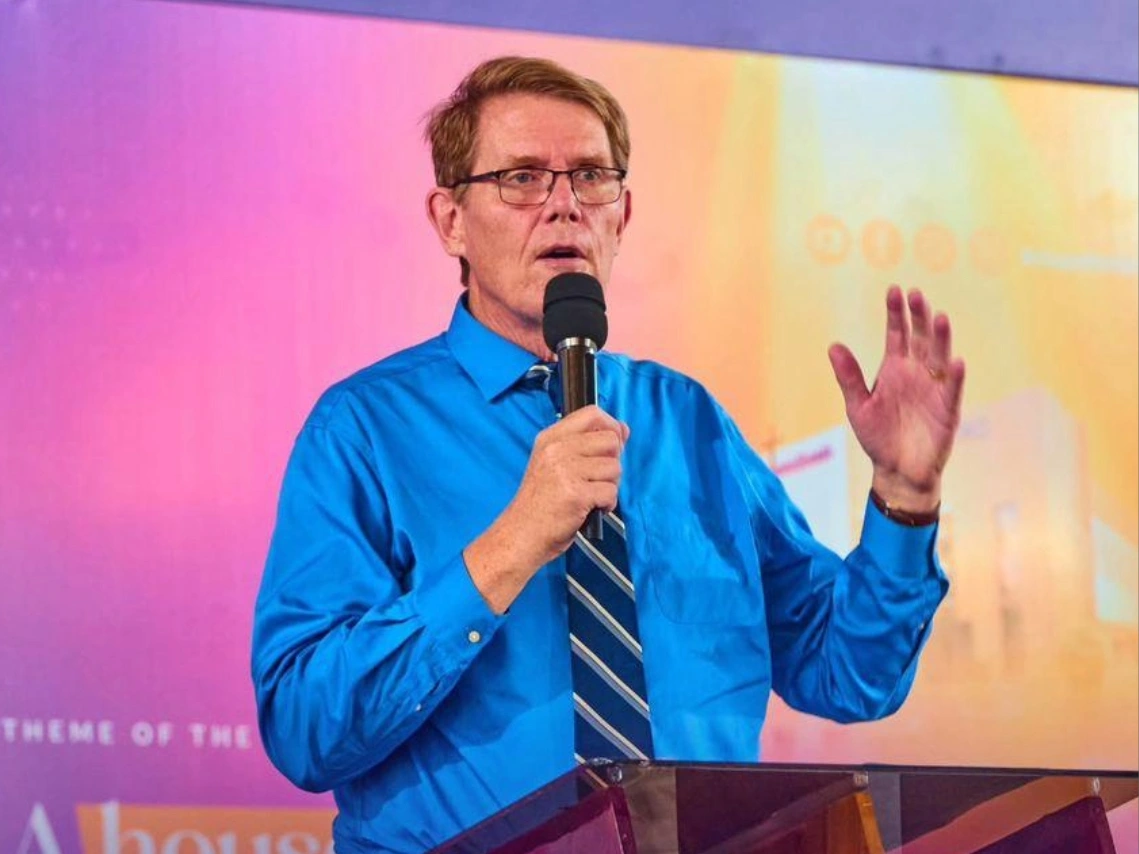
In this insightful episode of the Reflexio Podcast, Don speaks with Rev. Dr. Mark Durie about his journey from a childhood in Papua New Guinea to a career in academic linguistics and eventually to pastoral ministry in Melbourne, Australia. Mark shares pivotal spiritual encounters, including experiences of personal deliverance and ministering to those with troubled backgrounds, highlighting the spiritual realities faced by many.
The conversation explores his work with believers of Muslim background (particularly Iranians) who are navigating trauma and experience transformation after leaving Islam. Mark reflects on key differences between Islamic and Christian worldviews, spiritual warfare, and the unique challenges of discipleship among those from Islamic contexts.
The conversation closes with wisdom for younger listeners, emphasizing the importance of seeking God's calling rather than self-fulfillment. This episode offers profound wisdom and practical insights for anyone interested in spiritual formation, cross-cultural ministry, and the power of genuine pastoral care.
Links for follow up:
Mark’s Personal Webpage
Mark’s faculty bio at Melbourne School of Theology
Mark’s YouTube channel
Below are several links to Mark Durie’s book: Liberty to the Captives: Freedom from Islam and Dhimmitude through the Cross
On Mark Durie’s website: Liberty to the Captives
Kindle Version: Liberty to the Captives
Paperback on Amazon USA: Liberty to the Captives
Paperback on Amazon Australia: Liberty to the Captives
Liberty to the Captives available in multiple languages at luke4-18.com
Make sure to subscribe and give us a 5-star rating on your favorite podcasting platform. Let your friends know about The Reflexio Podcast.
Sign up for our newsletter to receive an email when new episodes drop.
Transcription
Don [00:00:00]:
Welcome back to another episode of the Reflexio podcast. I'm your host, Don Little, and today we're in for a special treat as I sit down and have a good, in depth, thoughtful conversation with Reverend Dr. Mark Durie. From Australia, Mark has been involved in pastoral ministry for decades and more recently in the last decade, involved with helping Iranians who came to faith in Christ be discipled and set free to be healthy and thriving Christians there in Melbourne, Australia. I think you'll find this conversation very insightful. Mark shares about his early years in pastoral ministry and how God kept bringing people into their church that had all kinds of problems in the past, and they were healed and delivered and freed and the church grew. It's very interesting to hear Mark talk about his early years and how God was equipping him for the ministry he has now, where he focuses increasingly on helping Muslim background believers flourish as followers of Christ. So welcome to another episode of Reflexio.
Don [00:01:13]:
So, Mark, welcome to the Reflexio podcast.
Mark [00:01:16]:
Thanks, Don. It's great to be with you.
Don [00:01:18]:
It's fun to be in the same place, even though we live in opposite sides of the world.
Mark [00:01:21]:
Yes.
Don [00:01:23]:
So many in your audience listening to this or watching it don't know who you are. So why don't we just start up by giving a little bit of your story, whatever you want to emphasize, but the things where God was active, that kind of stuff. Sure.
Mark [00:01:41]:
Well, Don, I've been a Christian all my life. I can't remember when I wasn't a Christian.
Don [00:01:45]:
Just like me. Yeah, I get it.
Mark [00:01:47]:
My parents were missionaries in what was then called the territory of Papua. It's now part of Papua New guinea, and I was born there. My first five years of life was there, strangely enough. I was baptized in the waters from the River Jordan because the dean of the cathedral there in a remote place in Papua, had a little bottle of Jordan River Jordan water. So he threw it into the font and there I was in Papua being baptized in the waters of the River Jordan. So that's how I began my Christian journey. I grew up as a believer. Certainly in my teenage years. I understood in a deeper and new way about my faith. And through my life, I've always wanted to sense the bigger picture of things. You know, I felt like sometimes I felt like I was just walking along in my little world and I wanted to know what more was happening around me and how to make sense of it. When I was at school, I used to play a lot of chess and mathematics and I suppose I'd be a geek these days. Or something like that, a nerd of one kind or another. But all my life I think God has pushed me more towards people and engaging with people. So I began my work career in academic linguistics, doing research and teaching and then
Mark [00:03:28]:
So. I think my life has been a journey away from abstraction, I suppose, towards people. When I was at school, I played chess and did Maths and was, I suppose you'd call me a nerd, although we didn't have that word at that time. But God has kind of led me on a journey towards more and more engagement with me people. So after I finished school and I did a PhD of a language spoken in Indonesia, the language of Aceh, which happened to be a very Islamic area. But I really loved living there. And that was a great, really enjoyable time of my life. I was in my early 20s and ate a lot of rice, drank a lot of coffee and was learning the local language.
Don [00:04:20]:
Just time out on that. Did you actually talk to the guy from the Maasai that's here? There's a guy from that part. Nope, you haven't met him. Maybe look him up tomorrow. Yeah, okay, go ahead.
Mark [00:04:34]:
Yeah. So I really enjoyed that. I wanted to work in an environment where there were a lot of speakers, millions of speakers of this language, where I wouldn't be an overwhelming presence. A lot of my friends had done research on Aboriginal languages in Australia that were in the process of dying. I just loved living there in that environment. And it was a big important time of my life. And then I had a career in linguistics for a while. I felt God call me into. So I'd already been, as it were, moved away from mathematics into language. And then I felt God called me into pastoral ministry. He said, feed my sheep. So I went to theological college and became an Anglican pastor and served for 21 years in Melbourne. And then in the latter part of my life, I've become really focused on reaching Muslims for the gospel, but particularly supporting the needs of people that have left Islam and become Christians. And as a kind of by nature quite an introverted person interested in playing games and mental games and solving puzzles, God has kind of pushed me into the world of people, helping people, engaging with people, understanding people. And the other thing I suppose about my life, as I think about it, is I've always tried to make sense of the bigger picture of things. And particularly what's interested me is the spiritual nature of life, the spiritual reality, the. The spiritual world. In which we live and to understand how that worked and how we find ourselves in relation to it. So that's also been a lifelong journey for me.
Mark [00:06:21]:
So here we are, you know, we're at a conference thinking about how to support the needs of people that have left Islam and become Christians. And what an amazing concept that is. So at this particular stage in my life, I'm really focused on that. And my passion is to see. Is to help people that have left the house of Islam and following Jesus, help them to make that transition well and be effective in their Christian life.
Don [00:06:55]:
So we've known each other for a number of years now. We could talk about any different things. But I'd like us to go into this whole area of spiritual and spiritual warfare. In the past, you've told me a story about your teen years where as a Christian, you were actually delivered in some form. And that sort of led into a path of being aware of the spiritual level at a deeper level than a lot of Christians are. I don't know if you want to.
Mark [00:07:26]:
Sure, sure. So when I was in my final year of school, we had a... My father was a pastor. He was principal of a theological college. And anyway, we had a visit from a pastor in Sydney. We were living in Canberra in Australia, and this pastor came down and he was working in an area called Darlinghurst or Kings Cross, which is the red light district of Sydney. And he was explaining to us in that way. We were sitting in our living room and he was explaining to us that they were doing a lot of work amongst prostitutes and drug addicts, and many of them were quite deeply into witchcraft, Satanism.
And he was talking about their experiences of deliverance ministry and what that was like. And as they were talking about this and he was explaining some incidents that they'd seen there, I began to feel quite sick and I began to groan and like something was wrong. And my father and this visiting minister, his name was Bernard Gook, they turned their attention to me and began to pray for me. And as they were praying for me and engaging with this. Whatever it was, this spiritual. As they were praying for me, engaging with this spiritual presence that was disturbing me, I had this conviction in my mind that it was a spirit of laziness. The word came into my mind really clearly. So I spoke that out. Anyway, they cast out this demon and we finished the evening and I went to bed. And I think I would have woken up the next day and thought, what was that about? It was a Weird moment.
But what was not weird was that my life completely changed. So up until my final year of school, I hadn't really been a good student. I'd been. Well, for example, in English we were supposed to write an essay, a literary essay every week all year long. And I did two all year. So instead of 35 or 40 or whatever it was. So I wasn't an ideal student and I got through okay. But I wasn't really dedicated to the learning project.
Don [00:09:34]:
Were you a little bit bored with it all too? Is that part of it?
Mark [00:09:36]:
I think it was. I just didn't. Wasn't focused. I would get distracted. I'd do other things. I didn't find it. I wouldn't say I found it boring. I just wasn't. I didn't really. Part of me didn't care in a way like I was. It didn't make sense to. For me to. Well, I think it was a spirit of laziness that seemed to be the issue. Anyway, so that was towards the end of my final year of school. School. And I managed to do well after get into. Actually I did an arts degree. And the reason why I did an arts degree is I wanted to understand where I was in the world and how the world worked. Instead of a science degree or an actuarial studies or something else like that.
Don [00:10:21]:
It's sort of parallel to me because I was good in math and science, but I found them easy. But figuring out people were hard. So I took literature and social sciences, my high school to sort of try to figure out life more. Very similar. Interesting. Yeah.
Mark [00:10:38]:
And I started off doing a lot of Maths in Uni, but I found I switched into linguistics in the middle of my second year. And then I switched out of just linguistics, you might do with a book to saying, I want to go and live in the field and actually. And wrestle with the reality of life.
But anyway, so the next year when I started at university, I was completely. Completely changed and I was very focused. I enjoyed the study. I did well. I did very well. And got what we call a university medal, which they give a couple of those each year to two students. Yeah. The top two or three students in the whole undergraduate school of the Australian National University. And scholarships opened up and, you know, I was in my mid to late 20s. I was a visiting fellow at MIT and Stanford, UCLA. And at the age of 30, I was head of a department of almost 30 people at Melbourne University. So it was extraordinary.
Don [00:11:35]:
Yeah.
Mark [00:11:35]:
And I was elected to the Academy of Humanities, which is something that normally people experience in their 50s or 60s. And I was 32, 33. So, yeah, none of that would have happened, I think, unless God had, in that 10 minute encounter, changed my life, completely changed my life.
And lots of things flowed from the fact that I had such. The track that God opened up for me at that time. So, yeah, that was an encounter.
And I was aware that my father was engaged in praying with people and for people who'd had encounters with the demonic needed to be freed. He told me one story once. I was at Union University at the time, but he'd been called in by a church in Canberra to help. He was an Anglican, but it wasn't an Anglican church, it was another denomination. And their issue was that I think one of the wives of the elders had began to act, begun to act very strangely, was sending, as I recall, pornographic letters to the, the members of the congregation. It was really bizarre and out of character for a Christian woman. So they thought this was a spiritual issue. So my father was called in and maybe there were others. And he explained to me that they'd ministered for many hours and it was very dramatic. I think he said that when the demons left, she threw up and this foul smell filled the church. And it was just one of those, like, really and then.
But what was interesting is 10 years later, 12 years later, at my father's funeral, a pastor came up to me and he was from that denomination and he said, oh, your father came and ministered to us and the church was never the same again. We know it was a huge breakthrough for us spiritually. And I thought, I didn't say, but I thought, oh, I know what that was. And so we were open.
My wife Debbie also had had encounters with the demonic in different ways, working in a psych ward as a nurse and other ways. So we were sort of open to the reality of the spiritual realm. I've sometimes wondered whether the experience of growing up in Papua New guinea was part of that as well, because we were surrounded by. Obviously there were spirits that troubled the worship. Yeah, it was just part of that. So, yeah, that was a, a reality that we were aware of.
And, you know, sometimes people might say, well, why are you a Christian? You know, why have you made that decision? And I could say, well, I grew up as a Christian, but for me, and Jesus has always made sense to me and the Bible makes sense to me and it shaped my thought very deeply. Listening to the Gospels every Sunday at church and my parents would, we would read the Bible at the dinner table. And pray for each other and talk about a day. So I was formed in it.
But I think probably more than anything else for me, having actual experiences of God showing up, miraculous answers to prayer, God's intervention in circumstances that could not be explained. When I went to Indonesia on field work, I had quite a lot of recording equipment. And in those days your field recorder was reel to reel tape recorder. So it's a big and heavy thing. And I needed a microphone and I needed enough tapes. So I bought a steel metal trunk and I shipped it. And I contacted the airline in Australia. They said, yes, you can, can send it through to Medan. You'll fly through Jakarta, get your visa done and it'll be automatically sent through to Medan. You can just pick it up in Medan and it'll be cleared and you can have it. And so when I got to Medan, oh, it's not there. And so I went to my final destination and called the airline a few times and it wasn't there and it wasn't coming and what was happening. So in the end I realized it was still, still back in Jakarta. So I went to Jakarta, I flew back. It's quite expensive to try and find my, my steel case. It was quite a big steel box.
And anyway, so I went into the building, the head of customs and duty, and I was waiting in the foyer. I had no idea how to clear things in customs. This is not an easy thing in Indonesia. And I realized later that the embassies employed people full time just to do that. They had no other job but to try and get stuff out to clear customs. So I go up to the. Not knowing what to do. I find myself in the foyer of the head of customs. And just ahead of me there was a Christian guy, an American who'd come into the country with a box full of Bibles or literature or something, and he wanted to clear them. And the head of customs just was tearing strips off him, you know, giving him a hard time and turned him away, basically said, no, I'm not going to help you. I thought, oh, what am I? How am I going to get through this? I can't do my research. How am I going to get my luggage back? Have they already opened it? Have they sold it all on the back? What's happened to it? Anyway, so I go in and I was quite young, I was 22 or 21, I suppose, and yeah, 21. And I explained that I'm studying in Aceh and I was hoping to get my case out, my steel box so he appoints his assistant to march through his many layered and many storied offices to get my box out. And there's about eight or nine people that have to sign off on this. And at one point or a couple of times the people were unwilling to do it, probably because I wasn't paying the required bribe. But the assistant to the head of customs and duty would get really mad at them and make them do it.
So in the end I've got my box, you know, and then the boss says, oh, would you like to come to my house for a cup of tea? So we go to his house. He's a senior Javanese. Like the Javanese social system is like a caste system and if you're in an elite, that's a big thing. And he was an elite guy. So we go to his house and we sit down for a cup of tea and his servants come in on their knees, you know, bringing the tea and coffee in on their knees, which they, they lay down and they're kind of bowing, you know, and then they shuffle out backwards on their knees. But knowing that I'm wanting to go to Aceh, he invites his personal kind of witch doctor type person, a Dukun who's an Atchenese man. And he said, oh, he can introduce this, I can introduce this Australian to this. So we have a rip roaring old time talking about things and his son drives me back to my hotel and I have my box and I take it back with me and I get home. But when I get home there's a letter from my father.
Don [00:18:43]:
Now this is home or to Ace, back in Aceh.
Mark [00:18:46]:
When I get back to Aceh with my box and I've got everything I need, there's a letter from my father and he says, we were praying tonight and we believe your box is cleared. And I thought it is. And how was it cleared? It was amazing. I saw that it was impossible for me to have done this. I could have spent weeks.
Don [00:19:05]:
Your father interceded.
Mark [00:19:06]:
He had no idea except that God spoke to him and they were praying. So, so many examples of that. And you know, sometimes don't. God doesn't have to do things in elaborate ways, which was kind of elaborate there, but he does things to say, this is important, you need to pay attention. So anyway, one reason I believe, a big reason I believe in God is I've seen the power of God and I've seen it expressed in the context of prayer, of the truth of Jesus, words and everything. So yeah, so that was, that's part of My formation is the reality of living in a spiritual world and being aware of that. I think one of the great diseases of our Western culture is the forgetting of that, the loss of language and insight. And actually so many people are hungry for a sense of connectedness and that we've invented this word spirituality, which is a kind of expresses our longing for connection. And spiritual movements have expressed that in our society. But still at the base there's this hunger and an emptiness that I see all around me.
Don [00:20:22]:
So correct me if I'm wrong, but I remember that at some point, I think while you were still a linguist professor, or maybe when you became a pastor, you and Debbie is your wife, right, you started to minister to street people and prostitutes yourself, or that didn't happen a lot?
Mark [00:20:43]:
No, we weren't ministering to street people and prostitutes, but when I was at the university, we were in a Reformed evangelical church and there were people in need in the church, spiritual need. They were depressed or they had significant issues. And it was, I was just aware that the clergy didn't really know what to do with them or didn't know how to help them. And for some reason which I never fully understood, we ended up being referred to us. So Debbie and I would be praying for people and seeing God answer prayers too. But after I went into ministry and was ordained and began to work in a church as an assistant minister and then later as a minister in charge, we saw a lot of people coming to faith in Christ. It was interesting because I had never really led anyone to Christ, you know, and I was being ordained and I thought I was a bit of a fraud actually, but I went ahead and, you know, you do what God asks you to do. But no sooner had we had we gone into this full time ministry that we began to see people coming to faith in Christ. And the little church that we were serving in, this sort of May morning service went from 20 to 70 and they were all new Christians. So it was a very exciting time.
Don [00:22:02]:
Was it because you were sharing the gospel or because you were caring for and ministering to them? And they were, I mean, how were people coming to faith?
Mark [00:22:09]:
Well, we were running an alpha course and they were being touched by that and we were praying for people and prayers were being answered. Actually, it was quite a speed spiritually conflicted place. There's a lot of spiritual, I'd call it spiritual warfare going on in that place. So the, the church had had a house attached to it, which was a small house, but they thought maybe the juries could live in that it was like the curate's house, you know, and. And the vicar, I think he showed us in, if we had a look at, to see whether it would suit us. And when we went into the back bedroom, there was. There's a sort of black altar on the wall with a skull of a goat or something and a doll hanging upside down with pins in its eyes. I remember I said to my boss, I think we'd probably prefer not to live in this house.
Don [00:23:02]:
It was attached to the church, right?
Mark [00:23:04]:
It was the church's house. They were renting it to someone who was doing voodoo, you know. But we had a whole series of incidents like that in that church. We ran an Alpha course and the Satanist joined the Alpha course in order to prove that Satan was stronger than God. And there was a.
Don [00:23:22]:
And God showed up in the Alpha.
Mark [00:23:24]:
He was showing up and people coming to Faith in Christ. And they had this community organization renting part of the church's facilities and they sublet their part of the building out to a group of women. And I came in one morning in the middle of the year. It was like the 23rd of June, and there in the photocopier was Christmas, like Christmas carols, but they were winter solstice carols and they were in praise of the Two Horned One and the goddess. It was like God, you know, come rescue all ye pagans all, you know. So they were Christmas carols had been rewritten for worshipping pagan gods. Wow. And. And the floor where we had tin coffee in the church had these piles of bits of wax in the carpet because they had candles and they had a bit of ritual for the solstice and they were using the church photocopier to print off their hymns to their gods. And we had a whole series of these events in that church.
Don [00:24:26]:
So did you have to kick them out and cleanse the place?
Mark [00:24:29]:
Well, I said to my boss, I said, I think you might like to have a look at this.
Don [00:24:34]:
So it wasn't you that made the decision to have them there?
Mark [00:24:36]:
No, no, not at all. What had happened was the church had sublet part of their facilities to community organization, who then let it out to these, to these women. And so the church was not in control of who was using the facilities.
Then another time they rented it out to a yoga, rented out our hall to the yoga group. Now there's yoga and there's yoga, so some yoga is just sort of exercised. But this yoga group was worshipping and their guru was visiting and they had him up on a pedestal on a raised area. And everyone was sort of sitting around at a low well below him, and they were chanting and honoring him and so on. This was on a Sunday night, and we were running evensong, an evening service in the church. And I came out and saw a Paul, that here we are. We were renting this. This hall to a pagan activity of worship. And the person that had organized this for the yoga group, she said, isn't it wonderful? We're each worshiping in our own way here in the building. And I was thinking, well, that's interesting. That's interesting.
And there were other things that happened. This is just even. Just not quite the half of all that we had. So we had a sense that we were ministering on a kind of a wild frontier, that this church had become infiltrated by all these foreign spirits. Yeah, there were disturbing things happening. We had a pedophile join the choir. That was complicated. And the choir was quite rude to me. So the minister sacked them. They weren't allowed to sing. And as we. He was, for some reason off doing something else, he left me to lead the service that there was no choir in. And one of the little old ladies in the church, she was actually a good person, but something snapped in her as we started the hymns. And she came down. It was a long church. She came from the back to the front screaming, where's my choir? Why don't I have the choir? Meanwhile, we're singing Lift High the Cross. And here I was dealing with this, and she was kind of taken over by something that was wrong in the church. We actually got on really well after that, and it was totally out of character.
Don [00:27:03]:
It just happened. You didn't pray for her?
Mark [00:27:05]:
I think we. We talked and I did pray for her. Not present. But, no, it wasn't triggered by me. It was just. There was this bad stuff going on in the church, and she sort of found herself falling into something. So lots of confrontations. I mean, I found myself with a bottle of anointing oil, marching around the church, anointing all the pews and praying and asking for the Lord to cleanse the house of God.
Don [00:27:32]:
Different after that.
Mark [00:27:32]:
Yeah, it was, actually. The church grew and it flourished, and it's a thriving church now. It did well. So it was church planting.
Don [00:27:40]:
They don't rent out part of their facility anymore to pagan goddesses.
Mark [00:27:46]:
About eight years later, I spoke to the assistant there. I said, do you realize that the room that you have your office in now, this used to have a pagan altar in it? Said, oh, I didn't realize that. And he had this experience himself of being delivered when he was a youth in South America. And so he said, oh, I think I'll get our intercessors and we'll pray through that building. I said, that's a very good idea.
So we were. This is affluent Melbourne suburb. This is upper crust, you know, wealthy Melbourne suburb. But it was. It was like these forces were coming in on this little church. And. And so it was on a frontier. Then later after that, we served in two churches, but we began to find that people were coming to faith and joining the church out of quite conflicted spiritual backgrounds. So New Age, even Satanism, witchcraft, paganism. And we had more than our fair share. And it was like, God, why are you doing this to us?
Don [00:28:49]:
Bring all these people to us?
Mark [00:28:51]:
Why aren't they going to the church next down the road? Why did they.
Don [00:28:54]:
Because you could help them?
Mark [00:28:56]:
I don't know. But I think in retrospect, God was. Was training us. And we. Debbie really led in this, my dear wife, and she sensed what was happening, and we got involved in a ministry called Cleansing Stream, which helped us understand and gave us skills, and she did other training as well. And why was this important? Well, what we found was that these people would come to Christ and it was wonderful. Like, they come out of quite a dark place.
But even though they'd given their lives to Christ and they were 100% committed, absolutely war broke out inside after that point. So they'd be coming to church as Christians, but the very act of coming into the church would trigger off this, you've got to get out of here. You've got to leave, get out of here. In their minds and coming forward for communion. I could see them coming forward like they're kind of, you know, struggling to the front of the church. And they would come and say, look, this is really difficult what's happening. And so what we found is that we needed to kind of trace back with them what they'd been through and what they'd committed to and undo that. You know, so if they dedicated themselves or made a vow or whatever, they needed to be. They needed to be liberated from that. And so we learned a lot about that.
Don [00:30:28]:
Was it mostly sort of trial and error and prayerful discernment, or was the Cleansing Streams helping?
Mark [00:30:34]:
Yeah, there's no doubt being involved in Cleansing Stream, which is a ministry that came out of the US that was very helpful and that involved. If you got involved in that and did the ministry track, you'd pray for scores of people, you know, on a weekend. So you. And it was supervised. There were people who could step in if you didn't quite know what you're doing. And some of the experiences weren't so much with the occult, but they were in the area of inner healing and deliverance.
So there was in that first church where we had all those difficulties, right next to the church, there was an apartment with a little lady in it. She was quite little, she was 84. And she was a tough lady. So she was swearing a lot. She'd be up at 3:00 in the morning, sweeping the leaves off her driveway and shouting out oaths and swearing. So she was like, don't come near me type of person.
Anyway, we put up our sign about Alpha and eternal life. And she walks past and she says, eternal life. And so she comes along and joins the Alpha group, which is mainly retired people, at lunchtime, and she sits in there and she doesn't have a clue about how to relate to other people in that context. And gradually, bit by bit, she tells us her story and she gives her life to Christ. And the story was that her father went off to war in the First World War and didn't return. Her mother died just soon after giving birth to her. She was an orphan. She became a nurse, which kind of gave her structure and was the saving of her. A young man wanted to marry her. It was before the Second World War was starting. And she said, well, I'll marry you if you come back after the war. She didn't want to go through what happened to her. So he got through the war, they got married, came to Australia, then he died of an asthma attack at a train station.
She had two or three kids and was on her own in Australia. She wasn't originally Australian, she wasn't. She was from the UK. And she made a vow, I will never love anyone else ever again. And she said every few years I'd sell my house and go somewhere else so that I wouldn't make any friends. And she said it almost ruined me. And so I was meeting her then at the end of her life, and she'd had 30, 40 years of this regime, of her vow that she'd made, and all that swearing and offensiveness. This was living out that vow. She was trapped by that vow. But when she gave her life to Christ, she renounced that. She spent days in the church weeping and repenting. And one of the most beautiful moments I ever have had in ministry was we were having communion one morning and for the first time, she felt Susan, her name was. She felt she could take communion. So she gets up and begins to come forward, and one of the other ladies who was on the group with her takes her hand. And you see these two ladies coming together to take communion. Friends. She had friends.
Don [00:33:35]:
She had a friend.
Mark [00:33:36]:
And I learned, for example, that the power of a vow to destroy a life and the power of Jesus to set someone free, even after 40 years, you know, her way of life changed. She became as sweet as anything, had many friends. Yeah, the ladies just welcomed her. It was amazing. So that was. We had a lot of those sorts of experiences of seeing that something specifically needed to shift in her. I mean, God did that spontaneously, but I sort of observed it. And she gave her story in fragments, and I collated it all together and could see the amazing power of what we can surrender by our words unwittingly, and the power of Jesus to set us free from all that.
So all these experiences accumulated, and Debbie particularly worked hard on the process of what does it mean to lead someone to Jesus? And we really began to understand that they need to not only choose to follow Jesus, they need to choose not to follow other things. And if they've made a commitment in another direction, they need to renounce that.
Don [00:34:48]:
That's behind me. I'm no longer there.
Mark [00:34:49]:
That's right. Sometimes when I was working amongst Iranians in Melbourne, I'd say, it's just like football, you know, if you play for one team and then you change to the other team, you have to stop kicking goals for the first team. You can't be kicking goals in two directions. I said, if you do, you're going to have a really rough time. You know, you're in the firing line from both directions. So I would say to them, if you want to play football for Jesus, you've got to stop playing for Satan. You know, you've got to make a clear decision, and it means bringing everything in line.
And one of the things I really learned about the spiritual reality is that the details matter, the specifics. Like, if you like Susan making that vow. That vow was powerful. It was if in the spirit realm, the spirit said, okay, we can use that. We'll make that happen for you. Susan and I think she probably had know or fully idea of that time, of just how significant that was. But so we found that where people had gone through a particular ritual or made a commitment of some kind or submitted themselves to some regime, they needed to actually deal with that specifically. And one of the beautiful Things about that time was it was really hard. Like, we felt we were in constant battle. But one of the beautiful things was saying seeing people profoundly changed and transformed.
Don [00:36:20]:
So we don't have a long time. It's just one conversation. But I'm aware that your focus has shifted somewhat from general pastoral ministry. God brought Islam into your life. Can you just share a little bit about the insights from this experience of years of pastoral care? Understanding how people were bound in different ways, then being led to pastor help Iranian Christians, and seeing connections between their struggles and your understanding of Muhammad because of your.
Mark [00:36:58]:
Yeah, just.
Don [00:36:59]:
You don't have to go the whole story, but just because I think whoever's watching this, I think a lot of them are ministering among Muslims or know Muslims. Just to share that part, just the piece. Because I think it's been a significant contribution to the whole discipleship of...
Mark [00:37:18]:
And please feel free to edit this cut out things.
Don [00:37:21]:
Yeah, it's okay. Well, don't worry.
Mark [00:37:26]:
So we had had these experiences of. Now let me start this again. I think as a pastor, my job was to lead people to Christ and help transform their worldview. So it's a very kind of specific thing to help someone rebuild how they think.
And after 9 11, I realized, firstly, I knew a lot about Islam because I'd lived in a pretty radical Islamic context in Indonesia. The most Islamic group in Indonesia was the group I was with. And then I realized that all the people around me had no clue.
And worse than that, in our culture in the west, we have this view that all religions are the same. Yes. They're expressions of the human heart's desire for connection and meaning. People are basically good. So religions are kind of good because they're expression of the goodness of people seeking to be good. And also the differences don't really matter. You could make a country out of multiple religions, and it's just as good. You know, in fact, the more the more, the better. This diversity is beautiful, you know, so these. These are just. This is the wallpaper of life in the West. And. And.
And I realized that. That really. That Islam is actually very different. And I needed to understand it properly. I'd always avoided this when I was in Indonesia. I never tried to really sink my teeth into Islam and understand it. I sort of sensed I'd get into trouble if I did. It would have consequences.
But then I suddenly realized when I saw those planes going to those buildings, I knew immediately who had done it and why. And that was quite disturbing. Like, I recognized the verses found in the backpacks of the bombers, you know, I knew what they. Where they were because I'd heard them in Aceh.
And then I felt some responsibility. So I went to the library and got out the life of Muhammad, you know, a thousand pages, original source, and also books of his sayings. They're called hadiths. And I fourteen volumes of these. So I spent the summer reading all this material, thousands of pages. Bukhari, Bukhari Sahil, Bukhari Sahib, Muslim.
And I was reading it from the point of view whose job it was of a person, whose job it was to transform someone's worldview along spiritual lines. So I was saying, what kind of person would be generated by taking this as the canon, as truth, as God's truth, and especially Muhammad? What kind of person would I become if I wanted to be a person following Muhammad's example, which Islam does require? And then I was also asking, well, how does this differ from Jesus?
And I must admit it was a painful journey. And I felt quite depressed the more I got into it, because I could see what I saw in terms of how this would shape people was deeply distressing for me. And I also sense the people around us in our culture, in Australia and society and Western countries, very small capacity to do that kind of thinking that I was doing. Because firstly, people don't really believe religion has any power anyway. It's just a kind of cultural choice. It's very personal. They're all the same. So all these really bad ideas that just prevent anyone from thinking about those things.
But I had a different view. So I came to the view that Islam was very powerful in its capacity to form people more powerful than communism, for example, or political ideologies, and that it was very important for the church to understand these things. So I began to teach and speak as part of a team. And the topic I would speak on, understanding Islam, how it worked.
And I would also speak about what it was like for Christians to live under Islamic rule. And as I studied that, some of the things about that reminded me of witchcraft and the bondages that people had come out of when they came to Christ. And I actually saw there was a kind of a spiritual power that needed to be addressed. So as I was speaking about Christians living under Islam and the need to be free. And there was a lot of fear at the time. It was after 9, 11, so a lot of people just kind of were afraid. And I would.
So I would then say, well, let's do something about this and invite people to stand and we renounce Fear and declare the freedom of Christ. And a lot of people were so encouraged and their lives were changed, and someone had become effective in reaching out to Muslims. So I just saw this fruit, and then I thought, well, I've looked at what it's like to be a Christian in an Islamic context and the effect that that has on them.
But what about if you're a Muslim? You know, what. What is the spiritual bondage of the Muslim? My friend Susan, her spiritual bondage was that she made a vow that she'd never love anyone else ever again. But if you're in Islam, what are the things that determine your spiritual worldview? And they were all there in the life of my Muhammad, in his patterns of life and what he did and said and the things he bound people by. And it gets embedded in Islamic religion.
So I wrote a little book around about 15 years ago called Liberty to the Captives, which laid out my understanding of what Islam imposes on people, both Muslims and non Muslims. And I had prayers in that and resources to help people be set free. So I was using the spiritual worldview, my understanding of how the spirit realm works and how we enter into spiritual covenants, make agreements. We bind ourselves to things that are good and bad. And I was applying that framework, that worldview, to the topic of Islam with a suggested solution. And I believed it would work, because similar solutions worked for people who were coming out of other dark places.
And people began to ask if they could translate it. And that happened. But it wasn't long after I wrote that book that one day around 60 Iranians came to our church, and they'd just become Christians. They'd come on boats from Indonesia, fleeing Iran. And they came and they said, look, we're having these meetings in another part of the town. Will you be our pastor? We need a pastor. We need someone to look after us.
And since I'd written a book on how to be free of Islam, I thought I couldn't really say no to that. So I began to be busy helping them. We were holding revival meetings. I remember one night, a young man was preaching, and he gave an altar call. He said, you know, who amongst you would like to give your lives to Christ? And 28 people came forward, and he looked at me and said, mark, what do I do now? So I said, just do this and this and this. So it was a very exciting time.
And after some months, they wanted to become a church. So they'd been worshipping in other churches but meeting with us in the week. So we did, and we planted a church. And it was a really extraordinary experience and lots and lots of miraculous events. People healed, lives changed, a lot of trauma. People coming out of Islamic context have a level of trauma that I think if most ordinary Western people really comprehended, they'd be quite shocked. There are many reasons for it.
You know, I think in the west, we think of Christianity as being about forgiveness of sins. But what I found is that for these former Muslims, coming to Christ was about finding peace. It was the end of the war, you know, the inner war, the war with others, the fear, the need to be always on your guard.
I had an amazing conversation once with a couple that now lead that church, which we invited them and they were trained and now they're doing a wonderful job. And we were just talking and I mentioned something about the weather, and they said, oh, we love it the way you talk about the weather in Australia. I thought, really? I said, don't you talk about the weather in Iran? I said, no, life is too stressful. We don't have the space to talk about the weather. Life is just difficult.
Don [00:45:45]:
You don't talk about trivial things because there's too much troubling things.
Mark [00:45:49]:
We can't. Yeah, no one wants to. It's too painful to talk about. Why are you bothering talking about the weather? Like, I'm in pain here, you know. So they said, we love it here. It just makes us feel so good to talk about the weather. Things are not. Don't look the same, do they? And that was a really interesting journey.
So I went into that encounter with these people who loved the Lord, very passionate, but needed a lot of help and caring a lot with them. And we have these skills, you know, that. That we'd learned about how to help people be healed. So it was full on, you know, a lot of praying for people, helping them, dealing with sometimes demonic issues, sometimes trauma. And so what we did in discipling, in helping these people who left Islam, they did not like Islam at all. They fled Islam. They blamed Islam for Iran.
Don [00:46:50]:
Some of them weren't Muslims. By confession.
Mark [00:46:51]:
They had already rejected Islam, you know, but most of them were. Their birth certificate, their identity document would say Islam. But most of them, many of them, hated Islam. In fact, many of my Iranian friends have said that 90% of Iranians dislike Islam intensely.
Don [00:47:12]:
I've heard that now 70 or 80% of the mosques in Iran are closed because no one's going to them.
Mark [00:47:17]:
I've been told that, too. The doors are locked. There's chains on the doors.
Don [00:47:20]:
You know, no one's going.
Mark [00:47:22]:
They're vandalized. I was told that, like, 10 years ago. Yeah, it's. And I think. I think what happened is that the. This has happened in a number of places in the Muslim world.
So the ayatollahs took over in 1979, and they said, Islam's the solution. Life's going to be great now. But it got wrong. It went terrible. And these people that had taken over religious as religious people, they became corrupt. So everything became kind of bad, and there's a lot of pain in the society, and they blame the religion. Anyway, they end up in Australia now. So these are people who are culturally Muslim. They've been shaped by the values of a culture that's been steeped in the. In Muhammad's values and his life. And it runs very deep in people.
And the question is, how do you help them build a new culture? There are some beautiful things in Iranian culture, and there's some bad things in Australia and Aussie culture, but there are some things that are really not good in Iranian culture. And the challenge is, how do you rebuild people's worldview and their emotional worldview, and how can you bring healing? So we were sort of flat out applying all the skills we'd learned to help people rebuild their lives, which they really wanted to do.
And it was such a joy, and it was amazing, too, seeing the answers to prayer. God showing up. My friend Kaveh, who gave a testimony today, had this condition that caused him such... Some of these things were small but powerful. He had this condition that caused him to hiccup for two or three days at a time. And that would happen every week or two. Then he could hardly drink or eat during that time. Anyway, he turns up to church one day, hiccuping. And I just came over to him and said, in the name of Jesus, hiccup, stop. And they stopped. And he was like, I've never seen this before. Like, I've had this for years and years, and nothing has ever been able to shift them. And there were so many, so many amazing instances like that. One woman, I was preaching on, there's power in the name of Jesus. And after the service, it was a Saturday night, she goes down to the front of the church and she prays in front of the cross for a while. Anyway, the next week, she came to me and she said, I need to tell you something. She said, last week after the service, I went forward and I prayed for my mother because she's in Iran and she's been diagnosed with cancer. And it's as big as your fist. It's breast cancer. And she was due to go in for surgery on the Monday. So it was a Saturday night. Australia's ahead of time, so not yet Saturday night in Iran. And I prayed for her. And she went to bed that Saturday night in pain, but she woke up without pain. And when she went into the hospital on Monday morning, they did one last scan and there was no cancer. It had gone completely disappeared over the weekend. And so this woman, she said to me, you know, Pastor Mark, there is power in the name of Jesus. I've just seen it.
Mark [00:50:34]:
I said, yes, there is. Yes, there is. So we had a lot of wonderful experiences. And what was really, what I found really interesting was God was on the move. Like God was doing things or in people's lives. Someone hadn't spoken to his father for 10 years and you'd pray. And the next week, oh, my father called me. You know, a lot of things like that amazing provision in different ways, and it was very exciting.
But at the same time as this, you might say these good fireworks were happening. You've got this very steady, patient work of helping a whole group of people rethink how to be, how to relate. Maybe. I just. There's so much that I could share, but just one little thing.
So Islam as a religion is very focused on who is better than who. So there's a famous verse in the Quran which says to Muslims, you are the best people that Allah has raised up. You command what's right, you forbid what's wrong. So Muslims are the cream of the cream, the best of the best. In fact, Muhammad said, I am the best of the best, the choicest of the chosen. Jesus didn't run around saying, I'm the best of the best.
Don:
He just demonstrated it.
Mark: He was the best. Yeah, he didn't vindicate or justify himself, but Muhammad did. So the orientation towards being a winner and not a loser is very deep. The word losers is in the Quran a lot, you know, and so there's a kind of will to superiority. And it's very. It's incomprehensible from a Western Christian perspective. One of my students at the university became a Muslim. And I remember speaking to him a few years later and he said, he was on the phone, he said, mark, of course a righteous person is superior. And I thought, that's not what Jesus said. Quite the opposite. I thought, man, your thinking has been changed in a few years from a kind of secular view of human beings to this Islamized view. So anyway, this Affects the Iranians a lot. And everyone wants to be superior. What does that mean? Well, when we appointed a couple, a young couple, to lead the church, some people would say, why did you appoint them? Why didn't you appoint me? You've hurt me.
Don [00:52:57]:
I'm better than them.
Mark [00:52:58]:
I'm better than that. I could do a better job. And a newcomer will come in and they try and take people away. Oh, you don't really know. The pastor doesn't really know what he's doing. The poor fellow is trying his best. If only people came to me, they'd do well.
Now I have spoken to people who are working among Iranians who, who've had their churches split again and again and again by this. And churches just die. In some of my darker moments, I might say, well, churches where people of faith go for their faith to die because these kind of really bad pressures arise.
And so we worked hard at that. We ministered to people, we prayed for people and struggled with that. We help them overcome feelings of rejection. We help them to not respond with offence. We taught about Jesus washing people's feet. So powerful. One of the last things Jesus does with his disciples is he washes their feet and he says, unless you receive this, you have no part in me. And he says, you need to go and do what I've shown you to do.
And one of the really wonderful things I experienced, experienced Don, through this journey was, you know, when I read about the life of Muhammad, I was really deeply distressed. I can hardly express how grieved I was that billions of people would be guided by this. But the good thing was I really understood Jesus a lot better. And I'd grown up with Jesus in my head. Like, you think it's normal to want good things for other people? You think it's normal that love means wanting the best for other people. You think it's normal that you treat others the way you'd like to be treated. You know, you think it's normal that a stranger or someone you don't know deserves respect and to be honored.
But these are things Jesus taught and many societies aren't like that and Islam is not like that. And so I was, I kind of understood the psyche of Jesus and I understood the impact he had on his followers and, and you could see it in their letters. They'd speak about this, you know, love your enemies and it meant so much to them. So that was a big win for me. And I suppose I became a lot clearer about how to help people.
I feel deeply grieved about the West in our age, I think we're living off an inheritance, basically the inheritance of Jesus, which is being eroded. And fundamental building blocks of our society and culture that are dependent on biblical truths, such as the belief in sin, the reality of sin that's being eroded.
Let me just give you one example of that. Sorry, I'm going on a bit. But the Bible teaches us that. That people are sinful. Everyone is. There's no exception. Doesn't say they're all equally bad, but there's certainly none of them good. Really good, you know. And that's affected our politics. How has it affected our politics? Well, we have this principle called the separation of powers. You don't concentrate all power in one person. You've got a separate judiciary and you've got, you know, you've got the government that makes the laws and the executive part that implements them. And you have. The police are separate from the judges. And you've got all these structures in society where power is not concentrated. Now, why do we do that? We do that because if you put too much power in one person, it would corrupt them and their inclination to sin would be unchecked.
And we see that with communism like it was supposed to create this brave new world and it created monsters, absolute monsters. I sometimes am grieved when I see young people kind of leaning towards communism. They have no idea how corrupting that was and how many millions were destroyed, you know. And so the doctrine of the separation of powers comes from a Christian belief in the reality of sin and the need to. And it's like an instinct. Like, you see that this instinct, instinctively embedded in our culture has produced these structures. But what I see today is the separation of powers is being broken down. The judges are being pressured to be more political. You know, we see this in Australia. The courts are becoming more political.
Don [00:57:25]:
The US has been huge in the last five years.
Mark [00:57:27]:
Huge in the US and we see, you know, the premiers of our states using the police to intimidate the people. You know, that's not what the police are for.
Don [00:57:39]:
So it's the breakdown of the assumed understanding of life that Jesus gave through hundreds of years of Christian culture. But that's being abandoned.
Mark [00:57:52]:
That's right. The instinct that recognizes human sin is being eroded. And when people got rid of the idea of sin, they thought. They thought they were being pretty smart. Why have all this guilt, you know, Catholic guilt, whatever it is, they say, let's get rid of it. Then we have spiritual freedom, but actually our whole security and safety is built on, it's informed by this principle.
Don [00:58:16]:
It's shaping to avoid sin getting too powerful.
Mark [00:58:19]:
Another one is love your enemies. Jesus said. That means that you can disagree with someone profoundly and not hate them. Just because someone has an opposing political view to you, you don't have to hate them, you don't have to destroy them. But that has been eroded.
Don [00:58:37]:
This might timestamp our video, but I watched this morning, the memorial for Charlie Kirk in the US and so many people, I mean, his wife said, we forgive the killer we love. And Trump gets up and says, I don't love these enemies. I despise them. But they seem to love him. Yeah, exactly. And it's like, okay, he doesn't get it. But these Christians, they actually understand it, what it is.
Mark [00:59:05]:
I think Trump hasn't, or maybe he has grasped, but he hasn't grasped. If everyone thought like him, the kind of world that would be produced would be pretty unsustainable. They'd all be killing each other. And actually, he's affronted by Putin's willingness to, to send tens of thousands of people to their death. Like, it's offensive to him. He can't understand it, but it's actually the logical outcome of that worldview. Yeah.
Don [00:59:34]:
So just taking the conversations from big personal, as we sort of come to an end here, You've done. Your life has gone from being an academic to a pastor, and now writing and nurturing Muslim background believers. Is there some point in your life where you've, I don't know, gone through a struggle that really shook you, that you've had to lean on God or that you've seen God's grace in a new way that maybe you could share just to help people understand a little bit of the inner you and not just the ministry. It's asking a personal question.
Mark [01:00:20]:
You know, some of the big personal struggles in life, it's hard to talk about because other people are involved. And so that's hard. I think I found two things really difficult in life. One is, by nature, I'm an introvert and God has called me to be a pastor.
Don [01:00:36]:
That's an extroverted ministry.
Mark [01:00:38]:
It's painful, you know, like sometimes I get halfway through the day and I wish I could just melt, just get dissolve into my chair, you know, and have a day of busyness. It's hard to explain, but, you know, your job is to let people be available for them. And that was. It might sound trivial, but it was challenging. I could easily walk into a room and not say hello to people. It's just like I was in my. It was challenging. It was challenging.
But really harder than that was just the level of, of battle that we experienced. And there were a few cases where people around us on our team sort of crashed and that was very painful to see. And there was a toll, you know, there was costs involved in ministering, in the constant sense of this pressure, dealing with darkness. So I think that was hard. It was really good when we retired from the parish and went to live by the beach, really. And now I train and teach people and there is a battle going on, but we're not quite so enveloped in it. That was hard. And I don't think every church was like that. I think we just found ourselves on the edge. I think what. Just coming back to something we talked about earlier, I think the reason why God put me through, put us through all those really difficult experiences where we learned a lot and had gained a lot of skills was when the Islam thing happened. He wanted me to be ready for that. He wanted me to know what to do. And I couldn't have planned it.
Don [01:02:21]:
God had something in mind in my life.
Mark [01:02:24]:
I could never have planned it. Sometimes people say, oh, what's your. You're doing this and this, what's your success succession plan? Or how are you going to work out the future? It's like, well, I don't even know what my past is, how that worked, you know, so how can I control the future? You know? But yeah, God has done a lot and I think the challenges in each situation is, God, what are you doing here? Like, what are you asking of me? And I think I've been asking that question in my, in my life since of my teenage years and trying to live according to the answer of that. And it's, it's an everyday question like, what are you asking of me? What, where should I be putting myself? And I.
There has been an ideology in the church where you should figure out your spiritual gifts and do what your gifts are, are. So sometimes people say, I have this gift, I'm going to do this. But my experience of God is that he can supply gifts if he needs you to have them. And he'll sometimes ask you to do something that might not seem all that
Don [01:03:38]:
Comfortable?
Mark [01:03:39]:
Yeah, he'll sometimes ask you to do something that might not seem all that great or aligned with your gifts. Maybe he wants you to clean the toilets for a season or, or be caring for people intensively when you're an extrovert.
You know, if I had just done what my gifts were still be an academic, I'd be an actuary or something, you know, and making a lot of money. And I wouldn't be a pastor, you know, because it's not that God hasn't used the gifts that I had in ways that I hadn't expected and didn't really understand. But it's not like who am I? I will do what fits me. That's not the way the kingdom of word, the kingdom of God works.
Jesus said, take up your cross and follow me. So there's a kind of dying that's part of, part of living in God is setting yourself aside, but incredible joy.
You know, we are living in amazing times in terms of what God is doing around the world. And I've spoken about the disintegration of the west, which is really disturbing. But at the same time there's huge transformations happening in people's lives and particularly people coming out of Islam. And I just think it's an incredible time to be alive.
And I wish I could see where the world would be at the end of this century, but I won't make it that long. My kids might, you know, know and their grandchildren will. And I'm kind of wondering, I think with wonder about what will happen. There will be pain, there will be suffering. Won't all be great, but there will be amazing things happening because God is doing amazing things. And I think it's just been an amazing time to be alive and to be part of that and to see lives powerfully transformed by the spirit of God. It's a, I don't know any other greater privilege than to be helping God out in his amazing job of transforming lives to be filled with his truth and his love and his grace.
Don [01:05:46]:
So that's a natural segue into my last question to wrap up is if you envision people looking at the video and listening and they're 25 and looking ahead in the future, looking at the world, any words of counsel for them or challenge or encouragement just to what would you say to them?
Mark [01:06:09]:
So there's been a view in our society that the highest and best thing you can do is to be truly yourself. In the end that can be just a self absorbed vortex. You just get lost in yourself.
Don [01:06:29]:
That's narcissism.
Mark [01:06:30]:
It is narcissism. The real question is if God has made me who I am uniquely and loves me and cares for me, what is he asking of me? Where can I invest my life that's in line with God's purposes for me and how can I love as he loves, how can I serve as he serves, how can I be obedient to that call?
You know, I think everyone has made us. God has made each of us responsible for ourselves in the sense that we're accountable to him for how we live. He doesn't leave us alone to figure it all out on our own. But we have at the root kind of a choice to make is will we live to serve and honor the One who's made us according to his purpose and plan? And so that's what I'd say.
Don't get drawn into the this self realization game which will, which will dilute your happiness and your capacity for fulfillment in more ways than you can imagine. And you know, I'm now 67, so I'm at the and in more than second half of my life and the question I'm asking is not how can I more fulfill myself, but what is God asking me to do today and tomorrow and next year and how can I make the best use of my time in fulfilling that call in my life? And I'm just so thankful that God has done so much and I've so much to give thanks for. But that's what I'd be saying. Take up your cross and follow me. Jesus said so stand and see where God is calling you and listen for him and hear his voice and be ready to obey what he asks of you.
Don [01:08:22]:
Well, I hope you enjoyed that conversation with Mark as much as I did. I found it to be such an insightful conversation. Mark has such deep spiritual experience and wisdom. I encourage you to let your friends know about this episode in particular, but also about the podcast. Thank you for listening and watching and God bless you.
Join Our Community
Be part of a growing network of next-generation mission leaders. Get early access to new episodes, exclusive content, and resources to empower your journey.