Listen now:




Show Notes
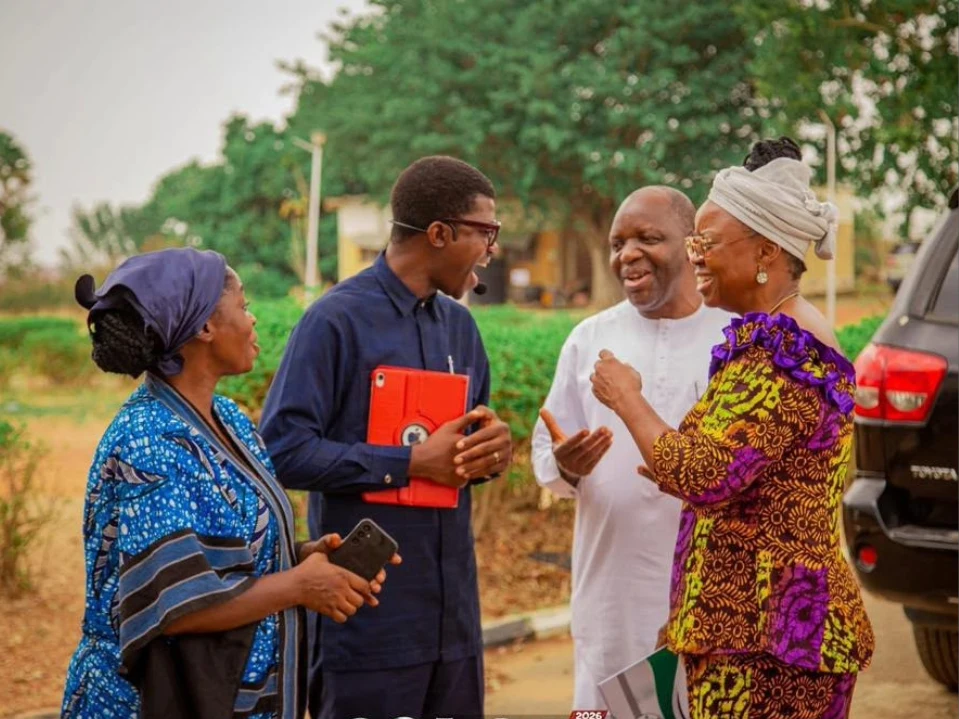
Pastor Samuel Ayodele shares his journey from rural Nigeria, to a career in banking, to a challenge from Jesus to live as a true Kingdom person.
God’s call on his life led him to establish the Rural Pastors Network, an initiative that equips indigenous pastors in northern Nigeria with encouragement, training, resources, and vision for church planting among unreached people groups. He explains how he discovered a disconnect between churches and the communities they served, inspiring him to develop new ways of engaging unreached and Muslim-majority communities through practical, holistic development.
Throughout the episode, Samuel shares stories of miraculous healings, supernatural provision, and unexpected open doors that have advanced ministry in resistant communities. The conversation closes with practical encouragement from Pastor Samuel for young people to trust God to expand their influence.
His is a story of surrender, resilience, innovation, and hope—a reminder that God can use faithful obedience to bring transformation to individuals, churches, and entire communities.
Links:
Centre for Human and Community Development
Facebook: Centre for Human and Community Development
LinkedIn: Centre for Human and Community Development
Upcoming Summit Nov 5 - 7, 2026: Global Professionals Summit 2026 - Abuja
Make sure to subscribe and give us a 5-star rating on your favorite podcasting platform. Let your friends know about The Reflexio Podcast and encourage them to Subscribe to receive an email when new episodes drop!
Transcription
Samuel [00:00:00]:
One of the things that God did to me was to begin to look for the unengaged, the least evangelized, and the unreached people groups. So that was also a dramatic journey. I was led to communities, but because, you know, what began my journey was research. I was doing research, so, and it was research that helps me see how disconnected most churches are from their host communities and how they are not serving the people, how they are not engaging the people, then the people's perspective about them.
Samuel [00:00:40]:
It is true that you are hearing bad news, but good news is prevailing as well. In Northern Nigeria, we're seeing gospel breakthrough in amazing places. Places that are considered closed to the gospel.
Don [00:00:56]:
Welcome to another edition of the Reflexio Podcast. In this episode, I sit down with Samuel.
Don [00:01:03]:
Samuel is a young man in Jos, Nigeria, and he leads a ministry called the Center for Human and Community Development. We talk about his early upbringing, his life as a young Christian, how God spoke to him and called him into ministry, and he actually left a career as a banker where he was doing very well and left all that because God called him to serve rural pastors in northern Nigeria. There are many unreached communities in Nigeria and they are almost all Muslim, and he has developed this ministry where he is serving rural pastors, helping them get established, helping their children get educated, giving them resources so they can be entrepreneurs, and he is helping them become effective church planters among unreached peoples across northern Nigeria. Quite a remarkable story. I use that word a lot, I'm sorry, but it is remarkable. And join me as we talk about his life and his journey and the development needs and what God is doing in Africa at this time.
Don [00:02:09]:
So welcome, Samuel, to the Reflexio Podcast. It's great that we can meet together in this conference. And actually do it in person instead of doing it online.
Samuel [00:02:19]:
What a privilege. God makes a way and God does things in amazing ways. Yeah. Who would have ever thought that we'll connect here? Yes, at the conference. Our meeting has always been virtual. Yes. And I'm glad that I can meet you in person.
Don [00:02:38]:
Yes. Um, can you just introduce yourself a little bit for our listeners? Those who are watching.
Samuel [00:02:44]:
Okay, Samuel Ayodele is my name. I'm married and blessed with 3 kids.
Don [00:02:53]:
Are they quite young still?
Samuel [00:02:55]:
Yeah, the first is 13, will be 13, will be— yes, the first is 13, the second is 11, while the last is 7. They are still at their formative age.
Don [00:03:12]:
Right.
Samuel [00:03:12]:
Thank you.
Don [00:03:13]:
And just briefly what your ministry is, and then we'll get into detail. Okay.
Samuel [00:03:21]:
I lead the Center for Human and Community Development. It's a ministry that is committed to holistic development and transformation of people and their communities. So, and we currently serve Africa, We are also finding an inroad to Europe as the Lord helps. Currently we are registered in United Kingdom as well.
Don [00:03:46]:
Wow, that's a new development.
Samuel [00:03:49]:
Yeah, yeah.
Don [00:03:51]:
So let's go back a bit. Tell us about your childhood. Did you grow up Christian? Did you walk away from the faith?
Samuel [00:04:04]:
What are some of your Just touch one of the most important parts of my life, actually. I was raised in a Christian home. My dad— my mom released me to my grandmother when I was 6 months old.
Don [00:04:18]:
For her to raise you?
Samuel [00:04:19]:
Yeah, because my mom became pregnant when I was 6 months. So I think that was God's design for my help, you know. So I was taken to the rural community where I lived with my grandmother for many years. Wow.
Don [00:04:38]:
Yeah, till I left school. Your grandfather wasn't in the picture?
Samuel [00:04:42]:
No, he was alive. He was alive. And they're of the evangelical background. So as a child, as a young lad, my grandmother backs me every morning, 5 AM, carries me to community church. where they pray, you know, early morning prayer.
Samuel [00:04:59]:
Early morning devotion together in the community. But I know that every morning at that young age, she wakes me up and says, Sam, we are going for piria. I didn't understand because she was not a lettered person. So it's years after I understood the word piria means prayer. The way she pronounced it, you didn't understand. Yeah. So basically, at age 5, she was of the Evangelical Church at age 5, she surrendered me to her elder brother who happens to be a leader at the Apostolic Church, a prophet to be precise.
Don [00:05:34]:
Okay, a Pentecostal church.
Samuel [00:05:36]:
Yes, yes. So eventually I began to follow that even at a tender age before I got enrolled in primary school, and he exposed me to the doctrine and the lifestyle of the prophetic people. So I began to prophesy at the age of 6, 7. So each time I ask myself, most times, what was I prophesying about those years back? Do you remember? I can't, but there are things that didn't leave me because most of what I do now was what I was following him to do when I was very young. He takes me on Suzuki 120 double silencer motorbike to several villages, you know, And I go there to prophesy. Yeah, I stayed in his place 12 midnight to 3 AM. We're awake praying.
Don [00:06:23]:
So he was doing ministry?
Samuel [00:06:25]:
He was doing ministry.
Don [00:06:26]:
You came with him?
Samuel [00:06:26]:
So I came with him. At a younger age, I was following about doing ministry and went to primary school, secondary school, and thereafter, you know, it was at the end of my primary school that I disengaged with him. But you know the funniest thing?
Don [00:06:41]:
Sorry, at the end of primary school, your secondary school, that what?
Samuel [00:06:44]:
It was at the end of my primary school that I disengaged. I went to urban instead of staying in the rural. So I went to a boarding house school.
Don [00:06:53]:
So you were 8 or 9?
Samuel [00:06:55]:
Oh, at the time I was going to secondary school, I was about 12.
Don [00:06:59]:
12.
Samuel [00:07:00]:
11, 12, thereabout. That was in 1993. Yeah, so went to secondary school, you know, but the impression he made on my life It was huge. It was so huge that I can't deny the fact that I had a walk with God, even though I cannot vividly hold on to some of them. But I cannot forget all those spiritual experiences that happened under his tutelage. I was done with secondary school and I had struggle making all my papers. I can't explain, but until one time, I stood in front of a mechanic workshop and I said, Lord, I was only looking for 2 of my papers, kind of, to, to get to high institution. It was chemistry and mathematics.
Samuel [00:07:50]:
Chemistry happens to be my best subject, but I kept failing it. So I, I told God, if I rewrite these exams again, I'm going to end up I'm going to come back to this mechanic workshop and abandon education.
Don [00:08:05]:
If you don't pass?
Samuel [00:08:06]:
If I don't pass. Amazingly, I didn't read for the exams, I didn't do— I passed the exams, and that was how I began my journey. I had diploma, I go enroll for diploma in computer science and technology. Then thereafter, I went to university actually, but somehow I will discuss about that later. to do computer science and technology as well. But eventually, while I was doing that, I got employed with a bank. So I began to work in the bank. And as I was working—
Don [00:08:42]:
As a bank teller or working with the finances?
Samuel [00:08:45]:
I was working as a teller, but previously I worked as an account officer with different customer within the same bank, you know. So eventually, um, I, I got out. Um, I think that was in 2000 and, um, 2009.
Samuel [00:09:13]:
I disengaged from the bank, and what led to that was I had an encounter with Jesus. What was the encounter was that Jesus told me he doesn't know me. It was so shocking because, you know, prior to that time—
Don [00:09:26]:
Say more.
Samuel [00:09:27]:
Jesus doesn't know me.
Don [00:09:29]:
He said this to you?
Samuel [00:09:30]:
He said this to me.
Don [00:09:31]:
You had a vision or a dream?
Samuel [00:09:32]:
Yes, not a vision. It was real in my room.
Samuel [00:09:35]:
I have moved from one city to the other refusing to do ministry.
Don [00:09:41]:
So you felt this call but you said no?
Samuel [00:09:44]:
I didn't want to do ministry. at different times.
Don [00:09:46]:
You didn't want to be like your uncle?
Samuel [00:09:47]:
I, I don't want to, because, you know, when he was a pastor, he, he lived sacrificially. Pastoral ministry was not this attractive in those days. They gave what they had, they lived sacrificially, and you could testify of the power of God in their life, unlike now that it's full of a lot of paparazzi and attention. So basically, I looked at the suffering and several other things. I came from a very poor background, kind of.
Samuel [00:10:14]:
So I felt banking was a deliverance for me, and it was the way to go. But eventually, um, I, I disengaged because I took Jesus. It was a dramatic experience. I can't describe so that I don't exaggerate, but it was very humbling when I took Jesus to my television and I was flipping preachers. He said, I'm not an orator. I can't preach you. I prefer to support ministry. And for the first time, Jesus pointed to me that most of the people I was showing him was not preaching the kingdom. What do you mean by that? For the first time, I understand that I needed to open my Bible with the lens of the kingdom. What does the kingdom of God mean?
Don [00:11:05]:
Right.
Samuel [00:11:05]:
I realized that I've been a religious person all my life up until that time. But not a Christian, not a kingdom person. Not a kingdom person. So eventually, what that did to me was that I couldn't recover. I repented even though I was already a pastor. I was a regional youth pastor at that time.
Don [00:11:24]:
You were a pastor?
Samuel [00:11:25]:
I was bi-vocational because I was both a banker, I was a pastor with one of the non-denominational—
Don [00:11:31]:
So you were doing ministry, but—
Samuel [00:11:33]:
So I was doing ministry. I was doing ministry. I didn't plan to do it, but they co-opted me into ministry. Every city I ran to, somehow somebody would just locate me and just put me in something. So by the time I relocated to another city, I refused to go to church. I only go to church— for you to know I'm a religious person— only when I want to drop my tithe and offering. So I remember one day when I went to that, to a church, the pastor said, oh, there's somebody here, you're just hiding You think you can fool God? But never mind. Anyway, one of the dramatic things that happened that made me give up my job at that time was that our bank used to be a commercial bank.
Samuel [00:12:13]:
The bank now opened up to retail banking. So the bandwidth, the customer strength of the bank has been stretched because, you know, the commercial banking, banking, only permit customers, or only enroll customers that can do turnover of about, let's say, $50,000. So, if you're not doing up to $50,000, you can't make— you can't have an account in such a bank. Now they opened this to accommodate retail customers.
Don [00:12:46]:
To anybody?
Samuel [00:12:47]:
And because of what they did, that led to a surge. Actually, they were a service-oriented bank. So, a lot of people came in. Now, they are now stretched. The bandwidth, the capacity of the bank can no longer take the number of customers they now have. So, they need to do upgrade. But before that time, most of the time, our system goes down because it can't handle what was going on within the system. So, there was this day, a man came to the bank. So, occasionally you see that, The bank had issues, systems are not working, customers are stranded, and you can have up to 100 customers within the bank and they are not being serviced. So a man just shouted from inside the banking hall, Samuel! Samuel! You are not supposed to be there. Love of money has kept you there.
Don [00:13:46]:
Someone shouted it?
Samuel [00:13:47]:
He shouted and everybody heard him. Oh, so when he got to my desk and he said it again, I was thinking I was going to see, um, prophet or apostle in front of his name. It was just Handsome Bala. Handsome Bala, that was his name. His name is Handsome, his surname is Bala. So he got to me and said You know you're not supposed to be here. Love of money and insecurity, life insecurity has kept you here. My supervisor was the first that responded to him and said, we know, but it's not yet time. Then the man responded and said, who are you to determine the time?
Don [00:14:26]:
To the bank manager?
Samuel [00:14:28]:
To the bank manager. From that moment on, I began to lose money. I can't explain.
Don [00:14:35]:
You just lost money?
Samuel [00:14:36]:
I just lost money. I don't get balance, you know. Things were not working, so eventually I wanted to give up, but I was encouraged. So I put up resignation. My resignation was about 8 times. My resignation was rejected 8 times. I had to go—
Don [00:14:51]:
Say it again, your—
Samuel [00:14:51]:
Resignation from the bank.
Don [00:14:53]:
Right.
Samuel [00:14:53]:
So that I could go pursue ministry was rejected.
Don [00:14:57]:
You kept postponing it.
Samuel [00:14:58]:
They just— my immediate supervisor kept rejecting my resignation because our resignation is to be done online. So there's a place where they approve. So instead of approval, they just bounce it back. So they start with me, oh, probably it's witches and wizards that has confused you. People are losing job and looking for job. You have a good job, you want to give it up? So eventually I, I said no. Uh, um, I just felt God is asking me to go. So eventually I went on leave.
Don [00:15:29]:
Okay.
Samuel [00:15:30]:
I went on leave, probably spent time to pray. And then during my leave time, the church I was attending then was very energetic and they can pray, you know, that kind of a thing. So I looked at their practices, I looked at their protocol, and I looked at it and I said, do you mean I'll come and resume every morning to come to this place and be shaking my head and be praying like this? I mean, there's no other things to do? And I made up my mind, okay, I'll go back to my work. The very day I said I'm going to— it was just like, I think, 3, 5 days to the end of my leave period. I had a dream. In that dream, I was driving a car. Actually, the car I was using then was so exotic because there was only 3 of its kind in the city I live.
Don [00:16:19]:
Okay.
Samuel [00:16:20]:
So as I was driving—
Don [00:16:21]:
In your dream or reality?
Samuel [00:16:23]:
Reality. It was the same dream that I have read that I used that I saw in my sleep.
Don [00:16:28]:
Yeah.
Samuel [00:16:28]:
So as I was driving, I just saw that the Federal Road Safety Corps, these guys that check your papers, whether it's correct and all of that, in that dream they just stopped me. They waved me down, I stopped. Then they asked for my particulars, I showed them, and they asked me to come down. I came down off the car and they drove my car away.
Don [00:16:51]:
They stole the car?
Samuel [00:16:52]:
No, it's not stolen.
Don [00:16:53]:
They took it?
Samuel [00:16:54]:
They took it away. So I was asking, where are you taking my car to? So I woke up from that sleep. What? At that time, all the money I invested in stock, um, has lost value because stock has gone bad. It was a recession period. The car seems to be the only valuable thing that I cherish and I felt I could hold on to. So if this car is taken away from me, what happens? So in that morning, the morning of that day, I went to the same church where I was a regional youth pastor. Regional means I was coordinating 3 states in Nigeria.
Don [00:17:30]:
Wow!
Samuel [00:17:31]:
Yeah, all the youth under that denomination. So, so I went to the church and I looked at them, you know, all this energetic prayer kind of. I felt I'm not called for this. So I mentioned that to a pastor, a female pastor. And the female pastor took my key from my hand and said, will you not obey the Lord until this key, which is the last thing you have, is taken away from you? Mind you—
Don [00:18:00]:
Key to the car? Yes.
Samuel [00:18:01]:
Mind you, I just had a dream. A lady said something. I just went to the banking hall close by to where— to the city where I went for leave and where I was pastoring actually, because I left the city where I was working, to the former city where I was made regional youth pastor. And despite I left, they did not select another person in my place. So I have to be coming from that place to look after young people and all of that. So I put up my resignation online. Whether you accept or not, I'm on leave. I'm not going to show up. Um, after that I served in South Sudan. The church posted me to South Sudan.
Don [00:18:43]:
South Sudan?
Samuel [00:18:43]:
Yes, I was in South Sudan. I was in Kenya, and while I was in Kenya, they gave me an option either to go to Ethiopia as country pastor or to go to Brazil. I went to pray. The Lord said—
Don [00:18:57]:
So this was your denomination sending you?
Samuel [00:18:58]:
The denomination, yes. So the Lord said to me that I should return back to Nigeria, so I returned back. to Nigeria. I got married in 2011, December, and, um, very, very strange, after our wedding, January, I had another visitation from the Lord, and he told me to stay at home, not to go to church. I felt that is bizarre. I was like, what does that mean?
Don [00:19:23]:
Don't go to church?
Samuel [00:19:24]:
Don't go to church. So I began to pray. At that time, I laid hold of a book called The Price of God's Miracle Working Power, written by A.A. Allen. I think was rewritten by R.W. Schambach.
Don [00:19:39]:
Mm-hmm.
Samuel [00:19:40]:
So I read the book again and again, and for 6 months I do spend time from 12 midday to 6 PM, that sunset, in a particular location. Um, one day while I was praying in the afternoon. The only scripture I stayed with for that 6 months was Exodus chapter 23 from verse 20 to 30.
Don [00:20:10]:
Okay.
Samuel [00:20:11]:
So I kept— each time I come to play to the place of prayer, I spend time to pray. He said, behold, I send an angel ahead of you. Verse 20, I send an angel ahead of you will bring you to the place I've prepared. Be mindful of him, for my name is in him. You will take out this city, you take out the Amorites and all of that. Then he went to, I think, verse— then in verse 26 or 25, he said, I will bless your bread, I'll bless your water, I'll take disease away from you. Verse 28 said, behold, I send an hornet ahead of you to the people to whom you shall come. So I— and in verse 30, 29 said, I will not take them this city away in one day. Little by little until you have grown. So I— so each time I come to the place of prayer, it's, Lord, take me to where you have prepared for me. Guide me to where you have reserved for me. So that was what I was praying. So in one of those days while I was praying, I just heard the voice of the Lord say, sit down. I was praying standing up. I heard, sit down. So I sat down. As I sat down, I saw a traveling some traveling bees. You know, bees just came and they were hovering over my head, and after a while they left. And I heard in my hearing, today this scripture is fulfilled in your hearing, which is the verse, I think verse 28, thereabout. I said, until that day, I didn't know, I didn't know that hornets were traveling bees.
Samuel [00:21:38]:
I never knew. So, um, so eventually I went back I spoke with my wife, my experience.
Don [00:21:47]:
Sorry, I didn't connect. So in the passage in Exodus, there's talking about hornets?
Samuel [00:21:53]:
Yes.
Don [00:21:54]:
What is that passage in?
Samuel [00:21:56]:
It's Exodus chapter 23.
Don [00:21:58]:
But what is the story there?
Samuel [00:21:59]:
That was when God spoke to Moses that he was not going to follow them, but he would send an angel.
Don [00:22:05]:
Okay. All right.
Samuel [00:22:07]:
Yes.
Don [00:22:08]:
And he said no.
Samuel [00:22:09]:
And he said no, it's better you go with us. Yeah.
Don [00:22:13]:
And so what's the connection then to the hornets that you saw?
Samuel [00:22:15]:
So what I was saying is that that passage was— I grew up from a background where you use scripture to pray, right? You pray promises. Yeah, yeah. So for me, that was a promise. The passage was a promise of God bringing me to the place he has prepared for me, right?
Don [00:22:37]:
Okay.
Samuel [00:22:37]:
So I kept praying that for about 6 months consistently, in the midday to the evening, to sunset, until that experience. And it was after that time that I began to review a few things which I'm going to share with you. One of the things I reviewed, because I also had something that was very strange, and I kept praying it away, that the church in my generation may not be able to evangelize my generation. I was like, what's the problem? So I did ask questions. Then I did a survey in my community with 50 pastors. Of the 50 pastors, only 2 were able to give me the— were able to share the testimony of their conviction of sin, their conversion testimony. This is who I used to be, this is who I am now.
Don [00:23:30]:
Mm-hmm.
Samuel [00:23:30]:
This is what God convicted me of. When I met him, before I became a Christian.
Don [00:23:35]:
Um.
Samuel [00:23:36]:
The third is their consecration journey. They have a personal walk with God. This is my daily rhythm, this is what I do, this is how I seek the Lord on daily basis.
Don [00:23:48]:
Um.
Samuel [00:23:48]:
Then the third is their commitment that is beyond external motivation. You don't have to check on them to know whether they are growing or they have appetite, appetite to the Lord?
Don [00:23:59]:
Right.
Samuel [00:23:59]:
The last is, how were they commissioned to ministry? These 2 have a unique testimony beyond being available and being rewarded with leadership. But the rest, the 48, were not able to give me candid testimony of their transformation, of their journey of faith in the Lord.
Don [00:24:17]:
Right.
Samuel [00:24:18]:
And what that crushed— what that did to me was, if a church leader is having this status, how is he going to lead his members or the people under his care to the Lord?
Don [00:24:35]:
Mm-hmm.
Samuel [00:24:36]:
So I began to see that probably we might be having a lot of falsehood around. So from that perspective, I began to engage communities. And one of the things that God did to me was to begin to look for the unengaged, the least evangelized, and the unreached people groups. So that was also a dramatic journey. I was led to communities, but because, you know, what began my journey was research.
Don [00:25:13]:
Okay.
Samuel [00:25:13]:
I was doing research. And it was research that helped me see how disconnected most churches are from their host communities, and how they are not serving the people, how they are not engaging the people, then the people's perspective about them. So at that point, most of my work was research, just gathering information. Why is church not effective here? So by instinct, I want to register an organization that can give me a legal expression, and the only name that comes to mind is Church Research International. So I went, and they didn't register it because they said—
Don [00:26:01]:
Okay, we'll pause.
Samuel [00:26:04]:
Okay, you have a guest? Just coming back to the room.
Don [00:26:17]:
Oh, and I know I'll forget, so—
Don [00:26:19]:
Thank you.
Don [00:26:20]:
Just a little gift from Egypt. Oh, okay. Thank you.
Samuel [00:26:24]:
Good night.
Don [00:26:25]:
Blessings. Some figs from Egypt. Chinedu is a friend.
Samuel [00:26:34]:
Okay.
Don [00:26:35]:
Yeah.
Samuel [00:26:35]:
For how long have you known him?
Don [00:26:37]:
15 years.
Samuel [00:26:39]:
Wow.
Don [00:26:39]:
Or yeah, maybe more.
Samuel [00:26:42]:
This should be dates, right?
Don [00:26:44]:
Yeah, dates. I might grab some if we keep going here.
Samuel [00:26:49]:
So, so eventually—
Don [00:26:54]:
Let me just do this. Okay. Okay.
Samuel [00:26:57]:
So eventually the Corporate Affairs Commission that is responsible for the registration of organization in my country demanded that I show up to explain what I'm trying to research about church.
Don [00:27:17]:
Okay.
Samuel [00:27:18]:
And obviously, because I could see that they've already misinterpreted my purpose and expression.
Don [00:27:23]:
Right.
Samuel [00:27:24]:
So I didn't show up. I just abandoned that process.
Samuel [00:27:27]:
I kept praying and I didn't know, the name just came out of my mouth. Can we try Center for Human and Community Development? Because if a man is not developed, if a community is not changed, there will be more problems. And the only way people can be developed and changed is when they encounter Jesus. So, and it went through. It was approved.
Don [00:27:53]:
So you then had to apply, and you applied with this name?
Samuel [00:27:56]:
Yes, so Center for Human Rights and Community. So from that moment, God began to give us access to Muslim communities.
Don [00:28:05]:
Were you trying to reach Muslims, or not yet? That started after?
Samuel [00:28:09]:
No, basically, you know, because where we're located was northern Nigeria, so largely it's Muslim. So if you want to engage any community, this survey, you just realize that majority of the locations you are trying to reach, they are Muslim, which was why the other name also was not— didn't go through. Because most times when we go to some communities that are dominated by Muslims and you introduce yourself as a group from Center for Human Community— I'm sorry, of Church Research International— they say, oh, they are church people, they are church people. But now that it is Center for Human and Community Development, oh, they say they are development people. So basically, the name provides access opportunity as well, and it helps us to engage effectively.
Don [00:29:01]:
Right.
Samuel [00:29:02]:
Now, when we began to work, we realized in the peak of the onslaught of Boko Haram bandits in northern Nigeria, We saw that cross-cultural missionaries were leaving the field because of the attacks.
Don [00:29:18]:
Um-hmm.
Samuel [00:29:19]:
And we began to ask the Lord. For me, it was a prayer, and I'll tell you why. I watched many ministries' labor of many years, 30 years, 20 years wiped off by the activities of Boko Haram. So I was talking to the Lord and said, Lord, I can't guarantee that what I'm going to do here will last.
Don [00:29:45]:
Right.
Samuel [00:29:46]:
Why don't you send me elsewhere and send laborers here? And I heard the word from the Lord saying, the laborers that I seek, that I seek, they are in laborers' houses. I didn't understand that phrase. The laborers that you seek, they are in laborers' houses. I didn't understand that. But fast forward, God opened our eyes to pastors, indigenous pastors, who continue to serve in the face of these atrocities.
Don [00:30:18]:
In villages, towns.
Samuel [00:30:19]:
Yes, despite this insecurity. Some of them are killed, you know, some of their families, some lose their wives, but they still remain.
Don [00:30:29]:
in those communities.
Samuel [00:30:30]:
They are faithful servants, even though ill-equipped, under-resourced. And when we began to look at that, God moved our heart to start off something called Rural Pastors Network. Rural Pastors Network. Even though we began engagement in Kenya before we came to Nigeria, during some of my trips after I left that denomination I've had to go to Kenya, somewhere in Mumias of Kakamega and Busia, to engage pastors serving around there, do some assessment, envision them on how they can have a stable walk with the Lord so that they can serve their community effectively and faithfully. Now, by the time I came to Nigeria and I saw this opportunity, I began to engage. We first began with 50 pastors. In a particular local government. And we saw huge gap, huge knowledge gap of pastors. Many of them are not all that educated. Some of them that are educated, not really well educated, but some of them are also under-resourced and most of the education they have is not transformative. So we felt the need to expand that. So we began to move from one community, from one local government district to one another, engaging, encouraging, envisioning, and equipping them.
Don [00:31:59]:
How would you do that? You have events? You go visit them?
Samuel [00:32:04]:
We go visit them.
Don [00:32:05]:
You go visit them?
Samuel [00:32:06]:
Yeah, but after a while—
Don [00:32:07]:
Just you or you and your wife?
Samuel [00:32:09]:
No, our team, our team, our team. We have a team, we have a team that will work together. So I just provide overall leadership. So eventually we went to some of these villages, engage, encourage. Before we know it, you can just have a pastor who connected to some other pastors within the villages. So that grew over time. And when it grew, then we began to have annual gatherings. in the city. So we bring pastors. So currently we have pastors across over 10 northern states in Nigeria, and they normally come annually where they are encouraged.
Don [00:32:52]:
All the pastors come?
Samuel [00:32:53]:
All these pastors, and they are spread across 47 denominations, about over 2,000 of them.
Don [00:32:58]:
So you have an event with 2,000 pastors?
Samuel [00:33:01]:
What we normally— we do not— not all of them attend, right, because they can't— some of them can't afford Right. But it would have been good to have them. The highest I think we've had in our gathering is 355. They just come from different places. But what we now do is after the gathering, we go visiting them at their various local government in order to ensure that those that couldn't make it to the gathering are also able to— we're able to engage them and encourage them. So that, by the way, Rural Pastors Network, for me, has been a strategy through which God is closing church planting gaps in Northern Nigeria. Muslim engagement is also happening with them because all that I have learned from you, I'm also transferring to them and a few other resources. Now remember I said something, that God said the laborers that we seek are in laborers' houses.
Don [00:34:06]:
So the laborers that we seek are—
Samuel [00:34:09]:
In laborers' houses. Laborers. The laborers' houses.
Don [00:34:14]:
Houses.
Samuel [00:34:15]:
Yes, I'll explain to you.
Don [00:34:17]:
Yeah, okay.
Samuel [00:34:19]:
So after a while, during one of our gatherings, we were having distraction assessment, and we engaged the pastors that were present. What are the distractions to ministry? Sadly—
Don [00:34:39]:
They keep you away from ministry.
Samuel [00:34:41]:
Yes. What are the— what is keeping you away from ministry? What is diminishing your strength in ministry? What is distracting you from effective ministry? And sadly, the whole hall went quiet. And by the time the pastor began to respond, their children was a major issue that they have classified as a distraction.
Don [00:35:08]:
How?
Samuel [00:35:08]:
Some of their children are given to drugs, they are given to all kinds of social vices. It has brought disreputation to them. Some of them are intermarrying Muslims. So for them, that is bringing serious pain and burden to them. Some of their children are into theft, trying to survive because they could not provide for their needs. It was then that we realized that the laborers that God is talking about are their children.
Don [00:35:39]:
Hmm.
Samuel [00:35:40]:
The houses, the laborers' houses that God is talking about at the pastors' houses.
Don [00:35:45]:
Okay.
Samuel [00:35:45]:
Though they are in pastors' house, but they are not effectively engaged. So that led to another expression called Pastors' Children Fellowship. So every year or so, we gather pastors' children as a way of complementing their parents, because we asked them, they said they'll be glad if we can engage their children, if we can. And truth be told, when I think 2 years ago, we had a gathering— we had last year also, but 2 years ago we conducted a survey. We had 428 pastors' children on camp, and of the 428, only 6 were interested in ministry. The rest were not interested in ministry. Why? Because of their parents' experiences.
Don [00:36:29]:
It was so hard.
Samuel [00:36:30]:
It was so hard for them. But praise be to God, before we left, I think over 300 made a decision to serve the Lord, not only to know the Lord but to serve him and to be his servant. So it was prayer answered for us. So, but in ministry, God has used different expression because we train the missionaries that serve with us, because aside that we empower pastors. Locations where there are no church breakthroughs at all, we send missionaries there. there as development partners. So they go through access ministry, education, healthcare, economy intervention as a way of assessing, building redemptive relationship, and leveraging on that for gospel breakthrough, planting churches afterwards. And God has done amazing things even in closed community to the gospel. So I, I think I should stop now if you want another question.
Don [00:37:28]:
Yeah, maybe. You said before we started the recording that the security situation in northern Nigeria, which everyone's heard of, even President Trump talks about it, is causing people leaving. So you're trying to— your vision is to help the pastors who are there to be resilient and equipped to do the work. Is that your main—
Samuel [00:38:01]:
Very true.
Don [00:38:01]:
Yeah?
Samuel [00:38:02]:
Very true. Now if you check projection from 1950 to 2050, in the year 1950 the population index of the rural people is about 10 to 20%. The rural dwellers were like 90%. while the urban was 10%. But there's a projection that by the year 2050, there will be a switch. The population index of the urban will be 70%, while the rural will be 30%. What does that mean? Why will it be so? The truth is the insecurity is not being resolved. So people are forced to leave their ancestral home to go to the urban. But nevertheless, majority of the UPGs that we are trying to reach, they are actually located in adjoining villages to where churches are planted already. So if the pastors leave or people keep leaving, What is the hope of reaching the UPGs? So if you encourage the pastors, empower them, envision them, entrust them with church planting movement among the unreached people groups who are their neighbors, in no time we will have closed the gap.
Don [00:39:33]:
So have you begun to see this happening?
Samuel [00:39:36]:
Yes.
Don [00:39:37]:
Can you tell a story or two around it?
Samuel [00:39:40]:
Okay.
Don [00:39:40]:
You said before that There's many miraculous stories.
Samuel [00:39:43]:
Yeah. Okay, let me give you one. A particular community where we went with our team, the kingmaker of that community had not worked for 9 years.
Don [00:39:57]:
The kingmaker?
Don [00:39:58]:
Yeah.
Don [00:39:58]:
You mean the one who determines who is in charge?
Samuel [00:40:01]:
Who determines who becomes the king of the community.
Don [00:40:04]:
Okay.
Samuel [00:40:04]:
The community leader. been bedridden for 9 years. So probably each time we go— and this is largely Muslim community— so each time we go to such places, we, we visit homes, check on, on them, and if there's opportunity to pray, if they are open for us to pray, we pray with them. So we visited this man. The leg has become so thin because the leg has not been in use for years.
Don [00:40:33]:
Dry. Because he couldn't walk?
Samuel [00:40:35]:
He couldn't walk. So I heard the voice of the Lord said I should go make him walk. Um, I looked at that so strange. That's my traditional experience. Some of my team members looked at me as I turned back. What does this guy want to do? So I went. The leg has become thin and dry. I obey the Lord. Because I've experienced the consequences of not obeying the Lord before. So I prayed and I left. The Lord said, I didn't ask you to pray, I asked you to make him walk. So I went back to him, I told one of my team members, can you hold him on the other side? I'll hold him on this side. Let's hold him on our shoulder and make him walk. Everyone around his house gathered. You know the settings of African houses and villages, how it looks like. They saw him, what are they trying to do here? We left him. The second day we came back there again, I prayed on the leg. The doctor on our team, I asked him to get a neuro— neuro— neurotic cream to rub the leg and make sure that he has some heat. Then we went. The third day, he didn't We didn't meet him at home. Guess what? He has gone to the palace and told the king at that time that we have come to make him walk. Wow! By the time we got to the palace, the king said, my kingmaker told me that you guys made him walk. We said, no, Jesus made him walk. Then he drew me to his inner chamber and said to me, Even me, I'm not well, and I want to become the paramount king here. Paramount king means that now he's like a community king, right? He wants to be the entire king of a tribe. That's his desire. So I said, it's a small thing for Jesus. Jesus will heal you now, and he will give you your heart desire, but that is if you follow him. He said he will follow him, but the only thing he can promise me is he cannot declare publicly because he might lose the stool. and he would deny his children opportunity to retain the family right forever. He said, no problem, Jesus have many secret followers. And on the occasion when it is necessary, he showed up. Anyway, God healed him. He became the paramount ruler. He opened up the entire about 30 villages to 50 to us. and we're planting churches in those places. Part of the people that were planting these churches are the pastors that I talked about. Our own organization has planted, I think, about 3 churches already. But our goal with Rural Pastors is that they are able to plant minimum of 3 churches in a year because we're introducing them to DMM, we're introducing them to CPM, we're introducing them to every strategy that we think God is using. in our time. And they are embracing it because, you know, it's not like their traditional method of planting churches. So they also are migrating their church members from membership mindset to missionary mindset. So these are part of curriculum we share with them anyway. But pastors are now planting churches because at the time of engagement, while engaging some pastors, pastors will tell you, oh, we have not been told to plant church. Oh, we don't have money to do so. But as it is now, it's not like that anymore. Pastors now see that it's their responsibility to ensure that villages around them have churches. Because at the gathering, they sit down together, they identify all the villages within the local government where they serve where there are no churches at all. And afterwards, they all, just like Joshua, distribute the land between the children of Israel.
Don [00:44:30]:
You go there, I go there.
Samuel [00:44:31]:
You go there, you go there. And they are collaborating, they are working together, spread across. So I can tell you that we are seeing appreciable progress through Rural Pastors Network.
Don [00:44:46]:
As you think of people watching and listening to our conversation right now, there are people from 40, 50 different countries. As you look at northern Nigeria, I mean, I got a prayer request from Amos. I don't know if he was in your class with us. 2 of his nephews were killed yesterday by Fulani just going back to the mine and they killed them. It's like Do you have much hope for a change in the north of Nigeria? Do you think the growth of the gospel is going to undermine this? What is your perspective on where things are at and where you— you have a prophetic voice for us?
Samuel [00:45:39]:
First of all, it's not the Fulani that are killing. It's Fulani militia. It's Fulani militia.
Don [00:45:47]:
Militia, yeah. But they're Islamist militia.
Samuel [00:45:50]:
Yes, because it's important to have that understanding.
Samuel [00:45:54]:
Because there are Fulani Christians. So when we say Fulani—
Don [00:45:58]:
It's Islamists.
Samuel [00:45:59]:
It's Islamists and extremists that are doing that.
Samuel [00:46:03]:
There are Fulani Christians, there are communities of Fulani that we are serving, we have access to, and they're good. Some of them we are having disciple-making among them already. So most of the people driving this are Fulani militia who are trying to impose their sovereignty and their interests, you know.
Don [00:46:29]:
Sharia.
Samuel [00:46:30]:
Yes, yes. Now, to what you said, the earth is the Lord and the fullness thereof. The space that God has depends on the tenacity, read, resilience, um, and the, the commitment of his children.
Samuel [00:46:51]:
Uh, it is sad that people don't take responsibility for what belongs to the Lord. Jesus has paid for everything, and the question I keep asking is, how much of what he paid for will he get through my life, through your life? So if I'm able to answer that question, I should be able to speak of the future of insecurity and gospel saturation in Northern Nigeria. But from my little work, I've been working in Northern Nigeria for over 10 years, and I can tell you that it is true that you are hearing bad news, but good news is prevailing as well in Northern Nigeria.
Don [00:47:34]:
Okay.
Samuel [00:47:35]:
we're seeing gospel breakthrough in amazing places, places that are considered closed to the gospel.
Don [00:47:44]:
So can you give an example?
Samuel [00:47:46]:
Um, Bauchi State is one of the difficult states in Nigeria. Kano State is one of the difficult states in Nigeria. These are states that do not give opportunity for Christianity, and so many other states as well. If it's not, I can tell you that there is this intention to exert a particular religion over the rest. But in the midst of that, in the midst of that, people are coming to faith. So the way we work is we map a local government, you know, and in that local government we're able to track the tribes there, the villages there, the unchurched villages there, the unchurched and the unevangelized tribe. So when we want to engage, whether by our team or through the Rural Pastors Network, what we do basically is to focus on those places. For the purpose of people people not engaging and looking for where we work. I just mentioned those states, but basically we have on-ground teams that are making amazing progress so that those works and what God is doing is not hampered by people gathering information. But I can tell you vividly that all that Jesus has died for cannot be taken from him. His blood is shed. He's only waiting on you and I and everybody watching me who are willing to see that Jesus has all that he paid for. It's my— one of my coaches that normally reference that anyway, that what would Jesus get? Dr. Ferdinand Weke will tell you, what would Jesus get through your own life? And since I have one life, I only plan to burn it for Jesus, for the one that went to the cross for me.
Don [00:49:44]:
Amen.
Samuel [00:49:44]:
So a lot is happening. Pastors are planting churches. Movement is happening. It may not be at our own definition, but I can tell you that people are reaching people.
Samuel [00:49:58]:
But very importantly is that we must also not stop prayer because movement, miraculous movement, conversion, transformation, they are acts of God. No human being can make it happen. It's only God that can make it happen. So a lot is happening, and you mentioned something— on daily basis people are killed. But despite that, some people are still faithful, standing in the gap to ensure that people don't go to hell and people find Jesus before their death, whether they died naturally or they were killed.
Don [00:50:37]:
As you look back on your 20 years of ministry. Are there some times that were particularly rough, or you felt under attack, or illness? There's some stuff that was— yeah, do you want to share any?
Samuel [00:51:01]:
Jesus says, many are the afflictions of the righteous.
Don [00:51:04]:
Yes, so what has your experience been?
Samuel [00:51:09]:
The Bible rather says, many are the afflictions of the righteous, but the Lord delivers him from them all.
Don [00:51:14]:
Okay.
Samuel [00:51:15]:
There are many, there are many. I have had spiritual attacks, I've had physical attacks, I've had attempts of kidnapping, my house invasion. But what I can tell is God preserved me. Let me give you some of these scenarios. Number 1, my son was sick. I had a physical confrontation with an idol worshipper in one of the villages I served, and afterwards my second child took ill. And the very day we were in the hospital for one week, they couldn't diagnose what was wrong. But when I realized that we're not making progress, against doctor's advice, I'm not advising our audience to do that except they have a conviction from the Lord. Against doctor advice, I told my wife, we are taking our child out of hospital today. He got well at home, but that same day when we got home, our first child was having a distending stomach and we had to go to another hospital where we spent 2 months.
Samuel [00:52:23]:
They had to do laparotomy. for him twice, because the first time they did, they assumed they solved the problem, but it didn't solve. Afterwards, we saw that when we returned back home, the stomach was distending again, and we went back. But through that period, you know what, I couldn't pray because it was very overwhelming.
Samuel [00:52:43]:
But God raised voices around me who were interceding for us. The only prayer I was praying was, Lord, this guy is my first missionary. Will you allow Satan to take him away? Because, you know, my wife and I were in the bank. We were working at the bank, and then I resigned when I went into ministry. We had not married. We had not married when both of us were working in the bank. I had left. Then, you know, she just got promoted, so she couldn't— after she gave birth, she couldn't stay with our baby. So I had to raise the baby. She goes to work, come back in the evening. So I was at home nursing this child for 1 year. Most of the time I put him on the car seat, baby car seat, at the back, you know, at the back seat, and drive him to some villages, kind of change pampers on the way, you know. And I was reminding God, this guy has followed me to so many villages when he was less than a year. What justification will Satan have to take the first missionary in my life, in my home away? And I think God answered. He was healed supernaturally, and I'm so grateful.
At another time, I was planning a trip. We're supposed to meet some pastors in Jigawa State. It's one of the northern states in Nigeria. I think over 200 pastors had already been mobilized and we're to meet them. Then at 2 AM of the day we're to travel, I woke up— sorry, 1 AM, I woke up and I was restless. I can't navigate what was wrong. By 2 AM, one of my disciples when I was on campus, I had not spoken to him in years, he told me he just had a dream that I died and they were looking for casket. What? I said, really? So what I did was, okay, no problem. By morning, I kept praying just to get clarity.
By morning, I called the rest of the team. Today we are not traveling. Some of them were offended, they were not happy. They felt, oh, we've made commitment to some people, how do we explain to them? This is, um, this is an integrity issue and all of that. But I just explained to them.
Miraculously, sorry, that very day around 9 PM, around 9 PM, Prof, There were kidnappers on my street. If I had gone for that trip, that would have been the time I'll be returning home, and those guys will have followed me into my house. They attacked the house beside me, but despite that my generator was on and was making noise, they didn't come to my own house. So I see God's guidance in that as well.
Oh, let me talk about supernatural provision. One of the— I think about 2 years ago, we were to have pastors gathering, annual pastors gathering. We were trusting the Lord for resources till the day of the gathering. Pastors were coming from everywhere, and amazingly, we couldn't raise the fund. My wife reached out to one of our old colleagues and said, please, can you just lend me about, um, about, um, I think she was asking for about $500 just to kickstart the meeting so that afterwards people probably— people can support. And the person was not forthcoming. Oh, we didn't know what to do. So I just walked into the bank in anticipation that anything will happen. Probably if I meet the lady my wife has spoken to, I can now ask, can you support? While I was standing in there, I got a credit in the organization account of about $3,000 USD while I was standing in the bank, you know. So quickly call a friend. Excuse me, were you the one that— he said yes. He said, I had to travel from the UK to Paris in order to talk to my, my elder brother that you are starting a meeting today and you do not have resources.
Prof, That was how God saved us an embarrassment. You can imagine, pastors were arriving, there was no food, there was nothing, there was no money. God showed up supernaturally. At different times also, some of our trips, you know, we escaped banditry, we escaped— God has showed up in ministry in ways that we cannot. And if you're talking about conversion, you know, especially among Muslims, which seems difficult, among Fulani and all of that, God is doing amazing things through redemptive relationship. People are running. So, but you know, we had worked in a particular community, I think for about 3 years, and there was no fruit. And I told the missionary in that field, I said, please prepare to leave this field in the next 2 years. Sorry, in the next 1 year. Engage the children. plant the seed that you can plant in them. We can't see any fruit. That very day, the community leader reached out to me and said, I'd like to see you before you go. So he went in, I went into his inner chamber. He said, God showed— God came to me and told me that if I do not become a believer, he said, he will waste me. Tell me how to become a believer. A stark Muslim. From that day, The man normally drove from his village to our office in the city to come do Bible study with us.
At another time, we also, when we realized that the community was suspecting us, we go into his farm to do Discovery Bible study. So you can see at different times God showed up, but we can say that we've tested, we've enjoyed the miraculous power of God and answered prayer in most difficult times. I don't mind. I think I've told you many, but if it comes to mind, I can still tell you.
Don [00:58:36]:
Yeah, yeah, yeah. You're still relatively young.
Samuel [00:58:42]:
Yeah.
Don [00:58:44]:
You're wanting to do further studies. How do you see doing further studies tying in with what you're doing?
Samuel [00:58:57]:
Okay, so I see the place of growing intellectually. I normally assess people I work with around 5 essential capitals.
Don [00:59:12]:
5?
Samuel [00:59:13]:
Essential capitals. The first essential capital is spiritual capital. I want to know, I want to see the fruit of the Spirit. and the gift of the Spirit.
Don [00:59:23]:
Yeah.
Samuel [00:59:23]:
In my life and in the life of people I lead.
Don [00:59:26]:
Right.
Samuel [00:59:26]:
The second is relational capital. I realized that when there is healthy vertical relationship, that is relationship with God, you will surely have healthy horizontal fellowship relationship. So I want to see how do I build and help others to build healthy relationship first with God so that they can have healthy relationship with their neighbor. You know, Jesus said, love God with all your heart first, then you should love your neighbor. So you can see it's not the other way. If a man is able to love God, he will love his neighbor well. The third is intellectual capital. In the age of knowledge, you need wisdom and knowledge to be able to engage society effectively. So I'm also— as I want to grow intellectually, to be able to interact with the changing world.
Don [01:00:18]:
Yeah.
Samuel [01:00:19]:
I also want to be able— I want to have what it takes to be able to engage my world as well and encourage others to develop that in a changing world. Fourth is health capital. A lot of people don't understand that preventive medicine is far better than curative. So I help people to see that they need to know much about the history their family, their well-being, so that they don't recycle the same thing that has happened in that time. Because the blood that runs in their veins is from those people that have lived before. So there are tendencies that they might be sharing some hereditary diseases and all of that. Then I think the last one is economic capital.
Samuel [01:01:02]:
I realized that people need to also have financial health to be able to serve without so much pain and regrets and disappointment. So these are the 5 capitals that I teach, that I live, and it's part of my drive for more education and more growth, you know. So I'm, I'm an incurable learner. I just want to— that was what brought me in contact with you.
Samuel [01:01:31]:
During the summer school. So I continue to learn relearn both virtually and on-site as the Lord provides the opportunity. But honestly, and I encourage people, I encourage people to learn. Whatever you have now is only valid for today. It may not be relevant tomorrow. So continuous growth, which is kaizen by Japanese, is what you need. Continuous growth. Yeah.
Don [01:01:58]:
If you could do your life over, your early years, would there be something you would tell yourself or A young person now who's looking at their life and thinking about the situation either in Nigeria or even in the West, about what they should be doing in terms of God's call?
Samuel [01:02:14]:
Number one, I will not run against the tide. I wasted my time. Number two—
Don [01:02:20]:
Say it again. You will—
Samuel [01:02:21]:
I will not run against the tide.
Don [01:02:23]:
Yes, of God's push, of God's call.
Samuel [01:02:26]:
Of God's purpose and plan, because I wasted a lot of time.
Samuel [01:02:30]:
Trying to run away from what I do correctly. Second is, I will seek godly people that I can trust, and I would trust their judgment as well as the Holy Spirit.
Don [01:02:44]:
As a friend and mentor.
Samuel [01:02:45]:
Yes, because, you know, most of the things I was trying to navigate myself, many has gone through that process. And they did well, and all I needed to do was to learn from their mistakes so that I don't repeat it.
Don [01:03:02]:
Mm-hmm.
Samuel [01:03:03]:
But because of the fear of the way people had used people, taken advantage of people, that excluded me, that isolated me, to want to process everything and use a huge binocular to be— to pull stuff. But, you know, nevertheless, I can testify that God helped me. But I'm saying that I will pay more attention. I began to hear God early, but as I was going, because of here and there, I got confused. I will prioritize hearing God, even if it will take me 1 year to hear him, because I know that I will not repeat any class when I hear him. So, and I will leverage, I will leverage on the leadership of the Holy Spirit, because most times young people tend to make choice, travel life by opportunities. An opportunity at times might be good but might not be godly. So you need to be sure that that is the direction God is leading you.
Don [01:04:08]:
Mm-hmm.
Samuel [01:04:09]:
I will have great association. that I can trust, that I can, you know, um, I used to say this lastly, most of my friends are people that are 20 years ahead of me.
Samuel [01:04:28]:
And I learned that from the story of Solomon and his children. I hope you know that after Solomon died, His children came to power.
Don [01:04:41]:
And they followed the advice of their peers, not their father's peers.
Samuel [01:04:46]:
And that was what divided the kingdom.
Don [01:04:47]:
That's true. I'm glad you're applying that.
Samuel [01:04:51]:
So for me, I do not have younger friends. Not that I don't have them as friends, but when I'm talking about people—
Don [01:04:57]:
They're not counselors.
Samuel [01:04:58]:
Who counsel me, who advise me, are people that have traveled 20 years, 20 years' miles, 20 years' kilometers. ahead of me so they can tell me from their journey.
Don [01:05:10]:
They can warn you about football.
Samuel [01:05:13]:
Yeah, football. So, and that has minimized mistakes, error, and regrettable actions.
Don [01:05:19]:
I think maybe we've covered a lot of ground.
Don [01:05:23]:
Yeah.
Don [01:05:24]:
Is there any final comment you want to make, observation or challenge to us?
Samuel [01:05:31]:
First of all is to thank you for the opportunity to come on your podcast. Um, we met online. You were my teacher, I was your student. Now I'm connecting with you in Thailand, and I'm so grateful for that.
Samuel [01:05:43]:
Secondly is to say that thank you for hearing the voices of laborers across the world, to, to major— a lot of audience to see what God is doing in different regions, which should command prayer and commitment from people.
Don [01:06:03]:
Yes.
Samuel [01:06:03]:
People should not only learn, but they should also— this should inspire them to respond to the expectation of heaven. As Jesus died so that every man will be saved. For God so loved the world that he gave his only begotten Son, that whosoever received him should not perish but have everlasting life. So God wants Everyone saved is not some. Jesus paid for all, and you should have all. Lastly is that I want to say that if God has called any of our viewers, do not delay. Respond quickly.
Don [01:06:41]:
Mm-hmm.
Samuel [01:06:41]:
And you can begin from your Jerusalem. Your Jerusalem is your family, your community.
Samuel [01:06:47]:
And before you begin to think of Judea, Samaria, and the end of the world, Start from where you are. Share the gospel with a friend today. Minister to the needs around you. As you move close to God and serve your community, God will take care of you. Amen.
Don [01:07:07]:
Thank you. Thank you. God bless you.
Samuel [01:07:10]:
Amen. Amen.
Don [01:07:11]:
Great.
Samuel [01:07:12]:
Amen.
Don [01:07:12]:
Thank you for staying with us to the end of our conversation. I believe that it will be very insightful and you've learned a lot about what's going on in Nigeria and how God is raising up men and women to take up remarkable leadership situations. As always, I encourage you as we wind up on a podcast to give a thumbs up, write comments. I don't know very many of my friends who actually write comments when they listen to podcasts, but the way the metrics work is the more you write comments, the more the platforms distribute the podcast episodes to other people who have not yet heard of it. This way, more people can hear these stories of what God is doing through people that he's raised up around the global church.
Join Our Community
Be part of a growing network of next-generation mission leaders. Get early access to new episodes, exclusive content, and resources to empower your journey.