Listen now:




Show Notes
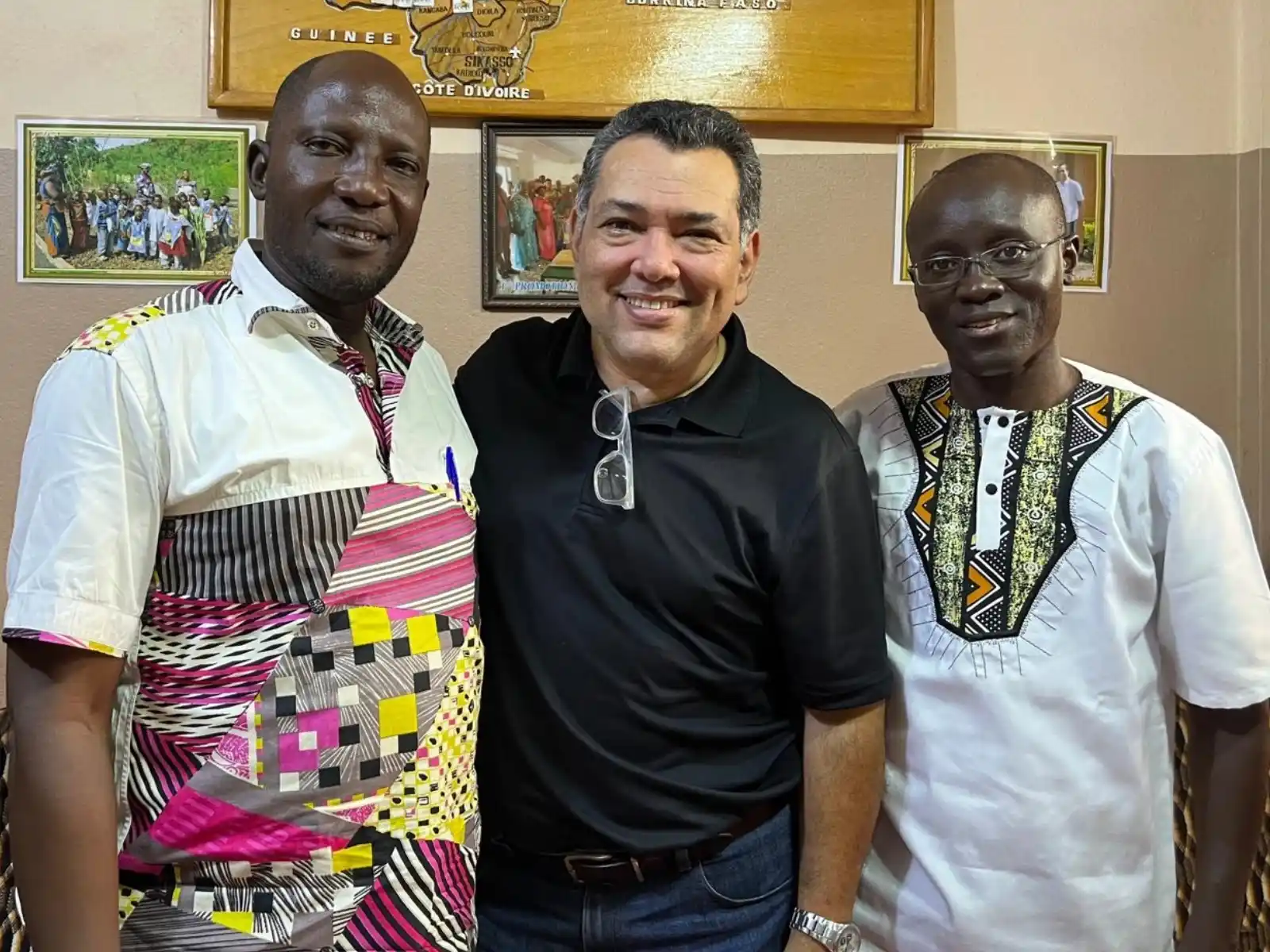
Costa Rican mission leader Allan Matamoros shares with us his inspirational journey into ministry and explores Latin America’s growing role in global mission. Allan shares how unexpected leadership opportunities influenced his original plan to serve in Pakistan to his current role supporting missionaries and local ministries across the Muslim world.
Partnership is at the heart of this candid conversation. Allan reflects on burnout, recovery, and the mentors who helped him regain perspective. His experiences highlight the importance of rest, the benefits of setting realistic expectations, the value of language learning, and why attaining cultural understanding matters when serving cross-culturally.
Through stories from North Africa and West Africa, Allan describes a future of mission shaped by local leadership, practical service, and global collaboration.
Links
Federación Misionera Evangélica Costarricense / Costa Rican Evangelical Missionary Federation (FEDEMEC) https://fedemec.net/
La Cooperación Misionera Iberoamericana (COMIBAM) Spanish: https://comibam.org/es/
Ibero-American Missionary Cooperation (USA) https://www.comibamusa.org/en
Vision 5 9: https://vision59.odoo.com/
PMI People in Mission International (Spanish): https://pminternacional.org/
PMI People in Mission International USA (English): https://pmiusa.org/
Partners International: https://wearepartners.org/
Transcription
Allan [00:00:00]:
and immediately something happened in the continent with a couple of emphasis. Spain first, just because historical reasons.
Don [00:00:08]:
Going back to your heritage?
Allan [00:00:10]:
Yes, we call it the motherland.
Don [00:00:12]:
Okay.
Allan [00:00:13]:
And the Muslim world.
Don [00:00:15]:
Okay.
Allan [00:00:16]:
And it's been something very remarkable. Just Muslims, Muslims, Muslims. I don't know if you know, but in Spanish, everybody, everybody make a joke about my last name. Matamoros means Muslim killer.
Don [00:00:31]:
Okay, yes.
Allan [00:00:33]:
Mata, to kill somebody, and Moorish, Arabs in Spain. So I had a number of local believers friends in Morocco, and I talked with one of them, and I said, brother, am I right if I believe that there are more believers or small groups in Morocco than what the foreigners believe. And he told me, you are right. So now I was aware that some of the foreigners were already involved,
Don [00:01:07]:
but
Allan [00:01:07]:
not
Don [00:01:07]:
all of
Allan [00:01:08]:
them, not the majority,
Don [00:01:10]:
right?
Allan [00:01:10]:
And then he told me, if you don't mind, come, and I would love to explore the country with Does
Don [00:01:18]:
this happen to be Abdullah? No? Someone else?
Allan [00:01:21]:
No.
Don [00:01:21]:
I mean, we don't need to say his name.
Allan [00:01:22]:
I'm gonna call him Mohammed.
Don [00:01:24]:
Okay.
Allan [00:01:24]:
And nobody's in danger.
Don [00:01:25]:
Yes.
Allan [00:01:26]:
So, and I said this week on our encounter here that I traveled with him through Nador, Al Hoceima, Tangier, Tetouan, Rabat, Casablanca, Fez, Meknes, Agadir, and then I don't remember the order, but Tantan, Taroudansi, Ifni, Laayoune.
Don [00:01:48]:
You saw the whole country?
Allan [00:01:49]:
The whole country, and surprise, surprise.
Don [00:01:53]:
You met small groups?
Allan [00:01:56]:
Small groups, some, some of them 2 or 3 people, some of them 20. Morocco is still a very needy country, no doubt about
Don [00:02:06]:
it,
Allan [00:02:07]:
but it was more than I understood at the time, and we did our cut Cross-Cultural Orientation Training. We love it. We began our life in Morocco, but when we were less than 1 year, Marcos Amado, again, he was not really feeling well.
Don [00:02:29]:
Was he the International Director of PMI?
Allan [00:02:31]:
He was the International Director of PMI and the one who implemented the, the, the COT
Don [00:02:39]:
training.
Allan [00:02:41]:
And then we had a board meeting. PMI had at the time 60, 70 workers on the field at the time in Senegal and Morocco mainly, and a couple in Tunis. And I was invited to that meeting, and by the end of the meeting, I was the new International Director of PMI. So—
Don [00:03:06]:
Clearly people saw your leadership gifting early on.
Allan [00:03:09]:
Yes, but that complicates my dreams a little bit.
Don [00:03:13]:
Your dreams to be in Uzbekistan or in Pakistan.
Allan [00:03:16]:
So, and we led PMI for 12 years. By God's grace.
Don [00:03:22]:
Where did you base? Were you in Spain from there?
Allan [00:03:24]:
First in Granada.
Don [00:03:25]:
Granada,
Allan [00:03:27]:
yeah. At the middle of the road, I told the board, I am more than willing to be leading PMI, but I want to live in a Muslim country. I don't mind if I am the executive director. They told me, but that's crazy. And I told them, it was a time when the directors of the mission societies—
Don [00:03:48]:
Always lived in—
Allan [00:03:49]:
Always lived on the field.
Don [00:03:50]:
Yes.
Allan [00:03:50]:
C.T. Stott, Hudson Taylor, and others. I want to be the Latino version.
Don [00:03:57]:
Yes.
Allan [00:03:59]:
I ended living in Jordan.
Don [00:04:00]:
So you went to Jordan and led PMI?
Allan [00:04:02]:
Yeah, from there until the end of my term.
Don [00:04:06]:
Welcome to the 30th episode of the Reflexio Podcast. About 6 months ago, I was at a conference in Asia and I had an opportunity to sit down with Alain Matamoros. I've known Alain off and on for quite a long time, and he has been the leader of the Vision 59 network And he was just passing on his leadership to the new leader. And we had a chance to sit down. His life and ministry really coincides very closely with the rise of the Latin American mission movement. As he explains, he came to faith and he immediately got called to work with Muslims. And we talk about his life, but we also talk about the Latin American mission movement. what's going on in the world, how it's interfacing with the wider mission movements from other parts of the world. We have a very interesting conversation. I think you will really enjoy what Alain shares and appreciate the perspectives that he brings to what God is doing around the world in this 21st century. So welcome, Alain, to the Reflexio Podcast. It's great that we can meet here at this conference. And have a chance to do this interview face to face.
Allan [00:05:22]:
Thank you very much, Don. It's a pleasure to see you again.
Don [00:05:25]:
Yeah, we see each other every 10 years or so at different events like this. Why don't you just introduce yourself a little bit for our audience?
Allan [00:05:35]:
Good. Well, my name is Allan Matamoros, and I was born in San José, Costa Rica, in Central America, and I came to Jesus during the 1980s. a time when finally the faith in Jesus Christ really took root in the Central American countries. Simultaneously to that, let's say, explosion of believers and churches, it began the Latin American missionary movement. So it comes simultaneously into my life.
Don [00:06:11]:
Gospel and missions.
Allan [00:06:13]:
Gospel and missions come together. I was born again in 1984 and missions began in 1987. And then I got involved. I was studying at— I did my college education in business. And we saw the first mission school based in Costa Rica through the first mission agency in my country.
Don [00:06:37]:
Is this like a 3-month session or 6 months?
Allan [00:06:40]:
No, it was—
Don [00:06:40]:
Is it an actual Bible school kind of?
Allan [00:06:42]:
Well, I did, I did the whole seminary.
Don [00:06:45]:
Okay.
Allan [00:06:46]:
And the missions emphasis was about, about 1 year
Don [00:06:51]:
of
Allan [00:06:51]:
my studies and fighting to finish my, my business administration education as well.
Don [00:06:59]:
Right.
Allan [00:06:59]:
And immediately I found, I found my future wife in one of the, the Introduction to Islam classes with Tom McCurry.
Don [00:07:09]:
Don McCurry.
Allan [00:07:09]:
And that's how I met my wife. We got married in '92, and immediately we submit our application to our national mission agency.
Don [00:07:21]:
Okay, to go over to work with Muslims?
Allan [00:07:23]:
To go overseas to the Muslim world. And believe it or not, I've been involved in missions among Muslims since then.
Don [00:07:31]:
Yes, and where are you now? What are you doing now? I know it's a
Allan [00:07:37]:
Yeah, I am serving with Partners International as their North Africa Middle East Director.
Don [00:07:44]:
Okay.
Allan [00:07:45]:
Now, on this stage of my life, I am spending most of my time with local or indigenous ministries, mainly in these 2 areas, with one extra task with the Fulani group.
Don [00:08:01]:
Okay.
Allan [00:08:02]:
So, and mainly on the West African countries, and I just love this stage of my life.
Don [00:08:10]:
That's amazing.
Allan [00:08:11]:
Our dreams of our younger days—
Don [00:08:13]:
Are being fulfilled?
Allan [00:08:15]:
Fulfilled. So we were asking God in order to see the Church of Jesus taking root in these areas of the world, and it's happening.
Don [00:08:26]:
Amen. Amen. So why don't you go back a bit and just tell a bit more about how you got called into mission and where you went, and then we can focus more on what's going on now in Latino mission world, but in your life too.
Allan [00:08:44]:
Yeah, good. Yes, in 1987, a group of pastors of Latin America organized the first missionary congress that was in São Paulo, Brazil, and the very well-known Luis Bush, Time for a Window, and the whole thing, and a group of leaders organized the whole thing. 3,500 Latin Americans—
Don [00:09:08]:
From Latin America.
Allan [00:09:09]:
Traveled to São Paulo just to hear something very simple: the Bible should be applicable to us as well.
Don [00:09:18]:
Yes.
Allan [00:09:18]:
And we have to go to the nations.
Don [00:09:20]:
We're called to.
Allan [00:09:21]:
As well. and on rich people groups and the pending task in many parts of the world. And immediately something happened in the continent with a couple of emphasis. Spain first, just because historical reasons.
Don [00:09:37]:
Going back to your heritage.
Allan [00:09:39]:
Yes, we call it the motherland.
Don [00:09:42]:
Okay.
Allan [00:09:43]:
And the Muslim world. And it's been something very remarkable. just Muslims, Muslims, Muslims. I don't know if you know, but in Spanish, everybody, everybody make a joke about my last name. Matamoros means Muslim killer.
Don [00:10:01]:
Okay, yes.
Allan [00:10:03]:
Mata, to kill somebody, and Moorish, Arabs in Spain. But yeah, that's a footprint of the Christian and Muslim relationships in the Iberian Peninsula. and the long history between the Hispanic world and at least the North Africa region.
Don [00:10:21]:
Right.
Allan [00:10:21]:
And North Africa has been the first area where Latinos deployed the first generation of missionaries.
Don [00:10:31]:
Yes.
Allan [00:10:31]:
So in God's providence, my wife and I got involved during that season. So together with a generation of young university students, we applied to be missionaries first in Pakistan. That was our first dream, and actually I went to Pakistan.
Don [00:10:51]:
On an exploratory trip?
Allan [00:10:53]:
Exploratory trip, dreaming to work among the Baloch, and I love it. I had the most wonderful 5 weeks of my life.
Don [00:11:02]:
Wow.
Allan [00:11:03]:
A Costa Rican fellow in '92-'93, visiting Pakistan, interviewing with long-term missionaries, right? So that was a treasure. So I came back, we began to, to do fundraising.
Don [00:11:19]:
To go to Pakistan.
Allan [00:11:20]:
In order to go to Pakistan as missionaries, when suddenly the founder of FEDEMEC, the Costa Rican Evangelical Missions Federation, got ill, some health problems, And he had to step down. And then this is the funny thing. FEDEMEC had at the time a partnership with Frontiers. We were— our first partner was Frontiers and we were deploying the first generation through them. Right. And because we were already creating or forming teams in different parts, Greg Livingstone called the chairman of the board of FEDEMEC, a tiny mission society, and Greg told to the chair, we heard that your director is ill and is leaving. We— I don't know why, but he said, we recommend that you consider the Matamoros at least temporarily—
Don [00:12:24]:
As an intern.
Allan [00:12:25]:
As an intern director.
Don [00:12:28]:
So Greg Livingstone?
Allan [00:12:29]:
Yeah, Greg Livingstone.
Don [00:12:30]:
You served with Greg?
Allan [00:12:30]:
Yeah, and I was 24 years old.
Don [00:12:34]:
Wow.
Allan [00:12:34]:
So at that time, people like Tim Lewis was there and Greg was there and Joseph Cummings was there. For me, even though my— it took us a time to just adjust our minds to that request. Finally, we accepted, spent 8, 9 years in FEDEMEC.
Don [00:12:56]:
So you went back home and ran the association. Was that Costa Rica or was that Latin America?
Allan [00:13:02]:
Costa Rica, just Costa Ricans at that point. During our term, the first term, we were able to send 66 Costa Ricans to the Muslim world.
Don [00:13:13]:
Wow.
Allan [00:13:14]:
And that was our very first generation, a miracle. of the Lord. And, you know, in my 20s without missionary experience, trying to create something for member care, training, and so on. Now, we were so blessed receiving the goodwill of people like Don McCurry or Greg or many of them,
Don [00:13:39]:
right,
Allan [00:13:39]:
coming to Costa Rica. Some of them from the Samuel Swimmer Institute. Some of those professors used to come to Costa Rica twice per year
Don [00:13:52]:
and do
Allan [00:13:52]:
teaching in order to teach to our candidates.
Don [00:13:54]:
For a couple of weeks at a time?
Allan [00:13:55]:
Yes.
Don [00:13:56]:
Yeah,
Allan [00:13:57]:
that was amazing.
Don [00:13:58]:
Yeah.
Allan [00:13:58]:
And then Wycliffe approached us and they were working with us on linguistics and language learning.
Don [00:14:05]:
Okay,
Allan [00:14:06]:
so we found a lot of goodwill.
Don [00:14:08]:
Yes.
Allan [00:14:09]:
In some of the historical sending countries. So I was there for that season and I love it. '98, I was traveling, visiting teams in Senegal, in Mali, Morocco, in Uzbekistan, the whole thing. That was the adventure of my life. So, but finally I thought, okay, we want to go.
Don [00:14:30]:
We want to go too, yes.
Allan [00:14:32]:
And then at the time we had a new partner, PMI, Pueblos Musulmanes Internacional, Muslim Peoples International, a Latino mission among Muslims.
Don [00:14:44]:
Yes.
Allan [00:14:45]:
And I applied with them and we began our life in Morocco. I did the PMI cross-cultural training, living with Muslims.
Don [00:14:55]:
One-year program?
Allan [00:14:56]:
6 months living with Muslims.
Don [00:14:58]:
Was Andreas there by then?
Allan [00:15:00]:
Andreas Prinz, Marcos Amado.
Don [00:15:02]:
Yes.
Allan [00:15:03]:
and others.
Don [00:15:03]:
Of course, I was there then too, which is a small world.
Allan [00:15:06]:
Yes, and we did our COT, Cross-Cultural Orientation Training. We loved it. We began our life in Morocco, but when we were less than 1 year, Marcos Amado, again, he was not really feeling well.
Don [00:15:25]:
Was he the International Director of PMI?
Allan [00:15:27]:
He was the International Director of PMI. PMI and the one who implemented the, the COT training.
Don [00:15:36]:
The training.
Allan [00:15:36]:
And then we had a board meeting. PMI had at the time 60, 70 workers on the field at the time in Senegal and Morocco mainly, and a couple in Tunis. And I was invited to that meeting. And by the end of the meeting, I was the new International Director of PMI.
Don [00:16:02]:
So clearly people saw your leadership gifting early on.
Allan [00:16:06]:
Yes, but that complicates my dreams a little bit.
Don [00:16:09]:
Yes, your dreams to be in Uzbekistan or in
Allan [00:16:12]:
Pakistan. So, and we led PMI for 12 years by God's grace.
Don [00:16:19]:
Where did you base? Were you in Spain from there?
Allan [00:16:21]:
First in Granada.
Don [00:16:22]:
Yeah, Grenada.
Allan [00:16:24]:
At the middle of the road, I told the board, I am more than willing to be leading PMI, but I want to live in a Muslim country. I don't mind if I am the executive director. They told me, but that's crazy. And I told them, it was a time when the directors of the mission societies—
Don [00:16:44]:
Always lived in.
Allan [00:16:45]:
Always lived on the field.
Don [00:16:47]:
Yes.
Allan [00:16:48]:
C.T. Stott, Hudson Taylor, and others. I want to be the Latino version.
Don [00:16:54]:
Yes.
Allan [00:16:54]:
I ended up living in Jordan.
Don [00:16:57]:
So you went to Jordan and led PMI?
Allan [00:16:59]:
Yeah, from there until the end of my term. And we were living there, enjoying our life in Jordan when the vice president of Partners International an 80-year-old agency devoted to develop indigenous or local ministries, mainly in the so-called 10/40 window. And they were a great blessing for PMI, not supporting workers, but supporting our field projects.
Don [00:17:35]:
Okay.
Allan [00:17:35]:
From education to health and everything in between. And they called me and told me, Allan, what are you going to do now? I said, well, I am praying, but I'm very happy in Jordan.
Don [00:17:49]:
I can go and do ministry finally.
Allan [00:17:52]:
And they told me, would you mind to come to New Delhi, India for a church planting consultation? Fairly honest, I told Carlos Calderón, Brother, if this is another consultation with 300— sorry, Western missionaries.
Don [00:18:14]:
Yes.
Allan [00:18:14]:
I have attended many of those.
Don [00:18:20]:
Yes.
Allan [00:18:21]:
As a footnote, I was already involved with Vision 5/9.
Don [00:18:25]:
Okay.
Allan [00:18:25]:
So, and Vision 5/9 was just launching many opportunities. So, and then he told me, no, this is something different. Mm-hmm. Oh, wow. Okay. So I flew to New Delhi. There were about 40-something participants, one Salvadorian, one American, and one Costa Rican. The rest of the participants were Muslim background believers, very active on church planting among Muslims themselves.
Don [00:19:00]:
Wow, it blew you away.
Allan [00:19:02]:
Wow. Then somebody from Gambia giving advice to somebody from Tunis, and the Tunisian to the Jordanian, the Jordanian to the Uzbek. I told Carlos, what is this? Because I was shaped on the classic model that they don't have the gospel, I have the gospel. we are going to fix the problem, and that was different. And then Carlos told me, brother, we don't have a Middle East North Africa director. Would you mind to pray about it? And I like to say that I prayed 5 seconds and I said yes.
Don [00:19:43]:
Oh, you were excited.
Allan [00:19:44]:
I was excited, and the first thing that I did was talking with my North African friends that I did during my years on PMI, and I told them I have the feeling that I'm losing something. So, and our friends in Morocco or Tunis or Egypt or Jordan showed me something that I was at least not perceiving, and that was dozens of small groups flourishing everywhere out of the scope of the classic missionaries. Now, I want to say that I still strongly believe on recruiting missionaries from—
Don [00:20:27]:
To come and get baptized.
Allan [00:20:28]:
Wherever they come, going to their own reach. That was different to me. And I've been involved right now for 12 years on this, and it's been one of the joys of my life. working, connecting the Latino missionary movement with the indigenous movement among Muslims.
Don [00:20:47]:
Can you maybe give an example or two, a story that stands out in your memory as significant?
Allan [00:20:56]:
Well, one is in a country that you know probably better than me. So I had a number of local believers friends in Morocco, and I talked with one of them And I said, brother, am I right if I believe that there are more believers or small groups in Morocco than what the foreigners believe? And he told me, you are right. So now I was aware that some of the foreigners were already involved,
Don [00:21:30]:
but
Allan [00:21:30]:
not
Don [00:21:31]:
all of
Allan [00:21:31]:
them, not the majority.
Don [00:21:32]:
Right.
Allan [00:21:34]:
And then he told me, if you don't mind, come, and I would love to explore the country with you.
Don [00:21:42]:
Does this happen to be Abdullah? No, someone else?
Allan [00:21:44]:
No, I
Don [00:21:45]:
mean, we don't need to say.
Allan [00:21:46]:
I'm gonna call him Muhammad.
Don [00:21:47]:
Okay.
Allan [00:21:48]:
And nobody's in danger.
Don [00:21:49]:
Yes.
Allan [00:21:49]:
So, and I, I said this week on our encounter here that I traveled with him through Nador al-Husayma, Tangier, Tetouan, Rabat, Casablanca, Fez, Meknes, Agadir, and then I don't remember the order, but Tantan, Taroudansi, Ifni, Laayoune.
Don [00:22:12]:
You saw the whole country?
Allan [00:22:13]:
The whole country, and surprise, surprise.
Don [00:22:16]:
You met small groups?
Allan [00:22:19]:
Small groups, some, some of them 2 or 3 people, some of them 20. Morocco is still a very needy country, no doubt about it, but it was more than I understood at the time. I repeat the exercise in Tunis and I just felt excited and then I told Carlos a double yes to my commitment and we began the journey. Working with the Kabyleans, or working in Egypt with different groups. And through the war in Syria, we keep in relationship with some networks in Syria, Palestine, on the West Bank, Jordan as well, and a little bit in some of the Arabian Peninsula countries. And well, I just want to be a servant of the servants. It's been— it changed my mindset
Don [00:23:24]:
dramatically.
Allan [00:23:28]:
Now, I remain connected with the Latin American mission movement, and I've been talking with COMIBAM. COMIBAM is the Ibero-American Missionary Cooperation, is the Missio Nexus of Latin America.
Don [00:23:42]:
Okay.
Allan [00:23:44]:
And I am helping what COMIBAM calls fields. And as you may imagine, I've been saying, yes, let's recruit more Latinos to the Muslim world, but watch out, God is on the move. Mm-hmm. Regarding indigenous ministries and regarding the multicolored presence of the global church serving in many Muslim places, from Chinese to Nigerians, Americans, Latinos,
Don [00:24:17]:
Koreans,
Allan [00:24:18]:
and others.
Don [00:24:19]:
Yeah.
Allan [00:24:19]:
So let's— we have to be prepared. This is not the Muslim world of the beginning, the beginning of the '90s, and I feel a strong passion for promoting this through our movement In the Latino world.
Don [00:24:36]:
Yeah. I often like to ask a question like this. I didn't forewarn you, but is there a period or two in your life where it was very hard and you were struggling deeply? And yeah, anything where you saw God's faithfulness in the midst of Disaster or depression or whatever?
Allan [00:25:06]:
Well, the Latin American Missions Movement is very young.
Don [00:25:15]:
Yes.
Allan [00:25:15]:
So we have to admit that we are still learning how to support well our people and how to support, you know, the different kind of projects that we do on the field. Right. In 2007, I was at the time the PMI director, and we realized Partners at the time was facing a difficult season. And we realized, well, we have to learn how to raise funds in Latin America and maybe in other latitudes, the US and Europe. And We developed a big project in PMI for the whole, our whole presence. PMI doubled the size during that season. We go from 70 to 140 workers. That in our world is a significant number. That's big. And we live in a continent with 23, 24 countries. Some of them are experts on economic crisis.
Don [00:26:23]:
Yes, that's an interesting way to put it.
Allan [00:26:25]:
You know, Argentina is in a big economic crisis every 5 to 10 years, and they have a very mission-minded church in the country. So we got a bunch of very talented Argentinians that suddenly they lost their support.
Don [00:26:47]:
because the economy crashed.
Allan [00:26:48]:
Crashed. And then they were speaking in our first field. They were very talented on language learning. They were connecting well with the people, and they were already discipling, and we were not ready to lose them. So we began asking help to the Hispanic church in the U.S., and they were supporting our workers.
Don [00:27:13]:
Did that work? Did they respond?
Allan [00:27:15]:
It worked.
Don [00:27:15]:
Yeah.
Allan [00:27:16]:
Yeah, and I, maybe this is going to sound pretty rare in some context, but I was raising funds in churches in California full of illegals that were offering in order to help their brothers and sisters in the Muslim world. So that's the whole truth, that's what happened. The next step was supporting our projects. Praise God for the Brazilian church, they were very generous. But that wasn't enough. So, and through a good friend of mine in the US, I got some interviews with Christian foundations. Brother, with my broken English, visiting here and there and learning how to prepare documents.
Don [00:28:06]:
Yes.
Allan [00:28:06]:
How to report.
Don [00:28:08]:
Yes.
Allan [00:28:08]:
And learning new languages, a new language. Yeah, a very business language, by the way.
Don [00:28:14]:
Yes.
Allan [00:28:15]:
And in 2007, our office in California, because we ended up opening a PMI office in California, so they were, they were difficult in fulfilling their staff. And we, fairly honest, we were late on some reports. And I talked with the Christian organization and they told me, Alan, we understand, don't worry. But our people in our office, they got nervous. So our project got paralyzed for about 3 months.
Don [00:28:55]:
Mm-hmm.
Allan [00:28:56]:
So it was, in Latin American standards, was a lot of money. That was a project of $500,000 US dollars at the time, which in our world is a lot of money. And we got paralyzed. And brother, I, I worked more than was healthy.
Don [00:29:20]:
You worked nonstop.
Allan [00:29:25]:
I, I, I, I was worn out. Suddenly I found myself back in Costa Rica. under medical treatment.
Don [00:29:35]:
You were burnt out, you were crushed.
Allan [00:29:38]:
Yes, I was basically— I cannot describe the level of, how to say, exhaustion, or I was exhausted, totally exhausted. So, and praise the Lord, I wasn't depressed,
Allan [00:29:59]:
But yes, I was dealing with a sense of that I was failing to my colleagues on the field.
Don [00:30:06]:
You felt responsible for this lack of money.
Allan [00:30:10]:
And then during those 3 months, God was so faithful and Don McCurry again. So he was in God's providence, he was teaching a class in Costa Rica. Mm-hmm. When I arrived, you know, news went very faster than what you want. But he called me to my mom's house and he told me, I want to invite you and your wife for a dinner. I want to talk with you. And Don is already with the Lord.
Don [00:30:50]:
Yeah.
Allan [00:30:51]:
The brother, he was an instrument, a tool in the hands of the Lord. So—
Don [00:30:58]:
He helped you—
Allan [00:30:59]:
Yes, to
Don [00:31:01]:
discern,
Allan [00:31:01]:
to ponder everything. I was ready to give up on my role at PMI. By the way, Kom Yuan told me, we need a new executive director. This role is going to be less stressful than what you have now. And to be the director of COMIBAM was very tempting, but Don and Mary Jo were there. So, and they— Don shared some of his own burdens when he was in Pakistan, or later on when he began the Samuel Zwemer Institute, and—
Don [00:31:37]:
Yeah.
Allan [00:31:38]:
And his pains and fails on his journey. So, a gift from the Lord.
Don [00:31:46]:
So, because the people watching this are not necessarily mission knowledgeable, I know who Don McCurry is. I streamed his funeral. I went and watched it online.
Allan [00:32:00]:
Oh, wow.
Don [00:32:00]:
But can you just tell us a bit about who Don McCurry was?
Allan [00:32:04]:
Yeah, he was an American missionary that spent, I guess, 20 years in Pakistan with the Presbyterian Church of America, I guess, and later on he returned to the United States and he began, or he was one of the coordinators of an Islamic consultation that later on ended on the Samuel Zwemer Institute for Muslim Studies.
Don [00:32:30]:
1978 consultation.
Allan [00:32:32]:
In Pasadena. And he was leading that institute for a while, and later on he began ministries to Muslims based in Colorado Springs, if I remember well. Right. He got in touch with the Latin American Mission Movement in the early phases, so he was teaching in Latin America from 1987 to almost the time when he died.
Don [00:33:01]:
Wow, and he died in his upper 80s, right? Yeah.
Allan [00:33:04]:
So he
Don [00:33:06]:
had a big impact on Latin American missions.
Allan [00:33:08]:
Greater impact. We were a continent with no books, and the first book explaining Islam, even though it was written in English, we translated easily to Spanish, was Healing the Broken Family of Abraham.
Don [00:33:25]:
His book, I used that, yeah.
Allan [00:33:27]:
And then that was in Spanish, the name of the book was Hope for the Muslims.
Don [00:33:32]:
Okay.
Allan [00:33:33]:
And he was in some regards, you know, the mentor of the first generation of Latinos in the Muslim world and his wife. I want to mention his wife, Mary Jo, because she was such a great blessing to us. So he invested, Years and years in the Latino world.
Don [00:33:55]:
I know that my generation— I didn't know him myself until later, but many of my generation who are 10, 15 years older than you, he was the person that launched them into mission too. So God used him in quite a remarkable way to raise up a whole army of new workers.
Allan [00:34:16]:
Yeah, you are right.
Don [00:34:16]:
From the US and Latin America.
Allan [00:34:19]:
Yeah, so that was an amazing blessing, and I spent 3 months in Costa Rica, and I did the whole thing with my medical doctors, with my own mission. Praise God, our Costa Rican mission had a process, and 3 months later I was flying back to Spain.
Don [00:34:39]:
You were, you were doing better?
Allan [00:34:41]:
Feeling better, and I talked with the board, and I told them something needs to change here. Even though I ended a few weeks later in California where the foundation was, and God was very faithful that on my interview with the director of the foundation, he told me, Alan, I heard that you were facing some difficulties. Don't you want to share with us what happened? Fairly honest, I was scared. Yeah. But finally—
Don [00:35:14]:
You don't want to show your vulnerability.
Allan [00:35:15]:
Yeah. But I told him everything. And then he told me, what you have learned from this? And I said, well, you know, my time, rest, more realistic goals, and these kind of things. And He told me, but do you feel that PMI is still ready to keep moving forward? Because our foundation is ready to keep supporting you, you as a mission. And I said, yes, we have learned a difficult lesson. And by God's grace, we fulfill the whole initiative. And actually, this gentleman recommended us to 2 or 3 other foundations that complement our fieldwork.
Don [00:36:14]:
Right.
Allan [00:36:14]:
And I learned a lesson. So that was my, you know, one of my first difficult moments. in this journey.
Don [00:36:29]:
Wow. You mentioned the Latin American Mission Movement is young, but it's in 30 years plus now, right? Yeah. Would you have to describe where it's at now? Is it— is the enthusiasm died down and you're struggling to get it going, or is it flourishing? What's going on now?
Allan [00:36:56]:
Yes, in a quick picture, the generation of the '90s is when everything began,
Don [00:37:06]:
right?
Allan [00:37:08]:
Kurds, Berbers, Wolofs, Uzbeks, all these unreached Muslim
Don [00:37:12]:
peoples,
Allan [00:37:13]:
all of them unreached people groups in the Muslim world. I have no idea why, But when we turn to the 21st century, our recruitment
Don [00:37:25]:
dropped off,
Allan [00:37:26]:
dropped, and then in the— probably after the pandemic, it's
Don [00:37:33]:
going up again
Allan [00:37:34]:
now. It's going up again. So, um, COMIBAM did a big research during the last few years, and we got the news that we have about 40,000 or more Latin American cross-cultural missionaries supported by Latino churches, 36% are in the Muslim world. So it's one-third of our missions force.
Don [00:38:04]:
And are quite a few of those also cross-cultural workers in Latin America?
Allan [00:38:08]:
Yes, yes.
Don [00:38:09]:
For tribal peoples and—
Allan [00:38:10]:
Especially among the tribal people. Spain remains important in our universe. Muslims. And now, little by little, we are discovering the Buddhist world. I have to say that India, there's— it's been a very important presence of Latinos in India with Hindus and Muslims. So, but we are learning. We are learning.
Allan [00:38:39]:
But we are grateful as well.
Don [00:38:40]:
My hope, my expectation, people watching this are from around the world, but majority are still Westerners listening to this podcast. Do you have any comments or critique or reflection on the Western mission agency vis-à-vis the Latin Just some reflection from your years of exposure to everything?
Allan [00:39:10]:
Well, I have memories and reflections.
Allan [00:39:14]:
It was interesting to us that in, in a good number of Latin American countries, when everything began, we didn't find in the Western Missions Force based in Latin America that used to be a missions field, we didn't find too much support.
Don [00:39:38]:
They weren't interested in sending you?
Allan [00:39:41]:
Through the agencies already established in our continent. They were doubting. I remember when Adopt-a-People, the Adopt-a-People movement came to Latin America, we explored through the denominations at the time still led by foreign missionaries even though some of those denominations were in our country for 100 years.
Allan [00:40:05]:
And they were still managing Bible seminaries' properties.
Don [00:40:11]:
The foreigners were the Americans and the—
Allan [00:40:13]:
Yeah, and I was one of those young guys doing the surveys, and I remember talking with my fellow friends, and they were saying, you are not ready, you are not ready, you are So finally, in Central America, there were a couple of mission organizations that received pushback from the pastors of the season, and they were telling them, thank you for coming to Central America, we love you very much, could you leave now, please?
Don [00:40:48]:
Okay.
Allan [00:40:48]:
So this is what happened.
Don [00:40:50]:
Did they leave? So some of them leave?
Allan [00:40:53]:
Some of them leave. Yeah, so because it was, it was a pretty strange request in some of those organizations.
Don [00:41:02]:
You need to get out of the way.
Allan [00:41:04]:
Yeah, we were saying, please
Don [00:41:06]:
give us freedom
Allan [00:41:07]:
to develop.
Don [00:41:08]:
Yeah,
Allan [00:41:09]:
so, and we have been reflecting in our movement, watch out, we can we can do the same.
Allan [00:41:18]:
Very easily. So let's believe in the capacity and skills and God's presence in the local people, hopefully since the very beginning.
Don [00:41:29]:
Yeah.
Allan [00:41:30]:
So that was something interesting. Secondly, when I was in Jordan, I heard that some of the big agencies have a group, a kind of partnership. In Jordan, there were already Nigerians, Brazilians, and Latinos from different countries, and we were out of that circle. So then I met with a good fellow from the West, and I told him, but what do we need to do in order to have communion with you? We will— we are here wanting to plant churches.
Don [00:42:14]:
You felt you were excluded from that circle?
Allan [00:42:16]:
Absolutely.
Don [00:42:16]:
Okay.
Allan [00:42:17]:
And I was— PMI was waiting about a year to be invited to the group, and but we were so distracted, to be fairly honest. We just submit the application to that partnership.
Don [00:42:33]:
And get on with your Arabic and your—
Allan [00:42:34]:
Yes, we were doing 1,000 things. Finally, by the end of the year, we were invited. And then when I got to that meeting, it was me with a bunch of Western organizations. And in the middle of the meeting, I said I was already with Vision 59, which represents at least 180 international agencies working together.
Allan [00:43:05]:
In order to reach the Muslim world in collaboration. So, and I told them, have you heard of Vision 59? Do you know that Nigerians are here, that Brazilians are here, other Latinos, Chinese were just arriving in the Middle East? Why they are not here? We And we had an interchange and we were pushing and we were telling them there's local expressions in Jordan, Jordanian expressions, they deserve some space in our conversations.
Don [00:43:42]:
Right.
Allan [00:43:43]:
So again, when we were meditating internally in PMI, we thought we can do the same. So, and actually in another field in Morocco, some of our Moroccan friends told us, we love your projects, when are you going to invite us to be part of what you are doing in Morocco? Yes. With water wells, sanitation, and other kind of projects. So yes, over the years we have been learning about, you know, we I strongly believe that there's a lot of room for international missionaries in the Muslim world, but, you know, we have to come there as guests, as facilitators, or in collaboration, in partnership,
Allan [00:44:45]:
in an equal position, honoring one another, and these kind of things that are pretty obvious for the Christian faith but not always obvious on the practice.
Don [00:44:54]:
Yeah.
Allan [00:44:56]:
So, and it's been a lovely journey for my Western friends, but for Latinos as well. So it's very easy.
Don [00:45:04]:
So, um, maybe we won't talk about Vision 5:9. We could, but As you sort of look down the road a bit, 10, 15 years, the way things are headed, what would you say are some of the main characteristics of what mission, global mission, is going to look like going forward? Like now and as it develops. I mean, we talk about from the West to the rest, and now it's, you know, from everywhere to everywhere. But the actual working of that out is not straightforward. How do you see things in your optimistic moments or in your— yeah?
Allan [00:45:52]:
I am expecting to see a more local-led missions work with the global, with a global collaboration. And You and I have been here this week.
Don [00:46:07]:
Yes.
Allan [00:46:09]:
And it was more and more and more, even in very unreached political nations and unreached people groups, you find things that push you to reconsider your position. In 1998, I was visiting a Latino team in northern Mali. They were working with a people group, 2 people groups called Soninkés and Kazankés, 2 ethnicities in northern Mali. One night I was sharing here, um, my colleagues, Latino colleagues told me, Alan, we gotta run, the Fulanis are coming. Fulanis are in the whole West Africa and the Sahel area. Yes. Still semi-nomadic in some in some angles. And I remember 1998, literally running, because that year in particular, it was a very dry season. They were nomadic people, no food for everyone, not water for everyone.
Allan [00:47:14]:
And we were in a village with all of this. 1998. 3 or 4 years ago, I was in one of our meetings And then I met our friend from the Fulani world and we began a friendship and I flew to be with him in the capital city of his country and we began— I began to understand what was going on and suddenly I discovered that they already planted hundreds of house churches across at least 14 West African Sahel countries, completely led by the
Don [00:47:59]:
indigenous. Yeah,
Allan [00:48:01]:
and I remember that I told our friend, brother, there's no need of my presence here, and he told me, you are wrong.
Don [00:48:10]:
You're wrong, we still need you.
Allan [00:48:11]:
Yeah, he told me, we don't want to be isolated from the global church,
Don [00:48:17]:
Yes.
Allan [00:48:17]:
And probably you, you can give me a hand in certain areas. And I said, what kind of areas? And then he told me, we need to provide to our church planters of certain skills in order to see them independent economically. We cannot rely on foreign money forever.
Don [00:48:39]:
Right.
Allan [00:48:39]:
So, and then he took me and we were visiting tailors and carpenters and other skills, supporting themselves and providing for themselves. And then he told me, if you have people in the Latino world wanting to evangelize Muslims in this area of the world with us, but at the same time with this kind of skills, please send us Latinos.
Don [00:49:05]:
Train us in these skills.
Allan [00:49:07]:
Train us on these skills. and we can partner on church planting as well, but my first need is this: we would love to have you. So 2 months ago, I traveled with a group of mission pastors from Latin America to the capital city of this country, and it was a kind of love at first sight. Immediately they were chatting and we are not naive, we know that there's going to be problems in the future probably, but I was so happy to see these missions pastors from the Latino world connecting with this movement of churches and there were room for the 2 movements to glorify the name of the Lord. This is the future that I am expecting more and more in the future.
Don [00:49:58]:
One of my close friends and colleagues. He's worked in Benin for 35 years, and he's often mentioned to me that the mistake that the missions in West Africa and in general other places have made is that they develop the national church till it becomes strong enough to be on its own. and then they pull back and just let it run, and they don't connect it with other churches in the region, and they don't help the national church become internationally minded.
Allan [00:50:40]:
Yeah.
Don [00:50:40]:
And so they tend to focus on missions in their own country only, and then when there's a Boko Haram attack or there's some kind of crisis, they're all by themselves. They're isolated because they haven't got Connections with all the neighboring churches.
Allan [00:50:54]:
You are very right.
Don [00:50:55]:
I'm curious if you're seeing that kind of isolation being avoided or in some cases connections with the world church.
Allan [00:51:04]:
I have seen both. So some expressions of the church isolated before other churches in their countries and with the global church. But I have seen still today international missionaries isolated actually with the local communities. I was visiting the last 6 months 2 Sahel countries. For my surprise, and I want to be careful because I am pretty clear that every missions movement is gonna, is gonna, is gonna do their own mistakes. But I was amazed to find still missionary stations in the Sahel area.
Don [00:51:54]:
Little compounds.
Allan [00:51:56]:
Compounds. And I was in one of those cases, I was invited with others in order to be with the international missionaries, and I barely seen an African in a week. So, but because I was there, I called our friend and I told him, do you have some of your connections in this country? And he told me, yes, we, we have this and this and these people. I'm gonna call them and tell them that you are there.
Don [00:52:28]:
Okay.
Allan [00:52:29]:
And then I did what I was supposed to do.
Don [00:52:33]:
Right.
Allan [00:52:33]:
And I came out of the compound and spent the rest of my time in the country with those teams.
Don [00:52:42]:
With these African Fulani brothers.
Allan [00:52:44]:
That was amazing.
Don [00:52:46]:
Wow.
Allan [00:52:47]:
I was amazed. Now, certainly the Sahel area is becoming a very dangerous area of the world. I can understand the reasons, but I have seen isolation in the way that some churches were planted in the very beginning. with a very Western style, with Bible education in a very Western model, and requiring things to some of the local pastors that apply more to a country like Costa Rica.
Don [00:53:19]:
Or the US.
Allan [00:53:21]:
Or the US or Europe than to the realities of those countries in the Sahel area. So I hope that we are learning something really in order to be embedded with the local culture and people.
Don [00:53:38]:
So I'm gonna ask you one more question, we can wind up here. Yeah, it's a question I usually ask everyone I interview.
Allan [00:53:45]:
Yeah,
Don [00:53:45]:
if you were thinking to your 20-something, your 20-year-old self, what message would you have for that person now? Lessons learned, or if you like, what would you say to a 20-year-old now who's looking at their life trying to sense God's calling? Any encouragement or warnings or exhortation?
Allan [00:54:09]:
Well, I feel embarrassed because some of those are very pretty basic.
Allan [00:54:16]:
I will tell young fellow attention to the basics that are gonna become critical along the journey. Language learning. This is something that the Latino movement is still improving. We go to the field full of enthusiasm and sometimes we sacrifice some of the basics.
Don [00:54:42]:
The language, yeah.
Allan [00:54:43]:
And the same thing with observing and learning the
Don [00:54:50]:
culture,
Allan [00:54:50]:
the local culture, the nuances, the secrets of the local culture, just because we are in a hurry.
Don [00:54:58]:
Yeah.
Allan [00:54:59]:
So I love church planting, but I have found that, that what we practice in the Latino world in terms of the integral holistic mission that yes, we are going to proclaim, but we have to demonstrate the gospel in practical ways. That has been something important in our journey.
Don [00:55:21]:
Yes.
Allan [00:55:21]:
That we should pay attention. So I will tell to young Allan, pay attention to some of the basics because those basics are going to be with you the rest of your career. So Yes, that's going to be something that I would love to say to young Alan. Yeah.
Don [00:55:44]:
Any final comment on the situation mission-wise as we wrap up this conversation?
Allan [00:55:52]:
The missions world is changing before our eyes, and then we are moving from this, what we call the classic missions model, to a more multicultural missionary movement. with a strong presence of indigenous people or local people, and we have to develop a new way to do things, that nobody is the boss here.
Don [00:56:19]:
Yeah.
Allan [00:56:20]:
Sometimes you are going to lead the parade, maybe I'm going to lead the parade, but hopefully Jesus is the one who finally will lead the parade, but everyone else have something to offer. And that's going to require more respect, mutual respect and comprehension, collaboration. Collaboration requires a lot of intentionality. That doesn't come just by chance. A lot of forgiveness and patience because the missions world is becoming a new one and it's going to change more during the following years.
Don [00:56:56]:
It's true. It's changing. It's being turned on its head.
Allan [00:56:59]:
I love it.
Don [00:57:00]:
Yeah, it's exciting.
Allan [00:57:02]:
It's exciting, but very challenging.
Don [00:57:03]:
Well, thank you so much for sharing a little of your journey and some insights in the Latin American world. But it's great to have this conversation with you.
Allan [00:57:17]:
Well, it's been my honor. Thank you very much.
Don [00:57:20]:
Well, our conversation together about his life in the Latin American mission world and what God is doing opened up very intriguing conversations. I encourage you to share this episode in particular with anyone you know in the Latin American mission movement or who is working among Spanish-speaking people anywhere in the world. I think they will find it helpful and fascinating to hear Allan's story and his experience of the mission world coming from Latin America. As always, please give a thumbs up, make comments, let people know about the Reflexio Podcast. We really appreciate if you do that.
Join Our Community
Be part of a growing network of next-generation mission leaders. Get early access to new episodes, exclusive content, and resources to empower your journey.