



2026 | Episode 26 | 68 min

Hope in Nepal: A Devastating Flood, Political Upheaval, and a Gospel Movement

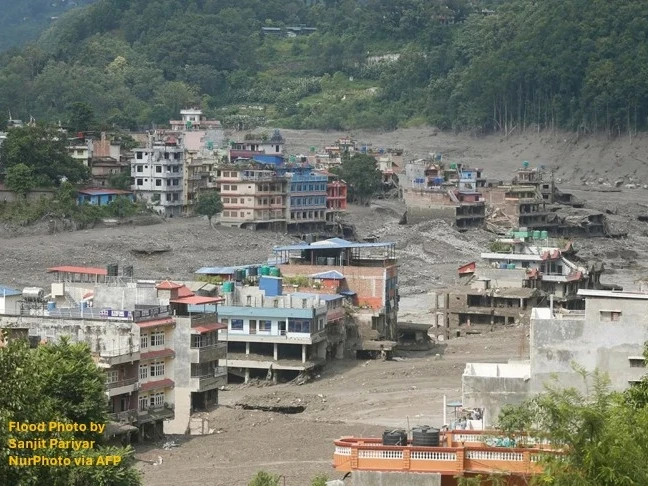
A devastating flood has brought fresh grief to Nepal, a nation marked by decades of political upheaval and economic hardship. Nepali brother Tom (penname) shares the human cost of the disaster and the remarkable story of God leading him from a Hindu childhood in a remote mountain village to planting churches in Malaysia and Australia—and now using media to connect Nepalis worldwide with the truth of the gospel.

Listen now:

Share

Hope in Nepal: A Devastating Flood, Political Upheaval, and a Gospel Movement

A devastating flood has brought fresh grief to Nepal, a nation marked by decades of political upheaval and economic hardship. Nepali brother Tom (penname) shares the human cost of the disaster and the remarkable story of God leading him from a Hindu childhood in a remote mountain village to planting churches in Malaysia and Australia—and now using media to connect Nepalis worldwide with the truth of the gospel.

https://www.reflexio.org/episodes/hope-in-nepal-a-devastating-flood-political-upheaval-and-a-gospel-movement

Show Notes

Brother Tom (penname) offers a personal window into Nepal’s history, culture, and spiritual life. He reflects on the pressures facing ordinary families, the legacy of decades of violent political conflict, and the urgent needs following the devastating flood.

He recounts the searching questions of his childhood, his first encounter with the message of Jesus, and the unexpected path that led him to serve Nepali communities far from home. Tom explains why personal relationships, patient discipleship, and locally rooted leadership remain vital—even as digital tools create new opportunities to reach seekers. 

His story points to lives changed by grace and invites us to pray for those grieving, those rebuilding, and lasting hope across Nepal and the Nepali diaspora.

GC Ministries’ Website: https://gcministries.org/

Transcription

Don [00:00:00]:
Welcome to another episode of the Reflexio Podcast. Today I have a conversation with Brother Tom (penname), who is a Nepali engineer, but also an evangelist, discipler, church planter, and we talk initially about the devastating flood that hit the country 2 weeks ago, and then we talk about the several decades of civil war and changes of government that has caused Nepal to be very unstable for several decades. And then we turn and we talk about his early life and how he grew up in a tiny village in the mountains and from a very devout Hindu family. Then he came to faith as a teenager and eventually led many of his own family members to faith, saw churches planted in his village area, and then after he became an engineer and working, they had to leave the country and join the millions of Nepalis fleeing the country. And as a result, he was in Malaysia where he did church planting there, planting house churches, and then moved to Australia and working with the Nepalese diaspora there. And more recently, he is in the States where he has got a media ministry going where he can access Nepalis in Nepal and in the diaspora using their phones, and then through that they can follow up and share the truth and share the gospel with them and see many coming to faith. It's quite an amazing story. It's heartbreaking as we talk about the situation in his country, but very encouraging as we talk about what God is doing in Nepal at this time.

Don [00:01:35]:
Welcome, Tom, to another episode of the Reflexio Podcast. It's great to have you with us.

Tom [00:01:40]:
Thank you.

Don [00:01:42]:
So people don't know you yet. Can you just briefly introduce yourself, who you are and what you're life and ministry is now?

Tom [00:01:50]:
Yes, I'm Tom. I'm originally from Nepal, and I'm married. I've got 2 kids and a wife, and at this time I live in Charlotte, North Carolina. And so, yes, I serve the Lord full-time. Yeah, that's it. And then Yeah, so I have been doing ministries in different parts of the globe, I would say, and the Lord has blessed.

Don [00:02:24]:
And your full-time ministry now is focused on Nepal and Nepalis?

Tom [00:02:30]:
Yes, our ministry is all focused in Nepal primarily and then also diaspora Nepalis globally. So there is a diaspora aspect of it, too, yes.

Don [00:02:43]:
So part of the reason why we're talking now is because 2 weeks ago from the time this podcast is published, there was this major flood with a glacier melting and a landslide that caused a massive flood up in one part of Nepal. Can you describe a little bit of the impact that that's had on that region, on the people? I understand you know people there. You've lost friends and colleagues.

Tom [00:03:14]:
Yes.

Don [00:03:15]:
Could you just talk about that a little bit? It's very heartbreaking.

Tom [00:03:18]:
Yeah, it's definitely heartbreaking. And it is so, yeah, mind-boggling. Like, you know, it's very hard to wrap our head around it. And it's the first time ever that people never knew this kind of flood in the past. And this is The first time of its kind. So, it's basically that the glacier up in Tibet actually, they were sort of melting and then moving downwards. And then, there are tons of these lakes. And then, as the glaciers fell to the lakes, it's kind of a massive weight. And, that really broke the lake. And then, the lake actually, as it broke and it came down, and the first thing is that it came to actually a border immigration or customer— custom— Border crossing.

Don [00:04:23]:
Yeah.

Tom [00:04:23]:
Yeah. So, there's a huge building. So, the thing smashed that huge building. People were running everywhere and no time to really save themselves. It's kind of a blink in the eye. Like, you know, they're running, but it's behind you and you are gone in a blink of your eyes. And, further down, as it went further down, that there are hydro dams, you know, like a lot of water reservoir for the water in a hydro park. And then, as it came towards that, you know, it was kind of bringing all kinds of things like big rocks and everything. And, it smashed those dams as well. And then, think of those massive amount of water that's flowing down from there. And then, all of a sudden, the villagers didn't know it was coming. And then, even when there was some sort of warning when they found, but still people couldn't believe it was so big because— Sometimes they try to compare it with like the monsoon kind of a flood, which is not that bad and all of that. And but then people would never think this is like huge, many, many feet high, and that would drown them. So yeah. And many, many, like, you know, up to now, perhaps 13, maybe about 1,300 people have lost their lives. Another 5,000 people have been missing, you know, they are— we don't know. The other day, I read that there were about 12 schools that was all, you know, destroyed, and there were about 600 students missing, you know. So it's just very heartbreaking, very tragic. So, and it could be, we don't know, people talk about like it's a global warming thing that more and more, you know, that snow are melting.

Don [00:06:30]:
Right.

Tom [00:06:31]:
And then there is a big talk about, like, you know, who is responsible for this.

Don [00:06:37]:
Yeah.

Tom [00:06:38]:
You know, so that's another matter. But in the midst of this, that, you know, there's an effort by the government to really go and, you know, rescue people. and also search those who are missing. And there could be people still alive in the tunnel, you know, like inside them. And some of the people who escaped that, they said that there are people alive inside the tunnel as well. So, and so many bodies are found down in India, like the river flows all the way to India, right?

Don [00:07:15]:
Wow.

Tom [00:07:15]:
So it's so bad. And then Every— like, people lost properties, their houses, their cars, and everything all over the place. So, uh, yeah, it's, it's, it just is— you cannot even imagine. And the tragedy and how, you know, people have lost their families. And recently my wife had visited Vienna, Austria. She had met a lot of Nepalis, and one of the friend that she met, her whole family were washed away, you know, died in that flood. And there are so many stories again and again, like, you know, there's a friend of mine that is a believer and then how his team, they were going over there and all of them were gone. And people who are working in the immigration office, how they lost their lives. So yeah, I mean, there are so many and we still don't know. It's so big and vast. We still don't know what is the damage yet.

Don [00:08:25]:
Yeah, we just know it's catastrophic.

Tom [00:08:27]:
Yeah, very much.

Don [00:08:29]:
So I, as you know, I've been in Nepal before and my memory of these steep mountain slopes with narrow valleys, I get this picture The villages all along the bottom of the valley and then the water coming and just completely destroying everything.

Tom [00:08:45]:
Yeah, right. So, there are so many people living close to the rivers and primarily because they normally plant rice. So, they need water for rice. And then, also that what happened is that as they were making roads. So, it was easier to build roads in the valley parallel to these rivers. So, that's very hard. It's very— it's kind of new. It's kind of unusual. In the past, people always live in the mountains. And, the valley, they used to go and work in the rice field and all of that.

Don [00:09:33]:
So, But then they'd go up to the mountains.

Tom [00:09:35]:
Yeah. And then go back to the mountains. Like for me, I come from a mountain village in Nepal. We live in the mountain, but I go to the rice field like that, you know, close to the river. It's about an hour and a half walk there.

Don [00:09:52]:
So down into the—

Tom [00:09:53]:
Down, down the valley. So that's very common. But, you know, it's been more recent in the last few decades, people are You know, kind of living closer to the river valleys. Right at the river.

Don [00:10:09]:
So that compounded the damage done.

Tom [00:10:12]:
Yes, yes.

Don [00:10:13]:
And I haven't actually looked at a map to see where this was, but they say that this was an area where a lot of foreign tourists come.

Tom [00:10:19]:
Yes.

Don [00:10:20]:
There was a lot of foreign from many countries that were also destroyed.

Tom [00:10:24]:
Yeah, like when we say that we lost many, many Nepalis, but also we lost many, many foreigners who were tourists in the area.

Don [00:10:34]:
as well.

Don [00:10:35]:
Yeah.

Tom [00:10:35]:
So, yeah, it's very scenic and natural and a beauty and all of that. And then hikes as well.

Don [00:10:43]:
Yeah.

Tom [00:10:44]:
Because it goes towards the mountains and Himalayas and a beautiful place called Gosainkunda, which is another big center for a lot of religious people as well as also the tourists too. So, Yeah, this has been very, very popular for trekking and hiking and visiting a lot of religious places too up in the mountain. Yeah.

Don [00:11:13]:
So when I spent time in Nepal in the '70s, several decades ago, I was up there, I don't know, 3 or 4 times. the country at that time seemed to be quite stable. There was a king and he was very progressive, looking ahead and building his country, building dams and building— providing electricity and modernizing the country. But when we talked last week, you were saying that that era ended. I sort of lost track. I haven't kept track. And most people listening to this probably don't know much about Nepal at all unless they visited like I did.

Tom [00:11:51]:
Yes.

Don [00:11:52]:
But in fact, Since the '90s, early '90s, even late '80s, it's been quite unstable politically, right?

Tom [00:11:59]:
Yes.

Don [00:12:00]:
Can you sort of tell a bit of that background and what's been going on in the country since the late '80s?

Tom [00:12:06]:
Yeah, I would say in a little bit, Nepal is sandwiched between India and China. You know, in the northern, it is kind of a Tibet.

Don [00:12:15]:
2 superpowers.

Tom [00:12:16]:
Yeah, superpowers on both sides. It's perhaps a size of North Carolina, about 56,000 square miles, perhaps.

Don [00:12:28]:
Yeah, it's a small country.

Tom [00:12:30]:
Yeah. And about 500, 600 miles long and 200 miles wide. So, it's quite small. And most of it is also mountain. But then, you know, there was like a lot of little kingdoms in the past. So, the one of the kings decided to unite all these little kingdoms and make Nepal. So, he built Nepal. So, he was the first king who united Nepal, built Nepal, and even fought against the English. Like, they were colonizing India.

Don [00:13:06]:
Was that in the 19th century or 18th century?

Tom [00:13:08]:
18th century or before that. Yes. So, And so, yeah, Nepal has not been colonized. So, it has been very independent, a sovereign nation.

Don [00:13:23]:
Very proud of being a sovereign nation.

Tom [00:13:24]:
Yeah. It has its own amazing history on its own. And starting almost at the sea level, it goes, you know, it rises very fast. And when you think about Mount Everest, like, you know, it's so fast. So, like, you can see the changes in the terrain there. And also people groups are very different. There are 269 people groups, perhaps more than 100 different languages that, you know, we don't understand each other, right?

Don [00:13:55]:
Right.

Tom [00:13:55]:
However, Nepali is the major language and which is very closer to Hindi language, the Indian language as well. So we are landlocked. So we were in that. So Nepal had that amazing history how the king built it, but then there was a Rana family, a particular family. People took power and ruled for about 104 years. So sometimes people call it a dark age because people didn't get a chance to go to school. You know, people were, you know, they were kind of ruling and they had this absolute power. And yes, in the 1950s, Actually, around that time that, um, when nations, they were trying to be free, including India.

Don [00:14:48]:
Yeah, become independent.

Tom [00:14:51]:
So the king actually made a huge, bold step, like, to leave the palace and actually went to India, actually. And then they had to negotiate. So the king came back and to Nepal after the negotiation when the— this Rana family sort of gave up their power. And that's it. So you can see how the kings have their history. And then it was about 10 years, '50 to '60. So there was kind of a multi-party democracy transition. There were all kinds of issues and problems going on. And then India was trying to expand, you know, like they had taken a sovereign nation, Sikkim, close to us, our neighbor. And whereas China had, you know, gotten, you know, came to Tibet and took Tibet as well. So then Nepal was very vulnerable.

Don [00:15:52]:
Yes.

Tom [00:15:53]:
And then our king saw how the, you know, how these powers could use the political leaders for their benefit. So then king saw that now perhaps, you know, we may not have a nation. So then he took— this king took the power and ruled himself. So this king ruled between '60 to '70, almost 10 years, a little less. And then he connected Nepal to the rest of the world, became the member with United Nations, and had great relations with the different countries. So, he had diplomatic ties with so many countries all over the world. So, actually way ahead of India too so that the world would recognize it as a sovereign nation.

Don [00:16:45]:
Right.

Tom [00:16:45]:
In the same time that the king actually built the nations, all the roads, the hospitals, schools, universities, factories, industries, whatnot, everything that he really did that in that very short period of time, those infrastructure. And then, he died early. Like, he died like in his 50s. And then, his son took over. Great king. Like, he had been ruling. But then, in 1990, they wanted again multi-party democracy. So, there was some sort of revolt and protests going on. So, the king said, hey, if you want this, I give it to you. All right. So the political parties began to rule it. So that's where the 1990, that was kind of pivotal. Now from the king to the political parties or the leaders. So from there on, Nepal has been very unstable because of the fights between the political parties and within their own party as well. And then after a couple of years in 1992, a group of the communists known as Maoists, and they really began a war. You know, they began to kill people, threaten people.

Don [00:18:07]:
Were they armed by China and supported by China?

Tom [00:18:11]:
Oh, no, no. Actually, it's very interesting that this ideology, political ideology, is more like China, but it was all backed and recruited by India.

Don [00:18:22]:
India was trying to undermine the country?

Tom [00:18:24]:
Right, yeah, India, you know, because India wants to take over the country, Nepal. So one of the ways— and I mean, they have done that all the time, but then using Maoists, it looks like it's Chinese, right? But like, these, they were supported totally by India, and then they waged that war and killed about 17,000 people. And thousands of the others are missing, you know, we don't know. And so that was like you say, a decade of more or less like '96 to 2006. And 2006 is the max. And then the king said like, okay, that you can have you know, you can do whatever you want to do now. Like, it's up to you. So then they came into power. They came into power. So before that, if you see 2001, there was a royal massacre. So they killed the king because king would not compromise either with China or India, and especially with India. So And then he was massacred, you know.

Don [00:19:43]:
Him and his family and all?

Tom [00:19:45]:
Yeah, all families and all of that. And then his brother became a king, but there was a lot of pressure, you know, by these Maoists and, you know, India and others that they removed him from the power. So he was like us, like general people. So that was in 2008. And then, as that happened, every time it's getting worse. The country is getting worse. They destroyed all the factories, all the industries, all the businesses, and everything that we had to depend on India. Like, they were making it harder for the farmers, you know. So, what happened is millions of people fled the country, went to other countries for their safety. and security, number one. And number two, when there's nothing, no jobs or nothing, you know, then they had no money to feed their families. Though they actually went to countries like Middle East, Malaysia, America, Europe, everywhere, wherever they could go to. So that's why about one-third of the population, you know, we have like 30 million, almost 10 million are outside of Nepal.

Don [00:21:01]:
Wow.

Tom [00:21:02]:
Right. So that's the— yeah, and then it's been very tragic. The country is going downhill all this time, and then people are frustrated. And then last year in September, actually this month last year, the government, you know, were trying to ban the social media. And then these Gen Z groups came and protested, and they did not— they protested against corruption and no good governance. There was not, you know, it's bad, very bad. And they were very, very frustrated. But as soon as they came out in the street and all of that, the government quickly killed quite a number of They shot them. Yeah. So, that really went and it became worse the second day. It was like they burned the country. So, major, major, all the buildings and palaces and everything were burnt all over the countries. And then, the government sort of stepped down. And then, eventually, there was an interim government who kind of got the mandate to hold the election.

Don [00:22:27]:
And there's been an election or it's coming?

Tom [00:22:29]:
No, yeah, we have election in March of this year, you know, in March of, I think, March 5th perhaps that we had an election. And then we have very young leaders, Gen Z type of thing. So you think of prime minister, 35 years old, and the House of Speaker, she's a deputy, I think, House of Speaker, she's like 25 years old, and so someone between 25 to 40. I think if you are 50, you are terribly old.

Don [00:23:03]:
So there's the hope that the youth will give a new future to the country.

Tom [00:23:09]:
Right, so there's a lot of hope and aspiration, like, and perhaps they will steer the country towards a great future. That's the hope. But it's a very challenging process because, you know, they have the same bureaucracy who tried to really fail the government. All these political parties who had enjoyed, you know, the corruption and everything, they would be going against them. They're still there. The good thing is that they overwhelmingly willingly won the election, like almost 2/3 of the seats that they won. So that's huge. That's in the, what do you call, the Congress, like lower house, upper house, that's the Congress. But they still have those other political parties in the upper house. And there's always a tension between the two anyway.

Don [00:24:02]:
And now this new government is faced with this major catastrophe That's going to take all the resources to help rebuild that region of the country after the flood.

Tom [00:24:11]:
Yeah, right. So, yeah, as the new government continues to really figure out, navigate, and people are asking, like, you know, the results, you know, sooner and all of that, seems like they're working hard, but still there's a big hope. And they have been facing different things. There was religious violence a little bit before that, and quite a few people got killed between Hindus and Muslims. And then the government was like, it had to put a lot of focus on that. And then there were other things too, like the government has, you know, challenge, a lot of challenges they are facing. And this one, this flood is very much like, you know, something they had not expected.

Don [00:25:00]:
Yeah.

Tom [00:25:01]:
And all of a sudden that this is what they are trying to you know, kind of work through and try to figure out, like, how they can. Because already, we have a lot of debt and our money is very weak. And then, a lot of infrastructures are destroyed. You know, like, with this flood, most of the roads in that region is gone. And then, about, I think that 39 bridges all washed away. And hydroelectric dams are all destroyed. And, you know, and people— losing their house, house was wiped out, and then they are wondering, should they even live there anymore or find a new place?

Don [00:25:49]:
Yeah.

Tom [00:25:49]:
So, yeah, there's massive, massive challenge they're facing, but it seems like the government is sort of determined and they're working day and night trying to figure out how they can help rebuild.

Don [00:26:05]:
Well, this is such a tragedy, but I want to move from that more personal to you. Can you share a little bit of your story, how you came to faith? This was before all the civil war and unrest. Share your story a little bit and then how God led you out of Nepal because of the conflict. Can you just tell that story for us?

Tom [00:26:28]:
Yeah, so I I was born in a remote village in Nepal. It's kind of a— if you think of Kathmandu, it's like west and north. So, western part of Nepal and then northern.

Don [00:26:44]:
Up near the Tibet border?

Tom [00:26:46]:
Yeah, closer to Tibet border. And so, I was born and raised. And in Nepal, there are so many mountains, so many villages. So, a lot of times, that village is like the whole world. So, I I was born in the village, grew up there, and that was my whole world. Furthermore, like, my grandfather was very religious. So, he had sold all his properties and everything and built a temple, Hindu temple, deep into the forest so that he can worship God there and ask people to come and worship.

Don [00:27:27]:
Was this Hinduism or Buddhism or some kind of combined?

Tom [00:27:30]:
It is Hinduism.

Don [00:27:31]:
Hinduism.

Tom [00:27:31]:
So, it is Hindu. So, Nepal is predominantly Hindus, like over 80%, about 10% Buddhist, but Buddha was born in Nepal, you know. So, and then Hinduism is kind of a center. Hindu and Hindus think Nepal is the center for their faith as well, kind of a pilgrimage for them. And then there are about 5%, perhaps Muslim and others, So that's the kind of a religious and demographic. Yeah. So I grew up, you know, in that environment, you know, in the temple, growing up chanting Hindu things in the morning, in the evening. So there would be a lot of different celebration and festivals to worship gods. And yes, so our particular one was Krishna. People you know, sometimes Hare Krishna or Krishna, that particular god, because in Hinduism there are like more than 300— they call it 300 million gods, right? So anything and everything could be a god in Hinduism. So that particular Krishna is one of the gods anyway. So my grandfather was the follower of Krishna. And this particular one was, you know, those who followed Krishna were vegetarian. So, they did not eat meat. So, yeah. And so, I grew up in that. So, I was happy. I loved my grandfather and grandmother and they loved me. And my father went into politics. So, they needed someone to succeed my grandfather. So, I looked like my grandfather, my nose and my toes. thumbs or whatever. So they, they thought I would, I would be his successor as a priest.

Don [00:29:25]:
Yeah.

Tom [00:29:26]:
So, but as I was growing up, even as a young kid, I began to question a lot of things in Hinduism. Some of the major ones is like caste system. Like I, I told you how my name and surname, you know, represents a caste and a group within that caste. So, there's a caste system. What amazed me is that a lot of times low-caste people do the manual work and menial type of jobs. And so, they come and build the temple. And then, once they build it, because they are low-caste, they cannot worship in the same temple.

Don [00:30:09]:
They can't worship in the temple they built.

Tom [00:30:11]:
Yeah. Even furthermore, like, you know, people who carve the idol to worship, I mean, they carve it, they make that little god for, you know, and then they bring it to the temple because they are low caste. They cannot worship the god they made. So I was questioning, you know, God because I began to see Hindu gods, gods of injustice, because it was not fair, like, you know, that he would not And they will not be allowed to come and worship in the temple. And it remains the same even today. So, so that, that was very upsetting that I could not compromise, you know, with that. It was hard. And then I also saw, like, you know, as I told you, that the followers of Krishna, they are vegetarian. So for me, for us, to eat meat means you go to hell. You know, it's very, you know, strong that you could not do that. But I could see other Hindus sacrifice animals, eat meat, and all of that. They say they are pleasing their God. So totally two, you know, polar opposites, right?

Don [00:31:24]:
Within the same Hindu devotion.

Tom [00:31:27]:
Yeah. So it's very, you know, so that confused me even more. Like, you know, how do I know who who I was and what I believed and how do I identify and say, this is what— who I am, what I believe, how I live. So there were all the variations, you know, of that one. And then in Hinduism, like there's a belief, like in a karma-based and a good works-based religion. So if you really do good karma, good works, then you go to heaven. Bad works, you go to hell. So that, that, that's what he believed. But also in Hinduism, there is reincarnation. So when you die, and if you have done a good work, perhaps you go to heaven, or not, and didn't do good works, you go to hell. But then they would be— they could be born again as a cow or a dog or any animals or birds or anything, right? that confused me. Like, do I go to heaven or hell or become a cow? How do I know this? So, uh, that, that, those questions. And the last one, you know, the major, major, you know, like the last one. My grandfather was a very nice man, very religious man, and he'd gone to all the pilgrimage, done everything possible to please Hindu gods. And then he Even though he did, he did the vow of silence that he would write and talk to people that way. And then, so, then it was very hard for him to, you know, feel the assurance. He did not think that he had salvation. So he still was unsure. He was still working. And I was looking at his life. He is the most religious guy. You know, guy, he'd done everything to earn good works. And if he's not good enough, everybody else looks terribly bad because they are way down there.

Don [00:33:29]:
Yeah.

Tom [00:33:30]:
So it looked like, is it like nobody can make it to heaven? Because, you know, it's very tough.

Don [00:33:36]:
Now, can I just ask a question here? Yes. You're using heaven and hell, which are in English, they're Christian terms.

Tom [00:33:45]:
Yes.

Don [00:33:45]:
But in your Hinduism, Was there this idea of an afterlife with God and hell was a place far from God, or what was the concept?

Tom [00:33:54]:
Oh yeah, I think that in that case, uh, very similar. I think that in Hinduism they talk about heaven and hell a lot.

Don [00:34:01]:
Okay.

Tom [00:34:01]:
So heaven is a place where you go with God, you have great life. Hell is a place that you will be tortured forever and ever.

Don [00:34:09]:
Wow, they believe much similar.

Don [00:34:11]:
Wow.

Tom [00:34:11]:
Right, very similar there. So yeah, yeah, that was very Very clear for us. Like, we would, we would believe that as a young kid. And that— so, you know, uh, that's why everybody, you know, somehow want to do some good works, hoping that they go to heaven, don't have to, you know, suffer the torture of the hell eternally. So, yeah. And, uh, so with all these questions, you know, in my mind, you know, I was, I was very upset. But then, you know, in, in our culture, then we could not ask these questions to our elders. Like, I have to be at least 16 to ask questions, you know, a lot of times. So in the midst of that, and one of those times that, you know, my grandfather used to go to India visit his gurus, bring a lot of Hindu literature. And then, you know, in one of those visits, somebody gave him a gospel tract, you know, and then he would not throw it away because the paper is God of knowledge, so you can't throw it away. If you happen to step on it, you bow down and apologize and say sorry. So he brought that gospel tract home, And I read it for the first time. I was always curious. I was reading this for the first time. I knew there's a loving, living God, and then also the life of Jesus, love of Jesus, His sacrifice, all of that amazed me. But I didn't know much because, you know, that little tract, that was it, and that remained as a seed in my life.

Don [00:35:55]:
How old were you when you read this?

Tom [00:35:57]:
That was— I was only 8 when I read it.

Don [00:36:00]:
Oh, a child, okay.

Tom [00:36:01]:
I was a so young kid. So around the age of 10, my father died young. So that even more pushed me to think about life and death, like what happens after life. I was close to my father. That bothered me a lot. And then I really began to question a lot, a lot more about life. And I was very depressed in some ways because of my father's death. And I was questioning even more what after this. And so, it was very interesting that in my village, and then that was my whole world. But when I was at the age of 12, around that time, I got a chance to go to a little town from my village. And that town, for the first time, I saw the You know, electricity, the bulbs, light bulbs, and I thought they were stars, but they were just light bulbs.

Don [00:37:00]:
First time you saw electricity.

Tom [00:37:02]:
The vehicles, like the trucks and, you know, bus and all of that, I would sit and watch, you know, so long, like, and I was amazed. I'd never seen. So we would always wonder, what do they feed this? We can kind of think that they're like animals. You feed animals in the village. How do they, you know, can they move if they— what food do they eat? So anyway, that was funny. But in the village, we also heard all the time there are people in the other planets. They visit now and then and go back. And it's kind of a funny story. But in the same town, I saw some people who were very different looking than myself. They were tall, they were big, they were white. And I was very curious about these people, and I came close to them, and I heard them speak English. And I had learned English very well before that.

Don [00:38:03]:
You had?

Tom [00:38:04]:
Because I wanted to learn English to read the books because there were not enough Nepali books, but then in the library, there were tons of English books, and hardly anybody would read, but then that was my quest. I wanted to learn more. So I got to know these people, and eventually they gave me a book, and then I took it back home and began reading. So they— and as I read this book, it talked about God who loves, like in John 3:16, God so loved the world. So I was reading this, For the first time when I read this book, it was amazing that it seemed real to me because Hinduism, Hindu scriptures, stories are more like a myth, so made up. Whereas this is a real thing happened, good or bad, it happened and it's recorded. So it was easier for me to believe. But to my amazement, for the first time I knew that there's a loving God. and a living God. Loving because in Hinduism, God is, you know, you kind of visualize God more like punishing, very impersonal. And whereas this here is the opposite. He is a loving God, very personal. He didn't want to condemn, He wanted to save. He just taught His disciples to pray to God and addressing Him as Father, right? You know, that could— how close you could be, more like a family. So a lot of those things really, you know, caught my heart. I, I loved it. And then there was no caste system, male or female, Jews or Greek, all of them were one in Christ.

Don [00:39:43]:
And so how old were you when this was going on, when you were reading?

Don [00:39:48]:
Were you a teenager?

Tom [00:39:49]:
I was 13. I was 13.

Don [00:39:50]:
Yeah.

Tom [00:39:50]:
Yes.

Don [00:39:51]:
So we're a little tight on time. Can you get to the point where you came to—

Tom [00:39:56]:
Right. Okay. That's, that's, that's good. Like, okay. So then, uh, right there, uh, so, uh, Yeah, I read that, and then as I continued to read, I came across Ephesians 2:8-10. That's where it's not by works, not by karma.

Don [00:40:15]:
So the book you were reading was the New Testament?

Tom [00:40:18]:
Right, right. So it's by grace. So that was like a light bulb, you know, like the turning point in my life. And I said, like, here is a salvation It's a gift, it's a grace, and I don't have to work. And rich or poor, high caste, low caste, educated and non-educated, young or old, they all could receive it. So I said, this makes sense. At the age of 13, not knowing what I was going to face in the future, that I gave my life to this new God. And then after that, like, you know, when I gave that and I really got into a lot of trouble, a lot of persecution, ostracizing, all of that until like I was 16 where we have this high school, we call it, in the 10th grade. And then that's when, and there was a kind of a test like, you know, hey, you worship a different God, something bad will happen. So they thought I would fail, but amazingly, you know, in this test, God really blessed me that I got the record heartbreaking results.

Don [00:41:22]:
Highest record ever.

Tom [00:41:23]:
So all friends and families and relatives and neighbors who were against me for the first time, they are so curious, so interested to know the God I worship, and eventually I got a chance to share the gospel to my families, their families and relatives and all of that, and many came to know the Lord eventually. In the village I was supposed to be a Hindu priest, there is a great vibrant church and about 14 other churches in the area.

Don [00:41:50]:
Wow!

Tom [00:41:50]:
So, yes.

Don [00:41:51]:
You were the first believer in that area?

Tom [00:41:54]:
Yes, yes, yeah. I mean, at the time, perhaps you could count on your fingers believers in the country, right? So very few, yes.

Don [00:42:04]:
So I understand that you did studies and you became an engineer, right?

Tom [00:42:09]:
Right, yes.

Don [00:42:10]:
Was that all in Nepal or did you go abroad to do that?

Tom [00:42:13]:
No, that was in Nepal. There was only one university, only one engineering college, and I got an admission there. And the Lord really blessed me over there, too. So God used my life to lead so many other French engineers to the Lord. Praise God! And then when I finished engineering, I went back to my home district, built the bridges, roads, water projects, and then I got a chance to really share the gospel, and most of these villages have the fellowship or churches as well. And then this, you know, the conflict, you know, late '90s, this conflict happened. So millions of people were outside of Nepal, like in Malaysia, there are millions of people, but there was no Nepali church. We moved over there, the Lord blessed us.

Don [00:43:03]:
So you, with your family, by this time you went to Malaysia?

Tom [00:43:06]:
Malaysia, yes.

Don [00:43:08]:
And you lived among the Nepali diaspora?

Tom [00:43:10]:
Right, right, right. So yeah, among the Nepali diaspora, right. So And then, you know, the Lord blessed the work there, too. Like, you know, we planted churches over there among the Nepalis. I think today it is totally growing. There are maybe about 150, 200, I don't know, you know, assemblies.

Don [00:43:30]:
And you were there working as an engineer but sharing the gospel all the time?

Tom [00:43:35]:
No, when I went over there, I actually went there as a student, you know, like I couldn't go as an evangelist or whatever. So, so I was a student and I was working, but also a student, and that's how I was able to do the ministry work and mission work as well. And following that, another big Nepali community was in Australia, but there was no Nepali church, and we moved over there and the Lord blessed us and we moved to Sydney. Started First Nepali Church and settled in.

Don [00:44:10]:
So can you just, can you, one, explain briefly how God led you in these steps and then maybe tell one or two stories of how God birthed the church just to give a flavor for what actually was happening?

Tom [00:44:25]:
Right, right. So yeah, I moved to like Australia, like, you know, it's a very funny story. I don't have any theological degree or seminary or whatever, so I was discipled by Navigators and discipleship was my major thing. And I love to share the gospel and lead the fellowship and that becomes a church. So we were in Australia and developed and planted churches there, too. So the Lord is amazing, you know, like how He works. And I was like, you know, that's in Malaysia. You know, we were there and, you know, led so many Nepalis to the Lord, and there was a young Nepali who spoke very good English, but I had a Malaysian friend too, like, hey, you know, can you share the gospel with him, all of that. They became very close friends for a long time, but the gospel didn't work, you know, like he could not. So finally, you know, he brought that a guy to, you know, to our room, and I questioned, shared, and took like 3 hours. And then after 3 hours, a lot of, you know, his questions were answered. So it's not only the language, there's a lot of layers of religion, culture, understanding. So sometimes we think that if I speak the language, perhaps I can do that, but you can't. So it's amazing. But after 3 hours, he gave his life to the Lord. After 1 week, he was baptized, and after 6 months, he was sharing the gospel. And then after a year, he went to seminary, right? And then did his M.Div. or whatever degree, went back to Nepal, became a dean of a Bible college. And he is a missionary. He is the head, I think, the leader leading the you know, mission department with the Baptist groups, so he is doing great. So there are so many other examples like that, too, and so he led so many others to the Lord, you know, so many of them, and he is serving actively to the Lord.

Don [00:46:44]:
Yes.

Tom [00:46:45]:
And, yes, so in Sydney, we came And in the beginning it's tough and they would come, they were not even a believer, but they would be interested. And they, you know, as they come to the Lord, they think that one of the leaders thought that he could not do this, it was too hard, and he didn't think that he understood enough, but he continually grew in courage. Today he is leading the church there.

Don [00:47:14]:
Wow!

Tom [00:47:15]:
and leading many others to the Lord too. So there are so many of those stories, um, again and again. So it's in there all that when we are moving, so from Sydney we're moving to another town where the Bhutanese refugees were. So we moved over there to plant a church among the Bhutanese too. The Lord blessed that too. But then we'd moved too many times, it was hard for my family And, you know, there was a request from perhaps various cities or state, but then during that time, I tried to find out like if there is another alternative. So I could see how the megachurches, you know, use technology. You know, you see everything on the screen, your pastors, your worship on the screen, live streaming to other campus. So like for me, can I use the technology for the mission? So at the same time there was social media. A lot of times I gave a call to the youths, they ignore it, but if it is a social media message, immediately they answer. So I could see there is a big shift. Then I wanted to develop a strategy to develop a system so that we could saturate Nepalis with the gospel. That was my dream. And then I also wanted to be more involved in the discipleship. And then, when I was looking for that in Australia, there was nothing. And, nobody knew what to do. So then, some of them said that, hey, the crazy Americans perhaps have solutions. They always do all the crazy stuff, right?

Don [00:48:51]:
Okay.

Don [00:48:52]:
They're the ones that try things.

Tom [00:48:53]:
Yeah, right. They want to try things. So, I moved to Charlotte, North Carolina to avoid the snow in the north, sun in the south, not terribly expensive like California, right? And then the Lord is so amazing that the person I needed to really develop this strategy was right in the city. And so together we developed the strategy and then the Lord blessed it in late 2021. Early, we launched this Mediator Movement in Nepal.

Don [00:49:27]:
And this was right in the middle of the pandemic, right?

Tom [00:49:31]:
Middle of the pandemic, and it was the right time. We thought that was wrong in the beginning, but, you know, I was adamant to really launch it because I really want to see how it works.

Don [00:49:43]:
Get started.

Tom [00:49:43]:
So the Lord blessed it and the system worked very well because in Nepal, if they want to learn about Christianity, they are afraid to go to someone and ask because they are afraid with their family, friends, and relatives, or go to a church, go to a Christian. So this is like in your you know, device like this, you know.

Don [00:50:05]:
Yeah.

Tom [00:50:05]:
You can see this. So then they can chat and learn, and so they were free, you know, they were safe. And we could see so many people, you know, responded, and then the Lord blessed, and it's all over Nepal and neighboring countries like India, Bhutan, where Nepalis are. And now we are connected to like 35 countries. And it's continuing to grow all over the world, especially among the Nepali people groups. God has blessed it.

Don [00:50:37]:
So when we talked before and you talked about this, it became clear to me that you're accessing, contacting people and giving them access to the gospel through media.

Don [00:50:49]:
Yes.

Don [00:50:50]:
But you're actually working with them in groups in Nepal. You have people there in Nepal working with the people face-to-face, not just media. Oh, yeah.

Tom [00:50:57]:
Yeah, yeah, so it's only connecting what we call those seekers who are looking for something because today social media is the world, right? Millions of billions of people are consuming social media. That's where you find people, you know. So we put our gospel videos and all of that there, and those interested, they reach out to us. So that's kind of an outreach, you know, social media connecting to the people who are very interested in the gospel.

Don [00:51:25]:
And then you have a team in Nepal in many cities that are working with the people that come to faith.

Tom [00:51:31]:
Yes, so we have a team, Media to Movement team, in Kathmandu. We have a media center so that people work. That's our, you know, headquarters for this or base.

Don [00:51:42]:
In Kathmandu.

Tom [00:51:42]:
So that's Kathmandu, so that's where our team works from, you know. So, yeah, so as the people are interested, you know, want to learn more, So then they connect them to the disciple maker in the people or believer in the church, the local church. So then, and then that's where they do the discipleship. So like our media movement, our focus is to share the gospel, connect to the people, number one. Number 2, disciple the believers. You know, that's a huge part of our ministry. And then number 3, to equip the leaders, like to develop leaders to multiply because you need leaders for that. And then the fourth is we develop disciples fellowship group, which is more like a house church.

Don [00:52:31]:
Okay.

Tom [00:52:31]:
This group is like a house church, but we call it disciples fellowship group. And then the fifth is we are involved in the access ministry or social, it's more of a social work, right, or community service or development work, connecting with the people Serving them, but with the desire to share the gospel, to build a relationship with the community so that we can expand the kingdom of God, yes.

Don [00:52:58]:
And do you get out to Nepal regularly to visit and work with your team, or do you mostly do it remotely now?

Tom [00:53:05]:
No, I am there half of my time, like, you know, so I go there, you know, at least once or 2 times a year or more. as well. So I am there mostly in Nepal helping, but now because my team is strong and growing, so I don't have to travel there more often.

Don [00:53:26]:
As much.

Tom [00:53:26]:
For longer periods, so praise God for that. So, yeah, our leaders are very strong and mature and they are able to continue the movement there, but it is good. So I go often there, And then I also visit diaspora Nepalis in various countries as well.

Don [00:53:46]:
So I am curious, how does these house fellowships, how do they interact with existing churches that have buildings in Nepal? Do they have connection? Do they have fellowship with the leaders? How do they connect?

Tom [00:54:03]:
So, no, I think we Our mission is focused on planting churches in partnership with the local church.

Don [00:54:13]:
Okay.

Tom [00:54:13]:
So then when we develop the disciples' fellowship group, we develop with the church, so it's within the church.

Don [00:54:21]:
So it's a local church that already exists and then you work together?

Tom [00:54:26]:
Yeah, yeah, churches that are already existing there. So we share our vision how discipleship, this media thing, and leadership development can help their church to grow or become healthier and to multiply.

Don [00:54:41]:
Right.

Tom [00:54:41]:
As the churches kind of see that vision, are interested, then we equip them, you know. So there are so many churches all over the country that are interested and they partner with us. And then, you know, when we develop that disciple fellowship group, then they can use that and to start a new church as well. So that's the whole idea. So we work very closely with the local churches and local leaders. So it's very indigenous-led leaders, indigenous leaders-led ministry and churches.

Don [00:55:20]:
So when I visited Nepal 50 years ago, there were very few believers and it was very difficult with intense persecution. Now, are you talking about several hundred believers or thousands? What's going on in Nepal and then among the diaspora?

Tom [00:55:38]:
Right, still tough, very unreached. And so 269 people groups, 268 unreached, no, 269 and then 256, I think, unreached.

Don [00:55:52]:
More than 250 groups still have no known Christians?

Tom [00:55:57]:
Yeah, right. So that's our rich people group, and based on that, you know, Jeshua Project data.

Don [00:56:03]:
So lots of work to do.

Tom [00:56:05]:
Perhaps that might have changed, you know, it changes, you know, all the time because, you know, more people hear the gospel. So, yes, so even though it's anti-conversion, even though there is a lot of pressure from outside, you know, from religious groups like Hindus, Buddhists, internal pressure, and then India opposes it, doesn't want Nepal to really hear the gospel, or China, too. So in the midst of all of that, the Lord has blessed us growing and expanding. More are hungry, like, you know, it's more than a conversion, that it is more of knowing God, true living God, and that's all we are trying. So, I mean, they don't You know, we do not focus a lot in terms of conversion. That's not the thing. But we really help them, the seekers, to find the truth and help them to grow in their search, the quest for the truth anyway.

Don [00:57:06]:
Yeah.

Tom [00:57:06]:
Yes.

Don [00:57:07]:
So just a different direction. You've had quite a life living in 3, 4 continents now and working with Nepalis all over the world.

Tom [00:57:18]:
Yes.

Don [00:57:20]:
Can you recount a time in your life that was very difficult and a deep challenge to your faith?

Tom [00:57:28]:
Yes. Oh, yeah, I, you know, like, it would be very disheartening, you know, as young believers, even when I was young. There was a lot of pressure, persecutions from the community, from the society. and families and others. So, you know, it's almost like you want to give it up, like, you know, no more, it's too much. And just the way God saved me, you know, it's the grace of God, right, you know, that saved me. It's the grace that continued to bless me. So I could see God's hand. So as a young boy, I could have easily given up, you know, but then it is His grace, you know. And then, yeah, those were very tough, like, you know, it's hard. And as you are young and you face all kinds of challenges because of our faith and other issues in life, and, you know, like, you know, secularism, again, another big issue, communism, and you are very confused sometimes in your life. like, you know, what you believe in, all of that. It can be very challenging. And in the midst of all this, that to really keep your faith is very tough, like even in, in the college time and all of that. But it is, you know, I did not see any other options anyway. There was no any other thing better than this.

So I would always sort of compare You know, like, if this is any better than any other things that I would ever believe. And God, you know, just showed me again and again, this is the path. This is the truth. So I just persevered on that. It's all the— and then that has helped me, even though it is tough. Sometimes you go deep, you struggle, you question, you know, because you are in, you know, you're questioning a lot within yourselves and It's been tough, but also a lot of pressure from outside. It's both external and internal, and it's tough. But God really uses that, and He's cooking something perhaps out of that. And a very deep conviction because of that, like, you know, the biblical worldview and the only hope we have in God, and everything starts from Him. So anything that you try to do against him or, you know, without him, then everything is doomed to fail, you know. So, and people, you know, try to believe in other religion or even science or technology or advancement, man, all of them makes no sense when you don't have God. So I always got a, you know, like that, that's something that, you know, when I think of the youths, right? You know, like sometimes here, like, you know, people grow— wow, like they, they are going to church, but then after a while they question, they wander, they think, you know, there is a better thing and all of that, as if.

And I think the downside is that, like, sometimes churches or ministries perhaps try to kind of give them an impression of a religion rather. So perhaps they are Very frustrated with that, but it's the reality, it's the life, it's a transforming power of God. So you couldn't get anything better. I mean, that your eternity is saved and your life here, that you need God to live a life pleasing to God and in the community blessing, like, you know, blessing your family, your community, all of that. So My conviction is, yeah, it can be tough, it can be hard. We may be wondering, like this flood, God, why happened? Perhaps I cannot understand this, but on the other hand, there is no better thing than to live a life in God, in Jesus, and that's the best ever that I feel I've got that.

And I always challenge the young ones, too, rather than just dismiss the religion or dismiss this. Yeah, definitely they are frustrated. I understand that. But they have never seen how relevant this is, how realistic this is, you know, how, how much it can really transform their life for better. You know, life can be challenging, but then they are on the right path. So then, and I always say that, hey, you know, they want to have a lot of fun and all of that. So sometimes, oh, okay, religion stops that, right? That's what people think. But my conviction is that the best joy in your life, because you walk in His path, so there's no better joy, better happiness, on the other hand, than walking and being in. So the other ones are kind of temporary. You think that that's the bait of the enemy. You think that, wow, like I have this, I can do this, I can do that. But eventually you fall into the trap of this world. It destroys you, that's for sure. But being in God has the best thing. So a lot of times all of us want that, you know, but then where do you find that? In God, in Jesus.

Don [01:03:08]:
So as we wind up, um, how would you invite people to pray for your people, your country, especially at this time of the crisis? But in general, how can we who don't know much about it, but now we have some insights from talking with you, uh, how can we pray and, and keep the situation before God?

Tom [01:03:31]:
Yes, so I think that the present, you know, massive thing, you know, this thing about this flood, uh, disasters. And, uh, you know, a lot of people are suffering. I mean, I cannot even imagine that they have lost their families, their relatives, their, you know, friends and others. And, uh, so it's hard. Like, uh, we need a lot of God's grace, God's strength. So just pray for these people. And it gets worse. Like, you know, like the time when there's a flood, you're panicking, you are not even able to process. So now it goes deep, so it will be hard. And also, you know, still the government is trying to rescue, to, you know, reconstruct, to really provide the relief to the people. So we need God's grace, God's wisdom so that they get food and clothes and others in time as well. That's very important. And then others perhaps who are trapped, maybe alive, that God would make a way so that people can find them as well. Those are the major, major things. Pray that now aftermath of this devastating flood, How do you get back to normal? How do you recover and how do you reconstruct the whole thing so that life can be normal? And there's a massive, very long process and people need wisdom, people need resources, people need, you know, all kinds of prayers to help these people.

And ultimately, in all of that, what we learned from this is In the blink of your eye, your life goes, and nobody could think. And it's so important, you know, yes, you know, our life is short here on earth, however much long, and it could be 80, 90, 100, but still very short to the eternity. And then even more so, an event like this tells us our life is extremely tiny. You know, it can be gone in a blink of our eyes. The most important thing is that, you know, I don't know how many knew Jesus, but many others who didn't know, you know, we just, you know, we feel sad about this. And there are so many more who survived, yet for them it's so important, you know, for them and for many others who don't know Jesus, who don't know God as their personal Savior. that they need to know Him for their eternity. So people should be praying for that. At the same time, being able to show the love or share the love through practical means, you know, supporting them to really kind of rebuild or restart their life as well. So those are major prayer areas.

Don [01:06:43]:
Thank you so much. So, Brother, it was great to talk to you, to for me get an update on what's been going on in Nepal over the last 50 years. But it's a hard time, but it's also an exciting time because there's such a responsiveness to the gospel in so many Nepalis. And, yeah, thank you for your faithfulness.

Tom [01:07:04]:
Oh, praise God! I love to share, brother, whatever God has done. It's nothing about me, you know, all of those, it's Him, and all the glory and honor to My God, to my Lord. So I just feel a joy to share, to let people know there is hope in Jesus and there is life in Jesus.

Don [01:07:23]:
What's the name of, the public name of your ministry?

Tom [01:07:28]:
It's GC Ministries. It's a platform because it's all about kingdom. You know, those names are more than that. It's all about his kingdom and his mission. And it's working together. We are one body, you know, working together. So that's all I'm passionate for.

Don [01:07:46]:
My conversation with Brother Tom was very heartbreaking, but also encouraging and very informative as we talked about the country and his own story and what God is doing. I am so glad to be able to connect with him and connect with what's going on in the world. But what God is doing in the midst of these kinds of natural disasters. As always, I encourage you to let your friends know. Please tell your friends at church to subscribe. The more people that you tell about this, the more people can hear these remarkable stories of men and women of God who God is raising up to serve him in this generation.

Join Our Community

Be part of a growing network of next-generation mission leaders. Get early access to new episodes, exclusive content, and resources to empower your journey.

By clicking Subscribe Today you're confirming that you agree with our Terms and Conditions.
Thank you! Your submission has been received!
Oops! Something went wrong while submitting the form.