Listen now:




Show Notes
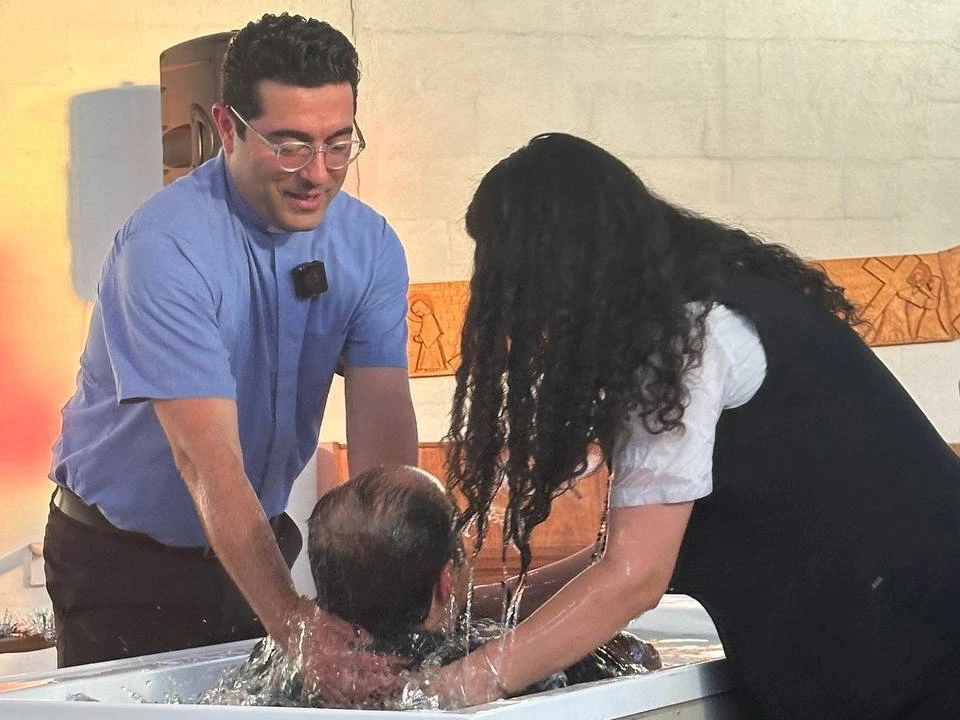
In this gripping episode of the Reflexio podcast, Don Little interviews Iranian pastor Kaveh Hassanzadeh to unpack his dramatic journey from a turbulent youth in Iran, through exile and life‑threatening hardship as an asylum seeker, to radical conversion to Christ, supernatural healing, and bold church planting among Iranian Muslims in Australia.
Pastor Kaveh shares how an illegal Farsi Bible, a storm‑tossed eighteen days on a smuggler’s boat, and a powerful deliverance from generational curses became turning points that reshaped his identity and ignited a dynamic ministry of spiritual liberation, discipleship, and inner healing for Muslim‑background believers.
You’ll hear his remarkable stories of physical healing, emotional restoration, and deep pastoral formation, as well as how Mark Durie’s mentoring and the book Liberty to the Captives have helped forge a healthy Iranian church that breaks cycles of shame, fear, and control. This empowers ordinary believers to flourish, lead, and plant new congregations in Melbourne and Adelaide.
Whether you’re passionate about missions, discipleship, or renewal in the Muslim world, this episode will inspire you to trust God’s bigger purposes, pursue authentic mentoring networks, and courageously step into costly, Spirit‑led ministry without fear.
Links:
Derek Prince sermon on Breaking Generational Curses
Below are several links to Mark Durie’s book:
Liberty to the Captives: Freedom from Islam and Dhimmitude through the Cross
On Mark Durie’s website: Liberty to the Captives
Kindle Version on Amazon: Liberty to the Captives
Paperback on Amazon.com: Liberty to the Captives
Liberty to the Captives available in multiple languages at luke4-18.com
Make sure to subscribe and give us a 5-star rating on your favorite podcasting platform. Let your friends know about The Reflexio Podcast.
Sign up for our newsletter to receive an email when new episodes drop.
Transcription
Don [00:00:01]:
Welcome again to the Reflexio podcast. I'm your host, Don Little. Last fall, I had a very interesting conversation with our brother and our guest today, Kaveh Hassanzadeh. I'm not sure if I'm pronouncing his name right, but he's an Iranian pastor in Melbourne, Australia, and I've actually heard about him and his ministry for quite a few years through our mutual friend Mark Durie.
And in this conversation we go through how he came to faith after he fled Iran and how he ended up in Australia and then being mentored by Mark Durie as a new believer and some with ministry gifting and how he ended up pastoring the church of Iranian converts there in Melbourne. And so it's a very interesting discussion both about his life, but especially about his ministry and how he grew and became mature and is able to now pastor church and actually help establish some other Iranian fellowships around the Melbourne area.
So I expect you're going to enjoy this conversation. It's a very thoughtful and insightful understanding of how to bring former Muslims into maturity and health and vitality. So enjoy another episode of the Reflexio podcast.
Don [00:01:22]:
So welcome, Kaveh, to the Reflexio podcast.
Kaveh [00:01:26]:
Thank you, Don.
Don [00:01:27]:
It's great to meet a couple days ago and to meet hear your story a little bit and thank you for agreeing to come and talk this afternoon here.
Kaveh [00:01:36]:
It's a pleasure.
Don [00:01:37]:
So welcome.
Kaveh [00:01:38]:
Thank you so much, Don, for the invitation. Thanks.
Don [00:01:42]:
And as we both know, I'm a friend of Mark Juries for the last 10 or so years. You've known him a lot longer, but he's told me a little of your story and the way God's worked in the fellowship there in Melbourne.
Kaveh [00:01:58]:
Yes.
Don [00:01:59]:
So can you tell us a bit of your own story and then we'll get to the church story a little later on. But introduce yourself and.
Kaveh [00:02:06]:
Absolutely. Well, I'm Kaveh, pastor of Emmanuel Iranian Church in Melbourne of Australia. I was born in Iran, raised in Iran, but I live in Australia for more than a decade now and I'm married. I've got three beautiful boys.
Don [00:02:33]:
How old are they now?
Kaveh [00:02:34]:
13, 11 and nine.
Don [00:02:36]:
Okay.
Kaveh [00:02:38]:
So yeah, my wife and I, we both serve the Iranian church in Melbourne.
Yeah. So let me to start with the journey of my fate to becoming my. Yeah, So I was 17 that I lost my father due to cancer, internal cancer. I'm oldest son of two in my family. So you can imagine how much burden and, you know, pressure within that time.
Don [00:03:19]:
Were you close to your father?
Kaveh [00:03:20]:
Oh, yeah. Okay. Yeah, yeah. But so that led Me to. Yeah, I guess broke my life myself. Did lots of bad things in my life.
Don [00:03:39]:
So you sort of went crazy.
Kaveh [00:03:40]:
Yeah, crazy thing, you know. And I get really angry with God, to be honest.
Don [00:03:47]:
Angry at God?
Kaveh [00:03:47]:
Yes. I wasn't Muslim, I should say. I didn't raise in a strict Muslim family. My family are not Muslim, I should say. But this is society and a way that we grew up all in Iran. Yeah, that's right. In. In a school, everywhere in society. So it's Islamic culture. So. And I get really angry with God and why I lost my father when I was 17 and the most time that I needed.
Don [00:04:20]:
Yes, you needed that crucial time.
Kaveh [00:04:22]:
That's right. That's right. So my life is just, you know, go through lots of crazy season and hardship until one day that I took one of my father's book in his bookshelf and it was Bible. At that time I didn't know even they call it Bible or that's in Farsi. The only thing that we know is that this book belong to Christian.
Don [00:04:59]:
This is the Christian book.
Kaveh [00:05:00]:
Yes. And it's forbidden. It's illegal in Iran to have a Bible, to read the Bible, to be a Christian. My father was a Christian, as far as I know. My answer is no. I hope at the last minutes you had no idea. No. In his private, you know, he gave his heart to the Lord. But I did.
Don [00:05:24]:
You don't know.
Kaveh [00:05:25]:
Yeah, but he. He was. He was passionate about reading different subject, different in a book. So that book was there and. And it was there for 20 years. Almost 20 years, maybe more. And after my father passed away, one day after. A few years after. That I just. One day I just took the book
Don [00:05:56]:
you knew was there before.
Kaveh [00:05:58]:
Yeah, yeah, yeah, yeah. For more than 20 years. We know that belong to Christian. That's all. One day I took that book. Open it up. It was Gospel of John and obviously it was old translation. I didn't understand anything, but I remember.
Don [00:06:17]:
Did you start with the first chapter?
Kaveh [00:06:19]:
Yes, yes, yes. And you know the first chapter of. Yeah, that's right. Gospel of John. But it's something. It's just start there because then mostly because it was illegal and forbidden. I get interested. Okay, yeah. Let's see. What. What is this? So I read a couple of article on that time, you know, from Internet. I found it and I realized there is a different, you know like Catholic, Protestant, Orthodoxy. So yeah.
And I should say we are family. My mother's side especially have always tension with the government. They have some tension politically with the government for example, my grandfather persecuted it's sentenced to that after revolution.
Don [00:07:27]:
Shortly after the.
Kaveh [00:07:28]:
Yes, yes. Because he was in an army of Shah he opposed. Yeah. So there was always this tension and we had many political issues. So that was one thing. Then I when I just know about exposed by Christianity start by reading that book I just share with my mom and everyone that you know about Christianity. I'm a Christian and all of that. Yeah. I didn't know what I'm talking about but I say it and they get worried because of that background and now this you know and I do lots of, you know, nonsense thing so. And then we get married with my wife.
Don [00:08:24]:
Is this a childhood sweetheart?
Kaveh [00:08:26]:
Yeah, well yeah. During my Uni (university) actually we met and. But it's. It was for many years that we know each other, you know and her family and my family is two different worldview and we thought well, because of all of this it's better to leave the country and start fresh, start a new life together. Yes.
Don [00:09:00]:
She was eager to do that.
Kaveh [00:09:01]:
Oh yeah, yeah, she was. She was on board. So look Don, to be honest, now I look back and think about those days. I see God's hand in all of this. These are all excuse. I believe these are all some something that I made by my mind to convince on that moment that I take this step. But it was all about something much bigger, much important than this. So yeah, we leave the country to Indonesia. We don't have any idea and then met people that talking about Australia. So we. We had to stay in Indonesia. We stuck in Indonesia for about a year very hard situation in Jakarta in Bugur, and different parts of. Yeah.
Don [00:10:11]:
Did you have Iranian connection?
Kaveh [00:10:13]:
Yeah, absolutely. Yes. Yes. But it was really hard. It was really hard especially for someone that just get married two weeks after marriage.
Don [00:10:22]:
Two weeks after.
Kaveh [00:10:22]:
Yes.
Don [00:10:23]:
Wow.
Kaveh [00:10:23]:
Yes.
Don [00:10:23]:
That's not a honeymoon.
Kaveh [00:10:24]:
No, we are still in honeymoon. We leave the country. We didn't get back. Yeah. But Huda is such a blessing to my life. I should say this. Yeah. I mean she's amazing. She's amazing. Faithful to God and. Yeah.
Anyway, so we live in Indonesia for a year and then we asylum seekers and refuge to Australia and in Indonesia we met a family who were Christian back in Iran flee from persecution. And it was really hard for them. And it was interesting because when we met them we saw a kind of love that we never experienced toward us and others. This family. This family was extraordinary. They were amazing. And we get curious that what make them like this like this. And as we start conversation with the them get to know them. They said we are Christian.
And I said oh, I'm a Christian too. They said oh really? And I'm pretty sure after one minute's conversation they understood what, what's going on. But they didn't say anything. Instead they invite me every night to spend time together talking about Bible. And that was. Yeah that was really special time for us. So I started to read the Bible by myself. Another version of course. And every time that I read Bible more and more I get more and more convinced that this is real here. There is a power to change my life to fill those gap that after my father passed away it's just appear to my life. Here is a power to. To just build me again. You know, those brokenness, those things that I. Those damage that I cause to my life repair and you know.
So yeah, I convinced and I gave my heart to the Lord. I said, I just kneeled down one night and I said Lord forgive me, I want to give my life rest of my life to you, and live for you.
Don [00:13:29]:
Hallelujah.
Kaveh [00:13:30]:
Yeah, it was great. It was great. And I remember I said we stuck in Indonesia. We don't have any way to go. But week after that or some, some days after that there was that door open. Someone just. Yeah someone came to us and said look, I'm willing to take you to Australia because no one does that. No, just, just thank you.
Don [00:14:05]:
Oh, smuggle you.
Kaveh [00:14:06]:
Yeah, yeah. But no one willing to do that because when you stay in Indonesia more than a few months then the smugglers and people scare of you because they think you are working with government or something you. You know. So. But that, yeah it was just the open door for us and we took that chance. But it was wrong. I should say that was really wrong. I'm glad that because I spent 18 days on a ocean. On a fishing boat in a stormy ocean you can't imagine now both of us and we don't have any idea when you realize that you are on that boat, you don't have any other choices.
Don [00:14:58]:
You're stuck.
Kaveh [00:14:59]:
Yes. And. And I'm really glad that they stopped those boats in that way to coming to Australia. But
Don [00:15:12]:
that's how you arrived.
Kaveh [00:15:13]:
Yeah, yeah. But the. The way that government deal it, that's another thing that I not going to do that. But anyway, so we landing in Australia 2012 and straight after we arrived we make some contact with Iranian friend that we know before from before and we on the weekend, the first weekend we were in the church. And it was so great. It was amazing. We longed for that. So we worshiped there. It was Australian church, of course, English speaking church. And we get involved with. After a few weeks, I met the pastor, it was Baptist church. And he spent just a couple of hours with us and he said, I think you are ready for baptism. Would you like it? And I said, oh yes, absolutely, yes. So he baptized us and we received baptism and we joined that community for the worship. And then serving after a few months, less than a year, I guess I was in choir serving for the Christmas. I didn't know English much, but I remember I memorized the song through YouTube and then I went through practice and I was in the frontline, so that was good. Anyway.
Then we introduced to Iranian community, Christian community, which they gather on midweek, 10 or 15 people gathering in midweek in a hall that they rented right close to our home. And we said, okay, let's try it. And it was so amazing to see Iranian Christians welcoming you and have conversation there. And it was like a Bible study. And we realized that then that group meets on Sunday in another Australian church, which Mark, Dr. Mark Durie was pastor, senior pastor of that church. And they joined on Sunday to their service, but gather at the back of the church and someone translated same time with them. So that was interesting. So we just joined them and um...
Don [00:18:11]:
you left the Baptist church?
Kaveh [00:18:12]:
Yes, yes, joined Anglican church. And it was good. It was good. And then after a few months, the number of Iranian grew up and I guess they said, okay, what we have to do with these Iranians? Right. They rapidly growing and they decide to, I think teach us a little bit more in our own language. So they translate some material like Christianity Explained and try to teach us and not just teach us, but enable us to teach others. You know, learn and teach.
Don [00:19:05]:
Right.
Kaveh [00:19:05]:
We learn and then teach our.
Don [00:19:07]:
To the rest of the group.
Kaveh [00:19:08]:
Yeah, yeah. So my wife and I invited by Dr. Mark to that group and we start. So everything started from there. We get more involved in 2016, 2014. Sorry. Dr. Mark asked me and invited me to appoint me for helping him in Iranian ministry for six months, period of six months as trial, and then another six months and it was a year and another year.
So in middle of all of this, something dramatically happened to me spiritually. I. When I was in Iran, after age 18, 19, I diagnosed with some kind of sickness that, for example, I hiccup. I had a hiccup for three days to three days, two and a half days, non-stop non-stop for. For every two weeks, I should say. And it was really annoying. I tried everything, didn't work and I had some problem with my stomach and all of that. So go through lots of exam endoscopy for example and test breath test and all of that. And they said you are most likely to have cancer in future. Why is that? Because all of my generation, for example my father, my grandfather and my grandmother and one of my aunts died by cancer, internal cancer. And they said you got. Yeah. You got this potential to have cancer in future. So you need to be careful. I have lots of medication, lots of thing always with myself and I have to be careful what I ate, what I drank. And so yeah, it was really difficult.
Don [00:21:27]:
But all this medication.
Kaveh [00:21:28]:
Yeah, it doesn't work.
Don [00:21:30]:
It didn't make any difference?
Kaveh [00:21:30]:
No, no, nothing. Nothing get worse but not better. And every six months and. And one year I should repeat all of it test again. So it was really hard. But anyway, one day I. My hiccup started and as goes on. It was Saturday on that time we met on Saturday. So I went to church and people said to Mark that. To Dr. Mark that Kaveh have this issue.
Don [00:22:02]:
Was that the first time Mark had seen it?
Kaveh [00:22:04]:
Yes.
Don [00:22:05]:
Really?
Kaveh [00:22:06]:
Yes, it was the first time that Mark seen this in me. And he came and asked me what's happened. I said this is going on for years. And he said okay. He put his hand on my chest and pray. A simple pray. He said, in Jesus name I command this pain and this hiccup stop. And suddenly it stopped for the first time during my these years that I. I try everything. Many doctors in Iran, in Australia doesn't work. That works. And my hiccup stops. And I was so shocked.
Don [00:22:46]:
It's never come back.
Kaveh [00:22:47]:
No. And yeah, I was waiting that it's come back in one hour, two hours, day after day. Yeah. So it was amazing. So I. I thought well, it is something more than this that I believe until today. It is something more than this. And I begin to read, study a little bit about the spiritual relief and you know, know healing.
Don [00:23:24]:
Yes.
Kaveh [00:23:24]:
Miracle and all of that that we read in the Bible. But we thought well that's for them for that time. Yeah, for that time, not for us. It's the, you know, the fate is just here. So yeah. And. And then I read the book called Blood Blessing of course is you choose from direct Prince and it was a section on that book that said. Yeah. A lady just listened to the podcast and the tape that Greg Prince recorded.
Don [00:24:06]:
Burg Prince.
Kaveh [00:24:06]:
Yes, recorded and it's talking about generational curses.
Don [00:24:14]:
Right.
Kaveh [00:24:16]:
Which caused some sickness sometimes that is going through the. Yeah. Through the whole family. And just something came to my mind. Oh, it might be this. It's come from my generation. It's like a curse. So it was just a simple prayer that suggested that that lady said, you know, if something came. Came from my generation in Jesus name, I break that and I don't have anything with it. And I say that prayer to myself, to my situation. I own it from like personally. Yeah, personally. And say it. And suddenly I feel something goes out from me. And I was just again shocked. I was alone at home midday, and I feel, oh, it's. It's. I scared, to be honest. I rang my. One of my friend and I said, this happened to me. He has some experience like this before and he suggests that Mark this day.
Don [00:25:22]:
Mark this day, yeah.
Kaveh [00:25:24]:
And I said, okay. And then I said to myself, that's wrong. I'm not suggesting that people do it. But anyway, I did it and God is God of grace. So he answered that. So I thought, okay, let's try. Let's put on the throat. If I heal or if there is something change, then I should understand. So I drink and I ate everything that I forbidden.
Don [00:25:56]:
Okay, so this was how much after the healing?
Kaveh [00:26:00]:
Just right after that?
Don [00:26:01]:
Oh, just shortly after.
Kaveh [00:26:02]:
Yeah, I just, I didn't understand that this is a healing on that time
Don [00:26:06]:
when Mark prayed for you?
Kaveh [00:26:07]:
Oh, yeah, yeah, yeah, it is, it is, it is maybe a few week. Okay, two weeks, maybe less than a month. Yeah. So I experienced this. And, and, and also I try to. I stop all my medication after. After, after that.
Don [00:26:26]:
After birth?
Kaveh [00:26:27]:
No, no, no. After that event that happened to me. So I. After a week, I see that I'm okay. Everything is fine. I don't have any issue. I went to gp, my GP and said, I'm healed by God.
Don [00:26:46]:
And he said that?
Kaveh [00:26:47]:
Yeah.
Don [00:26:48]:
Was he a believer? She.
Kaveh [00:26:49]:
No, she look at me as a crazy guy. She said, what happened? And I explained it. And she said, okay, let's do the test again. And I said, no, I don't want a test. And she said, do it for me. Did I believe right?
Don [00:27:09]:
You believe, but I want to believe.
Kaveh [00:27:12]:
I said, okay. So I remember exactly. I went to an endoscopy and breathe test again. And after I done a test, came to recovery room and doctor said, I came in and said, why you are here, young man? And I said, well, I have a history of, you know, this pain, this, this kind of story. And he said, you are better than me.
Don [00:27:45]:
Perfect. Help.
Kaveh [00:27:46]:
Nothing is wrong. I'm not sure why you are here, why you're here. And I said, I've got many tests result in a run in here that shows there is something. He said, if you want it, you can make it. But it's not there. It's not there anything.
Don [00:28:04]:
Did he talk to the other doctor after?
Kaveh [00:28:06]:
Yes, yes. I took all of the result and since then, then it's going to be more than 10 years now. I have never issue with that kind of sickness.
Don [00:28:22]:
So do you, Would you interpret what happened?
Kaveh [00:28:25]:
Yeah.
Don [00:28:26]:
You broke the power of a curse.
Kaveh [00:28:27]:
Yes.
Don [00:28:28]:
In Jesus name.
Kaveh [00:28:29]:
Yes.
Don [00:28:30]:
Generational Satan's hold on you was broken.
Kaveh [00:28:32]:
Yes.
Don [00:28:33]:
And it was a physical hold.
Kaveh [00:28:35]:
It is, it was. But I, I'm going to say it wasn't just physical.
Don [00:28:41]:
Yeah.
Kaveh [00:28:42]:
It wasn't just healing in my body. But then I realized that that was a healing, spiritual healing. And yeah. And, and that healing prepare me or I should say push me toward ministry.
Don [00:29:09]:
Okay.
Kaveh [00:29:11]:
Being pastor.
Don [00:29:13]:
So I, I've sat under Mark's teaching.
Kaveh [00:29:16]:
Yes.
Don [00:29:17]:
And he did a whole section on generational curses.
Kaveh [00:29:21]:
I see.
Don [00:29:21]:
Okay. So after this happened, did you talk to Mark about all this?
Kaveh [00:29:25]:
Yes, yes.
Don [00:29:25]:
He also helped you understand?
Kaveh [00:29:26]:
Yes, yes, yes, yes. I, I, I was shocked as I said that I scared him. So yes, I talked with Mark and we had many session of praying after that as well. And I experienced not that was just the first one.
Don [00:29:46]:
Okay.
Kaveh [00:29:46]:
I went through lots of process of praying ministry and healing, emotional soul tie, you know and yeah, so that, that was just the beginning. I went through all of this and each time it was the point that pushed me toward another great thing. You know, for example, I give you another example. Before my priesthood ordination I feel that I have trust issue or I can't give other responsibility to do something trust people. Yes. I thought well I give you, but I need to be there. I have to make sure that this job is done in the way that we want. And you can imagine this for the pastor, senior pastor is not a great thing because you need to trust people, you need to encourage them, you need to build them up. And so just before my ordination I feel that I feel I'm not ready. I share with Mark and he starts know have a conversation with me. It was around hour go, you know, back to my childhood and lots of things came up. He prayed for trust issue and you know, perfectionism and all of that. And it was lots of tear. And so I, I said free from after that I was able to trust People very easily give them responsibility. If they fail, I stand with them, encourage them
Don [00:31:57]:
or.
Kaveh [00:31:57]:
Yes. And that was just game changing for us. So yeah, I believe that physical healing is not just about your physic, your body. God wants to show you something more important than that and you need to just listen to the Holy Spirit. That's God's grace. But he got a bigger. Yeah. Idea or purpose.
Don [00:32:29]:
So obviously we can't go through every direction. But as Mark's talked to me about the church situation, he's described a church of Iranian believers who many of whom have had this kind of healing and deliverance and ministry so that as a fellowship you're quite healthy. There's not all these. I've been working with Muslims for four decades and so often there's these issues. Many of us know that he's written this little book, Liberty to the Captives where he talks about the kind of influence of the Muhammad of faith on character.
Kaveh [00:33:22]:
Yes.
Don [00:33:22]:
Can you comment on that? Your own experience in your church? Because.
Kaveh [00:33:25]:
Yes.
Don [00:33:26]:
Yeah.
Kaveh [00:33:28]:
Liberty to captive is, it's, it's. I can see that. I can see my life through each page.
Don [00:33:36]:
Okay.
Kaveh [00:33:37]:
Especially last chapter.
Don [00:33:39]:
Okay. Which, which is on.
Kaveh [00:33:41]:
Which is on healthy church.
Don [00:33:42]:
Okay.
Kaveh [00:33:43]:
Yeah, yeah, yeah.
Don [00:33:45]:
Well
Kaveh [00:33:49]:
let me to put in this way, after a few years we discussed with Mark and have conversation about how we can just discipling people, Muslim background people. So he got lots of experience in that area. There was many sources, good sources that Western church provided mostly and that was great. We used many of them. All of them is good. But there was some gap in that that we couldn't, you know, figure out, figure it out until the liberty captive came out and Mark worked on that area specifically and bring every material together, you know. So I think the key for BnBS believer Muslim background is the key for their discipleship is in liberty, in captivity.
Kaveh [00:34:55]:
right now, let me to put in this way, right now we have pre, you know, pre baptism course which we're going through the all basic, you know, Christian belief and doctrine that catechism in a sense. Yeah, yeah, yeah, yeah, exactly so. And people go through that course, get ready for baptism, have a clear understanding about what Christianity is. Yes. And then we got the discipleship course.
Kaveh [00:35:34]:
We develop it. It's a one year discipleship course. I'm not going through that. It's another topic. I mean we use lots of material but we also adjust, adopt and develop a course that specifically address the issue of Iranian than Muslim normally deal with on that discipleship course. But we realize here, when People baptize and begin the discipleship. They might go well but in some point they stopped or they not just stop, but they know how they understood what that means to be a disciple, how we need to live the Christian life. But they are not able to do it. And liberty to captive. It's a key for that.
Don [00:36:42]:
Okay, so did you start doing that before baptism?
Kaveh [00:36:46]:
No of all because people need to be a believer.
Kaveh [00:36:50]:
Need to believe. And some of them, some of them is before the baptism, but definitely after the course, the first course.
Kaveh [00:37:01]:
That they have understanding, clear understanding about Christianity. That. Yes. Then they renounce Islam.
Kaveh [00:37:09]:
And teaching. Believe in Christ. Christ and baptized. And then there is lots of prayer that cut off the. For example, soul tie and you know, the chain that the. It's. It's rooted in Islamic, you know, teaching and sometimes culturally even so they can't. They need to cut off all of that.
Don [00:37:39]:
Do people come to that easily at this point or do they often resist like I'm not sure I want to pray this.
Kaveh [00:37:48]:
If you explain for them, if you just teach them, if you're going through the whole book rather than just the prayer. They are 95, 96% of them willingly going to. Yeah. Because they've got a clear understanding about Islam then.
Don [00:38:08]:
Right.
Kaveh [00:38:08]:
And about Christianity. So it's easy for them. And then discipleship courses work.
Don [00:38:16]:
Yes.
Kaveh [00:38:17]:
And you can see they are flourish. They are become leader that they can lead. They become a people that are other can trust them. They earn the trust of, you know, community and many other good things. I can, you know, explain enough, you know, in this short time that how much fruitful is.
Kaveh [00:38:51]:
Yeah, that, that kind of healing and you know, discipling enable us to plant another churches.
Don [00:39:04]:
Okay, so you planted another church in Melbourne.
Kaveh [00:39:07]:
Yes, in Melbourne and recently in Adelaide.
Don [00:39:10]:
So how far away is that?
Kaveh [00:39:12]:
Eight hour drive. Oh, okay.
Don [00:39:14]:
Another area.
Kaveh [00:39:15]:
Yes, it's. It's completely another region of Australia. But we do that and the good thing is when people go through this kind of discipleship process, formation, then you can see anymore that kind of conflict that normally Iranian churches deal with.
Don [00:39:44]:
And I have North Africa background.
Kaveh [00:39:46]:
Yeah.
Don [00:39:47]:
Similar kinds of conflicts.
Kaveh [00:39:48]:
Absolutely. Because many of those came from Islamic background. For example, being superior to others.
Don [00:39:56]:
Yeah.
Kaveh [00:39:57]:
You know, thinking self better than everyone else. That's right. Honor and shame. Yeah. You know, victimizing themselves feel they are victim. You know
Don:
Everything is someone else's fault.
Kaveh:
That's right. And trust issue, you know, so. So all of them, it's rooted in teaching of Muhammad and Quran and even you are not Muslim. For myself. But as you grow up in that kind of society, it's just influence in your character. And imagine a leader or believer that carry on all of those baggage to, you know, new life in Christ. So those are like a weight in your feet and you can, you know, experience the fullness of freedom in Christ that already given to us and the fullness of that joy that is in Christ. So yeah.
Don [00:41:06]:
So our listeners watching this, listening to our conversation, many of them are younger people. We hope. You, you've made reference to, you know, some struggles course the physical illness that you had. Are there any points in your journey as a Christian, as a pastor that have been particularly painful or took you by surprise? You thought, where is this coming from that you had to work through?
Kaveh [00:41:55]:
Yeah, definitely there was a moment in our life in our ministry that was difficult or surprising.
Don [00:42:09]:
Give an example.
Kaveh [00:42:11]:
Yeah, yeah, yeah, yeah. For example, they just. Because, you know, we put it in a nice way.
Kaveh [00:42:20]:
Everything. Yeah. Because we don't have much time first thing then, then we want to just touch some points here. So this journey is not easy. It wasn't easy. It will not easy for someone to take, you know, and there is lots of challenges that you need to work hard and. Yeah. And. And I suggest, strongly, strongly I suggest I take advantage and benefit, receive lots of benefit of this mentoring, coaching. You need to work on your network and build that network.
Kaveh [00:43:08]:
You call it mentor, you call it coach, whatever. Just build that network around yourself with people who have experience, who are faithful and they are great sources. If they are, they weren't in my life. I just, I'm not sure what's happened to me to be honest. God used those people. So for example, I just give you one example to deal with this kind of issue that I mentioned in Iranian context, Iranian churches and then try to cooperate with other churches that they don't have clear understanding of these kind of formation and issue and form information that we are talking.
It's, it's one challenge. Why is challenge? Because we don't want to cut off ourselves. And again we said we are better than them because that's not gonna help. Yeah. And. And we get free of this and how come we can just get back to that root, you know, so we are here in one body, you know, so we love to cooperate, we love to work together and you know, united. So it sometimes is really challenging and you need to work hard to just maintain your formation and guard that. But also able to work with others and takes lots of Energy, lots of things.
The other demanding thing is pastoral care. As a pastor going through this journey and led people through this journey. It's a really hard job because need a session of prayer, need lots of story to listen, helping people.
So it's, it's pastoral care is demanding. Then you have your own life. You need to guard your own life as well. Your healthy, your safety, everything. Yeah. Your marriage, your marriage, your you know, relation with your kids. So it is really important to know that this is God's work, not us. Just recently you asked me for an example.
Just last year I went through the really difficult season in my life that I couldn't feel joy anymore. And you know, yeah, I feel less energy to do the work, to just, you know, live even day by day life and. But I realized that I need help. Okay, that was really good. I reached for help talk with my wife first. Then my coach. Mark was the one of those first person after my wife that I share with him. And they helped me a lot. I was open and honest with the church even.
Kaveh [00:46:47]:
This is really important because often people think that's honor and shame culture. If you are not deal with that, then you can be honest about your weakness, about your struggle with the congregation, with the people around you. Because that's shameful.
Don [00:47:07]:
You can't be ashamed.
Kaveh [00:47:10]:
But I, I was able, thank to God I shared this with the congregation, with trusty people first and then congregation in a level that they could just understand and help me. And they were amazing. Even whole congregation support me in amazing way. So that kind of transparent, being transparent with others and be accountable and open about your struggle. Anyway, I, I would say that was really difficult time for me. And then I realized that sometimes we can just stuck to that trap, especially as a BNB that I'm alone and I need to do this, I need to be successful. I work so hard, too hard that then damage myself, you know, my relationship with God. I think because I always do the thing right.
Don [00:48:18]:
You're always doing, doing, doing.
Kaveh [00:48:21]:
So my relationship with God and obviously with other around me is just go through the challenge. But thankfully with people around me hope and the time that they provide for me to just reflect on myself and my relationship with God. So I overcome that. But so that was really difficult. This is a. Something that every pastor I guess need to be aware and protect himself and his family.
Don [00:48:57]:
Did that experience and coming out the other side lead to any kind of shift in your ministry? I understand you're sort of more focused on.
Kaveh [00:49:05]:
Yeah.
Don [00:49:06]:
Helping other churches Now?
Kaveh [00:49:08]:
Yeah, yeah, yeah, that's right. After I just came out from that season, I realized that I need to. I can be some help and support for other, you know, churches to just help them that not going through this pathway. And also often, as I said, often, Iranian church open. Oh, that's not just Iranian. I hearing that Muslim background churches, they especially their leaders feel alone. So I thought, whoa, it's more to be next to them, be with them and you know, just listen even to them, pray with them. And it might be easier for them to talk with someone from their background, similar background. Because that kind of shame and honor, it's just a little bit go aside, you know, so that kind of story. Yeah. So I'm right now thinking about not just church planting, but how I can just help other Iranian church and church itself.
Don [00:50:26]:
At this point, when we're recording my conversation with Kaveh, the camera stopped recording and we didn't realize it, and then it sort of restarted and I didn't realize that until afterwards. So at this point in the conversation, I had asked him if he had any counsel or suggestions for younger people as they're starting off in life and ministry. And we captured some of what he said.
Kaveh [00:50:50]:
And I see that those events that I go through, it was just God that led me through it.
Kaveh [00:51:00]:
Because of the bigger purpose. So I should say just leave the fear behind, encouraged by spirit, let God do his work. In your life, in your community, there is nothing to be afraid. If you go. If God calls you for something, he provided for you, go for it. Go for it. And don't be scared. Don't be ashamed of something. And be honest with yourself and with your people. That's really important. And seek help.
Don [00:51:53]:
Seek help.
Kaveh [00:51:53]:
Seek counsel. That's right.
Don [00:51:56]:
Struggling.
Kaveh [00:51:56]:
That's right. Seek help and build your network. These are treasure around you. Use it.
Don [00:52:06]:
That's wonderful.
Kaveh [00:52:07]:
So it was a few point, not just.
Don [00:52:09]:
That's good, it's all together, one sort of set of points.
Kaveh [00:52:12]:
Yeah, yeah, yeah.
Don [00:52:14]:
Thank you so much.
Kaveh [00:52:15]:
Thank you.
Don [00:52:15]:
Very good conversation.
Don [00:52:19]:
Well, that was a very good conversation that I had with Kaveh. It's interesting you'll be listening to this conversation just as I'm leaving Southeast Asia after having been in another conference where I hope to have recorded a number of other interviews with people from around the world who are ministering among Muslims.
And I encourage you to pass on news about this podcast, let other people know about it and give us a five star rating and a thumbs up and make comments on it. The more comments, the more interaction, the more people hear about it. So thank you again for tuning in to the Reflexio podcast.
Join Our Community
Be part of a growing network of next-generation mission leaders. Get early access to new episodes, exclusive content, and resources to empower your journey.