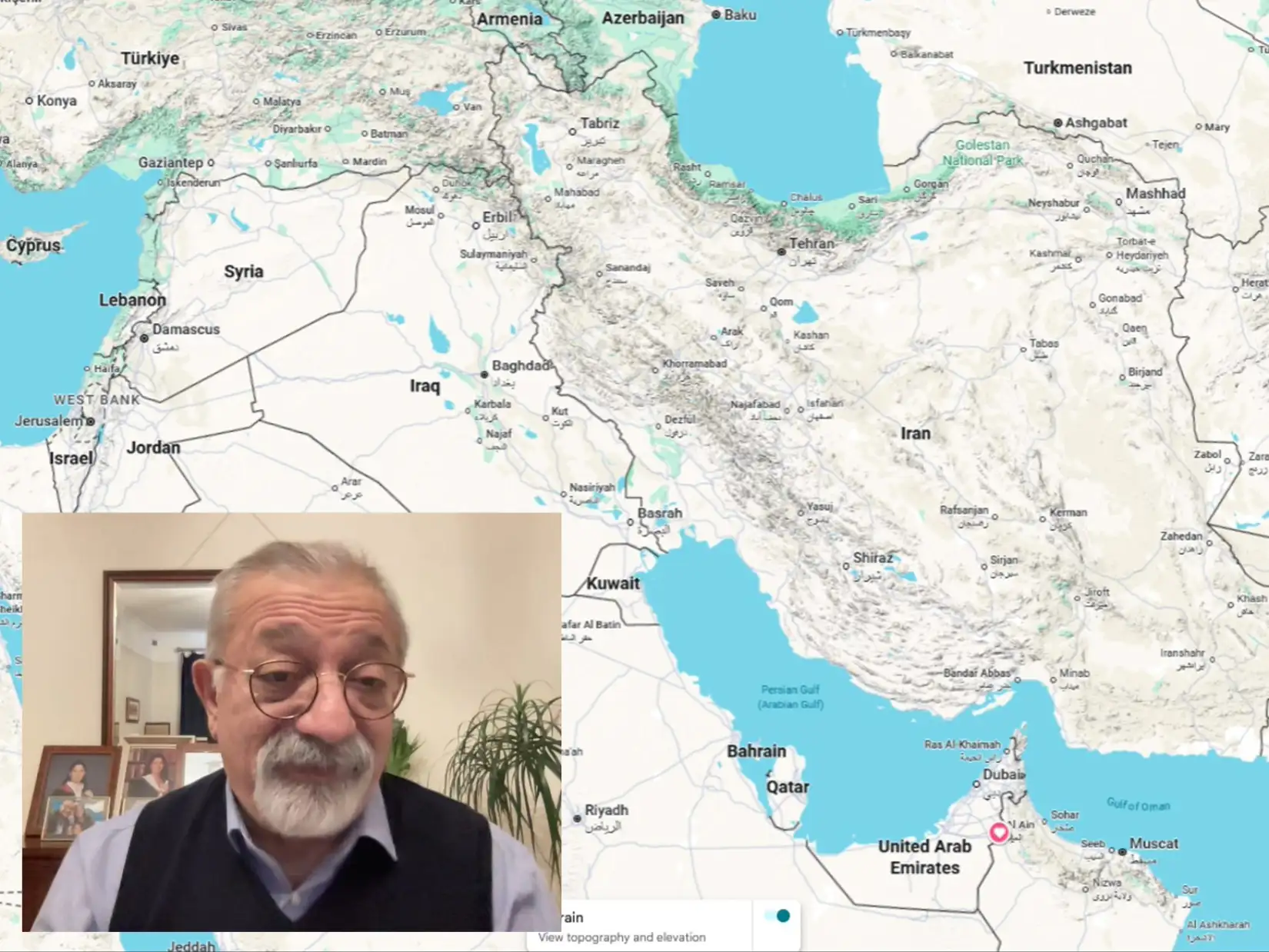
Listen now:




Show Notes
If you want to better understand the spiritual, political, and human dynamics of what God is doing in Iran today—and how to stand with Iranian Christians in informed, hope-filled prayer—this conversation is a must-listen.
Mehrdad traces the story of Iran’s modern spiritual awakening, beginning in the 1990s after the killing of several clergy, and the emergence of a movement that may now be described as one of the fastest-growing churches in the world. He describes how the majority of new believers are from a Muslim background, with estimates of at least one million Christians now in Iran, and how hunger for Scripture and leadership training has only intensified under persecution.
He shares how Pars Theological Centre began in response to this rapidly growing Iranian church in order to train leaders and pastors—many of them active in underground house fellowships across Iran and in the diaspora. This includes theological training, in-person formation conferences in nearby countries, a counseling ministry, and publishing resources in Farsi to disciple believers.
The conversation turns to the recent protests, crackdowns, and shocking mass killings—events that have profoundly shaken both the nation and the church. Mehrdad speaks candidly about Christians’ participation in the demonstrations, the high cost many have paid, and the deep lament, imprecatory prayer, and spiritual wrestling marking Iranian believers as they struggle to love their enemies while crying out for God’s justice.
Mehrdad closes the episode with specific, practical ways listeners can pray: for a true regime change that leads to a democratic Iran, for the protection and freedom of the church, for the honoring of Iranians’ agency, and for the readiness and unity of Iranian believers in this moment of possible new beginnings.
Make sure to subscribe and give us a 5-star rating on your favorite podcasting platform. Let your friends know about The Reflexio Podcast and encourage them to Subscribe to receive an email when new episodes drop!
Transcription
Don [00:00:01]:
Hello and welcome to another edition of the Reflexio Podcast. I'm your host, Don Little, and this is an actual special edition we're releasing to deal, to talk about the situation in Iran that is in the news every day. A few days ago, I was talking with a colleague and he encouraged me to do a special edition and to interview if I knew any Iranian pastors. And so I reached out to my friend Mehrdad, And he is very involved. He leads a ministry called Pars Theological Center based out of London, England, and their mission is to serve the pastors of the underground church in Iran. And so they currently have more than 450 students in Iran, and they meet with them regularly and are training them extensively in pastoral ministry and theological education. I'm not going to go into all we talk about, but you will not want to miss this interview. I talk a little bit about how things arrived here and how Christians are responding to the situation, what they think about it, how they're praying. I just believe this is going to be a very powerful time for you. It was very moving for me to talk to him today. I'm just going to tell you a bit more about him since we don't go into his bio very much. He's an MBB. He was a pastor in Iran for many years, then he He led a translation project to translate the whole Bible into Farsi. That was a 20— more than 20-year process completed in 2010. He's involved in this theological center. He's written a number of books. He has his PhD from the London School of Theology, a master's degree in hermeneutics, as well as a BA in linguistics and Bible translation and theology. Started off with a Bachelor of Science in Electronics, so he comes from a technical scientific background. We cover a lot of things. It's almost an hour-long interview. I'm sure you're going to be encouraged, and it'll give you a lot of insight in how to pray. Welcome to this episode of the Reflexio Podcast. So hello, Mehrdi, it's So thankful that you had the time to join me on this call. Welcome.
Mehrdad Fatehi [00:02:20]:
Thank you so much. Hello, Don. I am grateful and I am happy to be on this call.
Don [00:02:27]:
So before this recording started, I introduced you a little bit, but can you just tell briefly sort of what your primary ministry responsibility is, what you are involved with, even in, in Pars Theological Center, what your your role is.
Mehrdad [00:02:42]:
Yes, yes, I am the executive director of PARS, PARS Theological Center, and I also teach. I teach in biblical studies and systematic theology, so that is why I do at PARS. I also am a pastor at the Iranian Christian Fellowship London, but that is on a voluntary basis, but My main responsibility is PARS, yes.
Don [00:03:13]:
So, um, can you tell us a little bit of a story about how PARS came to be and what its vision is?
Mehrdad [00:03:21]:
Yes, um, PARS is a kind of non-denominational school training Iranians for ministry. Um, I, uh, from my, my youth, I, I had this sense of calling to teach theology. I was very much passionate about theology, but it took a long journey, as it usually does with God, that we started Pars. It was a time that the awakening, the revival in Iran had started, and the church was growing very fast. I had just finished a Bible translation. I was coordinating a Bible translation for nearly 20 years.
Don [00:04:16]:
Wow.
Mehrdad [00:04:17]:
Bible translation in Farsi, and it was coming to a close. So I was waiting and thinking and talking to people, to friends, to those who were involved in training Iranians, and we were We were dreaming about a school, a kind of interdenominational school that would cater for all the different church traditions, provide in-depth Bible teaching and theological education for the fast-growing Iranian church. So that was the That was the reason for starting PARS. Some research had shown that leadership was one of the top challenges that this fast-growing church was facing, and so we believe that to provide in-depth theological training and leadership development for this church would be a great priority. So we started Pars in 2010 specifically for this reason. We wanted to train especially the leaders of the underground church in Iran. So now we are training Nearly 600 students, 40-45% of which are actually located in Iran. They are studying with us from Iran, and the rest are scattered in over 20 countries. We are an accredited school now. We offer up to bachelor level theological and leadership development to our students. We have a counseling center providing professional counseling to Iranian Christians. Also, we have a publishing house now publishing some of our textbooks, some good books for discipling Iranians. Actually, actually, we are just, uh, we, we are, we are, we are seeking permission to translate your book.
Don [00:06:54]:
Oh, that's very good.
Mehrdad [00:06:56]:
Um, yes, the Effective, Effective Discipling in a Muslim Context. So it's, it's, I think it's a month that, uh, our head of, uh, publications is actually started the process of, you know, copyright permission and those things.
Don [00:07:14]:
So they're already in touch with InterVarsity?
Mehrdad [00:07:18]:
Yes, he must have, he must have, because it's a month that we have started the process of getting the permission. Yes.
Don [00:07:25]:
If he wants help from me, let him know. I can contact the publisher.
Mehrdad [00:07:29]:
I will. Yeah.
Don [00:07:31]:
And that's translated into Chinese and Arabic right now.
Mehrdad [00:07:34]:
So, yes, yes, yes. Very good. Very good, yeah. That is what Parsi is doing.
Don [00:07:41]:
You mentioned that the revival or the renewal of the Iranian church, when it started, I don't think most of our listeners know what you are referring to and when. When was this? When did this really start?
Mehrdad [00:07:57]:
Yes, yes, of course, church has a long history in Iran, but in more recent years, It was since 1990, actually, that this movement of God's Spirit started in Iran after a number of clergy men got killed, Iranian clergy men. After that, this movement started and underground churches started growing, mushrooming everywhere in the country, in the larger cities, smaller towns, even villages. So the growth was to the extent that the Iranian church had been known as one of the fastest-growing. Some believe that it is the fastest-growing church in the world. So, yeah, a revival, an awakening has been happening in in Iran for now, I guess it is about 30 years, so 3 decades. And we believe that this fast-growing of the church is happening mostly among people from a Muslim background, and some surveys show that there is at least about 1 million Christians, most of whom are from that background now living in Iran. So, yeah, so it is very exciting what God is doing, and many would like to learn and to study the Bible and to be trained to be good leaders for the church.
Don [00:10:01]:
You're talking about this revival, I remember I took a bunch of students from Houghton here up to Toronto, and we visited an Iranian church there maybe 10 years ago, and the pastor said, "We are the fastest growing church in the world. Our Iranians and Persians are coming to faith." And I've heard this for years now, so it's so exciting. With PARS, since you are focused on serving the underground church, can you describe a little bit of the kinds of connections you and your colleagues have with people? How do you, I mean, you probably haven't traveled in for a while. How do you have all these connections? Just to give an idea when you speak about what is going on, do people understand what you are speaking from, your context? Yes.
Mehrdad [00:10:51]:
As I said, we have 40-45% of our students residing in Iran. They are studying from Iran. So over 250 students of ours are living there. And a major part of our program is online, but we have combined it with some in-person elements. So we have what we call formation conferences for them. So for every student, we require that he or she would come out of the country for a week of intensive training, fellowship, prayer. So we have a very close connection with these students and, and the networks of underground churches that they are actually serving. So because our program is not a full-time program, it's designed for training people who are already serving the Lord, who are already ministering. So almost all of our students, at least most of our students, are involved in the underground church. So not only our tutors are in touch with them on a weekly basis, online, but every year we bring them out to neighboring countries like Turkey, Dubai, and other places for week-long conferences where we can see them face to face. We have fellowship with them. So there is a great connection between, between Pars and, and these, and these students. And as I said, because they are involved in leading these smaller or larger house fellowships, I can call them, so we also hear about what is happening. They share stories about God's work, and we are training now about 15— we are in touch with 15 networks of house fellowships. Some of them are smaller, some of them are bigger. We have the, the largest is like 20,000, about 20,000 members, but there are smaller like 200 members divided into several small fellowships, and so we are in touch with them also, and our students sort of are serving in those contexts. So that is the kind of relationship. Our counseling department, our counselors are giving counseling to people inside the country, to our students especially. That is our focus, but also to the members of their families and some other members of their house fellowships. We provide counseling. So, yeah, these are the different ways that we are in touch with the students inside the country.
Don [00:14:17]:
Wow, very extensive and very deep.
Mehrdad [00:14:21]:
Yes, praise God, praise God.
Don [00:14:23]:
I had the privilege of spending about 4 days in Tehran before the revolution. I was there in 1977, 2 years before the revolution, and such a prosperous country. I was just impressed with Tehran, driving around the huge traffic jams. But when the protests started December 28th, just about 3 months ago now, I was doing as much as I could to get news, praying all the time, saying, what is going on here? And it seemed like finally an opportunity to overthrow this oppressive Islamic regime. And I've been trying to get news, praying often, almost every Sunday I go up to the rail and pray during church because I just feel this deep burden. This is God's time for what, going on in Iran. So before we talk about the war that the U.S. started, can you talk about these last few months of the protests and the oppression and how the Christians have been doing in all of this? Anything you want to share about that?
Mehrdad [00:15:33]:
Yes, of course, the demonstrations and protests that started more recently, about 3 months ago, Yes. Was not the first time that Iranians started protesting and demonstrating. You remember that about 3 years ago, the Woman, Life, Freedom movement happens, that many younger generation came into the streets and demonstrated. And these have been happening. So as As the pressure and as the sort of oppression continued and the situation in the country got worse and worse and worse, so every now and then there were uprisings. So the more recent uprising was sort of a kind of climax, actually. Yeah, it seems like it was one of the largest It was one of the largest after, you know, maybe the Green Uprising many years before. This was the widest sort of demonstrations that happened in Iran. And so it started with some kind of sort of, you know, asking for some relief for their economic pressures, but then it changed into a wholesale sort of protest and asking for the changing of the system, changing of the regime. So that was one of the more specific characteristics, new characteristics. So this time, except just in the beginning, the rest was about changing the regime. They were asking that we don't want the Islamic Republic to continue ruling. And so that was a new kind of sort of voice, new kind of message. And the other thing was that they were, many of them, they were asking for an alternative, which was the former son of the former king. Yeah, Reza Pahlavi. So these two, I think, were quite new messages that the demonstrators were sort of speaking. And as to the Iranian Christians, I must say that so far as we were aware of, and before the internet blackout in those— when the massacre happened, Christians were very much involved, of course, the number of Christians, we are a very small minority.
Don [00:18:55]:
Yes.
Mehrdad [00:18:56]:
But I can say that this time I saw Christians more united with the nation. This was not that before it wasn't like that, but I just felt this time from the messages that we were receiving, from the connections that we had, that the Iranian Christians, especially I am talking about this sort of underground church, I am not talking about the official sort of Armenian-Assyrian church that is openly practicing still their sort of church life, and they are under restrictions, you know, as to what they can say or can't say. But the underground church, those that we are in touch with, actually make the larger, much larger part of the Christian population at this time, they were more involved. They were more— they felt that they have to be with the nation. Because Christians were also very much under persecution, and the church has been since 2013, I can say, that they basically closed down all the Farsi-speaking churches, all the churches that were actually sort of made up of Christians from a Muslim background. They were all closed down, no worship service, no training, nothing. And even they were sort of looking for house fellowships, and if they found some house fellowships, they would raid the fellowship and they would take people for interrogation, and the leaders were put into jail. So we had— the Christians had also suffered very much during the last, I can say, at least 10 years. It is accelerated and it has become much worse than before. So I just felt that the Christians were also sort of among the people, among the nation, attending these demonstrations and shouting and asking for a change, for a new sort of system. Yes.
Don [00:21:33]:
I've heard, I watched a podcast with, I forget his name, I'm sure you know him, but they talk about him as the Billy Graham of Iran.
Mehrdad [00:21:44]:
Hormoz Shariat.
Don [00:21:46]:
Yes, and he was saying that there's just so many people coming to faith, but he also talked about 60,000 to 80,000 people killed in these demonstrations, not 20,000 or 30,000 like they're talking. In the midst of all this, with your connection with pastors and leaders, how are the Christians? Are they being treated even worse, or are they just among the protesters that are being opposed?
Mehrdad [00:22:18]:
Yes, yes, obviously this was, I think, this was a turning point, I can say. I can say that that massacre, that massacre was a kind of Jordan Crossing. It shook the nation, shook everyone. We were in shock. Even the most pessimistic people, most negative people towards the regime could not imagine not only They couldn't believe, they couldn't imagine that something like that could happen. So yes, I must say that at least from even before the media started talking about these killings, from some of our connections, we were hearing that a widespread killing and bloodshed is happening. So yeah, I believe, though credible sources talk about over 30,000, 35,000 killed in just 2 days.
Don [00:23:38]:
Oh, wow.
Mehrdad [00:23:40]:
And but the number is believed to be much higher. Maybe up to 50,000, even more, because we don't have any way to verify because those whose sons and brothers and fathers and mothers were killed are threatened that if they talk about it, they will be even more sort of retribution, oppressed. So it was really, really a a shock, a big shock. Not only the magnitude of the killing, but the ruthlessness that the regime showed. They just opened fire. I mean, these are— we heard about, I mean, from few people who were finding a way to talk, that they opened fire with machine guns on people and just completely, they were shooting people from the top of the buildings. They were opening machine guns on people. They were even going to hospitals And killing people, injured, and even killing doctors and nurses. Just a few days ago, there was a report, a very disturbing report of what happened to two nurses who resisted and wanted to continue treating these injured. So many injured. Do not, you know, they don't go to hospitals to be treated because they are afraid that they will be shot there. So it was really a very disturbing event, and clearly it shook the nation and it shook the Christians as well. Christians at first obviously were so in shock. And I can say that prayers were being raised and lament and mourning. I think it was a time that the church experienced, and even I can say the expression of anger and through the imprecatory psalms was just being raised to God. And I think from, I mean, we don't have so much connection directly or not much with inside the country, but we are in touch with many Iranians outside in the diaspora, and they have friends and family inside the country.
Don [00:26:52]:
Yeah, everyone is connected.
Mehrdad [00:26:54]:
Christians are just raising their voices to God, and this was a very very unique experience. I don't think that we had experienced this before because the Christians found this themselves in the midst of kind of two kind of requirements. On the one hand, to love their enemies, and on the other hand, you know, the desire for God to to intervene, to come to the aid of the oppressed and people, innocent people that were just going out to, okay, to raise their voices and protest for all the atrocities that have been done to them through these 47 years. And they were killed so openly and shamelessly. The thing is that Though for at first they covered it up by closing, by blocking the internet, but here and there you could see that they were so openly and shamelessly talking about, you know, that yes, we are going to kill you if you come and protest and so that. So it was a It was a very, very unique experience, shock, trauma, and just anger. And it took some time for, I think, all of us to just fathom, you know, if you could, what is happening. So yeah, it was quite a It was quite a very disturbing, disturbing experience. I never saw the church— that is a fruit, I think, of this— that I never saw the Iranian church praying and interceding so much. You know, my own church, it is more than a month that every night we have prayer, every night, and people are just crying out to God and asking, I must say, asking for his judgment, his coming into the situation and really judge those who have, you know, so dismissively, so easily opened fire on innocent people. So It was quite a traumatic experience, and I think the Iranian Christians felt very much united with the nation, both in the protests and the demonstrations. They were part of it. A number of Christians got killed. I know of at least 20. but the number may be more. So Iranian Christians also had some people murdered, and in the expression of mourning and prayer and anger and then asking God to somehow intervene, to somehow come to the aid of the nation is something that I can say happened, at least till the US and Israel attacked. Yes.
Don [00:30:45]:
So this is recording this on Thursday. On Saturday, it will be 3 weeks since Israel and the US started to attack the regime leaders. How is that being felt? And are people feeling like it's an answer to prayer? Or they think it's worse? Your own sense of, your own sense and also what you hear, is this perceived as good news or is this making it worse? Yeah.
Mehrdad [00:31:18]:
Obviously, no Iranian really likes war. And, and we don't.
Don [00:31:27]:
And nobody likes war.
Mehrdad [00:31:29]:
No one, no one, no one wants war. And, uh, but I'm— what I can say, the way I can explain is that Iranians see themselves, uh, in a kind of dilemma of they are in between two, two wars. It's not It's not just a war that started with Israel and U.S. attacking Iran. This was a war that their own— they were in war with their own government, a war that had been going on for 47 years, and at least for, I mean, if you don't say for all of 47 years, for some, I can say that, but for most of them, at least for 2, 3 decades, this war is going on. And especially in the last few months, at least since the Woman Life Freedom Movement, even before that, there has been killings before, but It never came out. I think what happened was that this time, God really let it come out in a way that the world saw it, though it took some time even for the mainstream media to acknowledge it. But eventually, they had to because It was so, so open. But yes, Iranians see themselves, it's not just, it's not a choice between war and peace. It is a choice of two wars. Now, one of them is their own regime, a murderous regime that has robbed them of all their human rights. And now we have half of the country Iran is a very rich country, and half of them are under the poverty line, living under the poverty line. People don't have food to eat. This is very sad that a country that has so much oil, even if we think of just oil, this country is so rich, but they are rich in so many other respects. And so this regime has done all of that to them. And then on top of that, they have opened fire with machine guns on innocent people walking on the streets. And so the choice is very easy. And they don't look actually, not only that, that this is a choice between two wars, Iranians actually were praying and waiting And actually, we're upset that why, why US is not attacking.
Don [00:34:42]:
It took so long.
Mehrdad [00:34:44]:
Yes.
Don [00:34:44]:
Because Trump promised he was going to intervene if they got violent.
Mehrdad [00:34:48]:
Yes, people can't understand that when President Trump said that the help is on the way and I will help you and he didn't at first. Iranians got— Iranians were so upset and they were waiting still. They were praying and waiting. And so, yeah, contrary to maybe the rest of the world or some of the, again, I must say, mainstream media, the picture that they are portraying, if you look at it from the Iranian eyes, because that is important. That's what I want. Saying something as a third person from a very objective academic and intellectual, you know, point of view is one thing, but seeing it from the eyes of these Iranians have really suffered and are suffering even under this war from Israel and US. But the majority of them, I can't say that all of them, but the majority of Iranians that I have talked to, I have seen, they were waiting for it. And they are happy about it. And they don't look at it as a war with Iran. They look at it as a war with the Islamic regime. They regard the regime as an occupying force that have taken hostage a nation, and they look at this war as a rescue operation.
Don [00:36:34]:
Yes.
Mehrdad [00:36:35]:
And they are very thankful. If you talk to Iranians, they are very thankful. I have seen interviews that women were saying that Yes, let them punish them. Let them throw bombs on their buildings and places through which they oppress the people. And even if I'm being killed, even if we are killed, she was saying that even if I am killed by those bombs, yes, let them do it. Let them do it because they don't see any hope. This is the only hope that they feel is left for them. And so I know that some Iranians may be against war, though they are against the regime, but they may. The only ones that I have heard were on TV. I haven't met any Iranian, whether our students or our colleagues or anybody that I talk to. They don't look at this war as a war with Iran, but a war with the murderous regime of Iran, the Islamic regime that who has done so much to these people. And so, yeah, this is a very strange thing that people are happy that foreign countries bombard their, you know, because they feel that every single day, every single day that this regime continues to rule in Iran, They are— the loss, the extent of loss that they will suffer will be much more, much more than, you know, what they feel that this war is imposing on them. So this is a very, very strange situation. And I must say, from my own point of view as a Christian, as a Christian leader, I feel, I feel I, I, I, I want to look at things from the eye of my people.
Don [00:39:06]:
Yes.
Mehrdad [00:39:07]:
And, and when I look at things, uh, I, I see that, yeah, I can unite with them with this, with this feeling. And I can see, I actually preached on this exactly the, the Sunday before this war started. I preached at my church on God's judgment. On shedding of innocent blood. That is a very well sort of theme, a very well-known theme in the Old Testament and the New Testament. God hates especially shedding of innocent blood, the way Nahum talks to Nineveh about, you know, about shedding of innocent blood. And they have done that, and on top of a lot of other things that they have done. So I personally believe whatever the outcome of the war, I hope that the outcome will be for the good of the nation. I pray and I hope, but I believe that whatever the outcome, I see here God's judgment on this regime. And I think they are hitting, they are very, they are trying not to kill the civilians. That is what we hear from all the news, that they are specifically targeting the IRGC and the regime. So I think, of course, we really would would want to emphasize that they should really take care of that and that civilians are not hit. But I see that as a judgment by God. I can see that as ticking many, many boxes, many conditions of even a just war. I know that, okay, I don't see the only thing I can say that Okay, I don't know what was the intention, what is the real intention of President Trump or Netanyahu, but I know from what they have expressed is that rescuing the people, the Iranian nation is at least one of them, one major part of, I believe, the reasons that they have decided to do this. To do this, though I think the threat to their countries are very real. And I am very surprised. I can understand that people in the West cannot fathom the extent of the danger that the Islamic regime was and would be for America. They say that, okay, they were not imminently attacking us. Okay, how long do you want to have for a regime to throw a nuclear bomb on you? You can't wait for that to happen. So I feel that, yeah, they have good reasons to defend themselves. But I think I see it as a way to open up the country for this nation that has suffered for too long, for too long. And I pray with the rest of Iranian Christians that in God's grace, in God's sovereign control over things that are out of our control sometimes, God would really bring out a good thing out of it. And I hope, I am hopeful, I am hopeful. I feel that there is a good chance. Some of the comparisons with other countries around Iran is not very exact. Iran is different. We had such a, I mean, I think at least 85 up to 88% of Iranians are against this regime. So, and they were coming out demonstrating and asking for that. That is something that needs to be considered, needs to be considered in all the analysis and all the evaluations of what is happening. Yes.
Don [00:43:54]:
So in my personal devotions in these last few months, I read the book of Daniel, and it was, I mean, while the protests were happening and the whole situation there where the Prince of Persia comes and Daniel prays and Michael comes and fights against the Prince of Persia, I just couldn't help but feel like there is some major spiritual battle going on here, too. It is not just a physical battle. Any comment on that? I mean, how do you perceive on the spiritual level what is happening and what is God doing in the midst of this?
Mehrdad [00:44:32]:
Yes, that is something that we very much believe. We believe that spiritual warfare is going on as the Bible says. These spiritual forces are behind the, you know, the rules and the political powers and manipulating them. So, yeah, so we believe, we believe in that. And one of the very strange things that has happened was that two things. One is that we hear about a lot of prayer and magic happening, you know, When we talk about Islam, Shiite Islam, there is a lot of, a lot of, you know, magic and prayer and cultic things that we call superstition, you know, but behind the scenes we know that there are spiritual forces. I believe that, that, you know, you, I know that in your book you have a chapter on on this aspect of our mission towards Muslims and towards other nations. I mean, it is just different, different type, different kind, but definitely, definitely that is one of the important factors. So prayer, spiritual warfare with these forces has been a part of the prayer meetings that we have had. We always in a prayer, we start praying for God to, you know, rebuke these forces of evil. And so, yes, yes, definitely. And the other thing I wanted to mention, it was very strange still. People are talking about it, that what was the meaning. Because in the midst of, you know, after these demonstrations, after the killings, there was a day that also sort of the supporters of Islamic regime came out and somehow did some kind of demonstrations. And they raised the a kind of, what you call, a kind of statue of Baal. It was very strange because I've never heard any connection with Baal worship or, you know, and this was not just Tehran. It was in several cities where these gatherings, these coming to the streets happened. So, and they somehow set on fire this, this, this Baal statue and dancing and shouting around, around it. So there were different interpretations about what was this, what was happening in the midst of all these things. And all these statues were built, these were huge, big, and all the same, clearly this was not just, you know, something, a one-off in Tehran that a group of people had done it. It was something that happened in several places. So I don't know what was happening, but whatever was happening, it was something to do with these sort of demonic sort of aspects. Because some of the behavior that was shown, some of the ruthlessness that they have shown towards people, I believe goes beyond even human. Diabolical. You know, it's diabolical. It is. It is diabolical. It is not, you know, normal humans, even the most wicked and most evil and ruthless of them don't behave like that.
Don [00:49:06]:
It's like the Nazis in the Second World War, their diabolical assault on the Jews. It's the same, yes, I believe that.
Mehrdad [00:49:16]:
So we, we really believe Iranian Christians, uh, are praying. I, I personally, and I know that many of my colleagues believe this, that God has raised his church in Iran. God has, uh, God has built His church for this time.
Don [00:49:41]:
For such a time as this.
Mehrdad [00:49:42]:
For such a time, for such a time, for us to raise, lift up the nation and intercede, ask forgiveness for all the sins that, you know, our ancestors have happened, for the way they submitted to false gods and false ideologies and so many other things. But when these things happened, we just felt that there is a church, there is a thriving church, the fastest-growing church according to many people in the midst of this darkness. And this is really God's God's grace. This is how God works. Where the sin increases, God's grace increases all the more. Light shines in the darkness, you know. So, yeah, God raised His church, and I think, I believe that the church prayed. I believe that the church prayed, prayed very earnestly for for this time.
Don [00:50:56]:
So we're all hopeful, and I'm sure Iranians and Persians even more so, that this is going to end, not just stop, but end with the regime gone and a new something arising. What's your own sense of anticipation of what's happening soon? What's this physical conflict is over and the country can rebuild. What is your sense of hope and vision for what God is about and what humanly you hope for your country?
Mehrdad [00:51:34]:
We hope for, with the rest of Iranians, for a more democratic Iran. We really hope, we believe that Iranians are waiting for it. Iranians have been desiring it for a long time, and hopefully, hopefully they will, hopefully they will not let anything less than that to, to happen. And I believe that there is a good chance for that. I believe there is a good chance for that. As I said, of course, we, we don't know the details how How God will bring it about, but I believe that the agency of Iranian nation, which sometimes is ignored in some of the talks about America making regime change, should they do or should they not do? No, Iranians have agency here.
Don [00:52:35]:
Yes, that's right.
Mehrdad [00:52:36]:
The Iranian nation, they were on the streets and they are ready. The president and also Netanyahu and also people like Reza Pahlavi are telling them, don't go out, don't go out now because they want to go out. They want to go out and start again the demonstrations. So I very much believe and hope that the Iranian nation's agency will be respected. By the states and by the rest of the world so that what they are asking for, which is a democratic Iran, will happen. Now, which shape and form it will take, whether it will be a republic or it will be a kind of constitutional monarchy, that doesn't matter. What matters is that they are looking for a democratic Iran. And we Iranian Christians, I am in touch with many, many colleagues, many pastors, many, of course, our students. We are all hoping and praying for that, and we are hopeful. Iranians are hopeful. We are hopefully waiting to see what what God is doing. So we want everyone to pray with us that this would be the outcome. Yes. And I can say another thing that from a Christian point of view, especially that this fastest-growing church, this church that have been just being persecuted and restricted and Now, if there is an opening, if there is a space for the church to really freely worship and freely talk about their faith, I believe that there could be a much bigger revival happening in Iran. And that is our prayers because Iranian nation They are deeply, deeply disillusioned with Islam. They are deeply, deeply disappointed. And many of them have just, you know, they are completely left their traditional faith. Many of them are now seeking kind of secular democracy and do not believe in God anymore, you know, especially the younger generation. And they are right because the God that they knew, the God that were introduced to them, was not the true God. And I believe that if Christians have the freedom to talk about Jesus, to talk about the God of love, I believe many Iranians will be ready to respond, and we will have we will have a much bigger— the bigger part of the revival is still in the future, and it could shake the rest of the region.
Don [00:56:01]:
The whole region, yeah.
Mehrdad [00:56:02]:
The whole region can be shaken. And so, yeah, so from the Christian point of view, I'm very excited, and we are thinking and planning for, okay, if this happens, what are we going to do? What we need to do. In Iran. So yes, we are praying and praying with excitement and with hope, a lot of hope.
Don [00:56:27]:
So last question, most of the people who are listening and watching this conversation are not in Iran. They may have some Iranian friends, but most of us are watching the news trying to figure out what's going on. Any word for how we can participate and support you as believers and as your country? How can we pray with you? I mean, you shared a lot. It's going to give us lots of fuel for prayer, but any thoughts about counseling those who are not Iranian who are watching and looking and trying to understand and how to pray?
Mehrdad [00:57:06]:
Yes, please, please pray for this regime change to happen. This is the number one prayer because it can become much worse if this is not completed. A wounded regime, an angry regime can do much worse. So that is my first prayer point, to pray please for the war to end up with the regime change. And also pray that this change will end up into— with a democratic Iran.
Don [00:57:56]:
Democracy, yeah.
Mehrdad [00:57:57]:
Democracy. So not only the change, but to a democratic a democratic Iran. Also, as I said, please pray that the Iranian nation's agency would be respected by— in the process, you know, so that the U.S., Israel, and other— I don't know who will be involved in the whole thing— so that the Iranian nation's agency will be respected. Pray also so that the church, the church would have the freedom to witness to Christ in this new era, new spring. We are waiting for the spring, to today's time, the Nowruz is happening.
Don [00:58:52]:
3 or 4 days, yes.
Mehrdad [00:58:54]:
You know, I have the Nowruz, the half scene behind me. I don't think you see it, but we have a half scene of the celebration of Nowruz. And may this be a new day for Iran and also for the church, for the church that has been persecuted. I know that persecuting, persecution sometimes helps the church, but sometimes also restricts the church very much. I think it is time for the church, for these chains to be broken from the church, and so that the church will have the freedom to really evangelize, speak, and to be involved in the rebuilding of the country, because we believe that That is something that can happen. And also, please pray for a new initiative that started last year. We established a World Iranian Christian Alliance. So this is something that happened last March. 180 leaders from the diaspora— of course, we didn't have anyone from inside the country— gathered together, and this dream, this vision of a church that is some kind of unity— Iranians are notorious in not working together well, but this was God's grace, it was God's miracle, and the alliance has established, and we are working now on preparing everything, and for the new Iran in God's good plan for our country, a united church will make a bigger impact. So please pray for the World Iranian Christian Alliance to be ready for what is coming in Iran.
Don [01:01:14]:
It is so good to hear about this development. I hadn't heard about that. That is beautiful. Thank you. This has been very informative and also very stirring of what God is doing and for this great nation of Iran. And thank you. Thank you for taking the time and bless you as you go to your continuing your ministry and your networking and supporting the Iranian leadership.
Mehrdad [01:01:44]:
God bless you. Thank you so much for providing this opportunity for an Iranian voice to be heard by our dear brothers and sisters in the West and hopefully in the East, too.
Don [01:01:57]:
This podcast is going all over the world. Amen. Thank you so much. God bless you.
Mehrdad [01:02:01]:
God bless you, Don.
Don [01:02:03]:
Okay, bye-bye.
Don [01:02:04]:
Well, that was quite a remarkable conversation with Mehrdad. I suspect you feel as I do that you understand the situation in Iran a lot better. You have new insight into how Christians are experiencing the situation and how they view it, how they're praying. It's very encouraging to hear that Iranian Christians around the world are uniting in light of this conflict and with hope for the future of their people and their country. I encourage you to give a thumbs up, let people know about this episode of the Reflexio Podcast so that as many people as possible can hear our brother share with them his heart about the Iranian situation. God bless you.
Join Our Community
Be part of a growing network of next-generation mission leaders. Get early access to new episodes, exclusive content, and resources to empower your journey.